SANEM’s Selim Raihan calls for greater climate financing and international cooperation
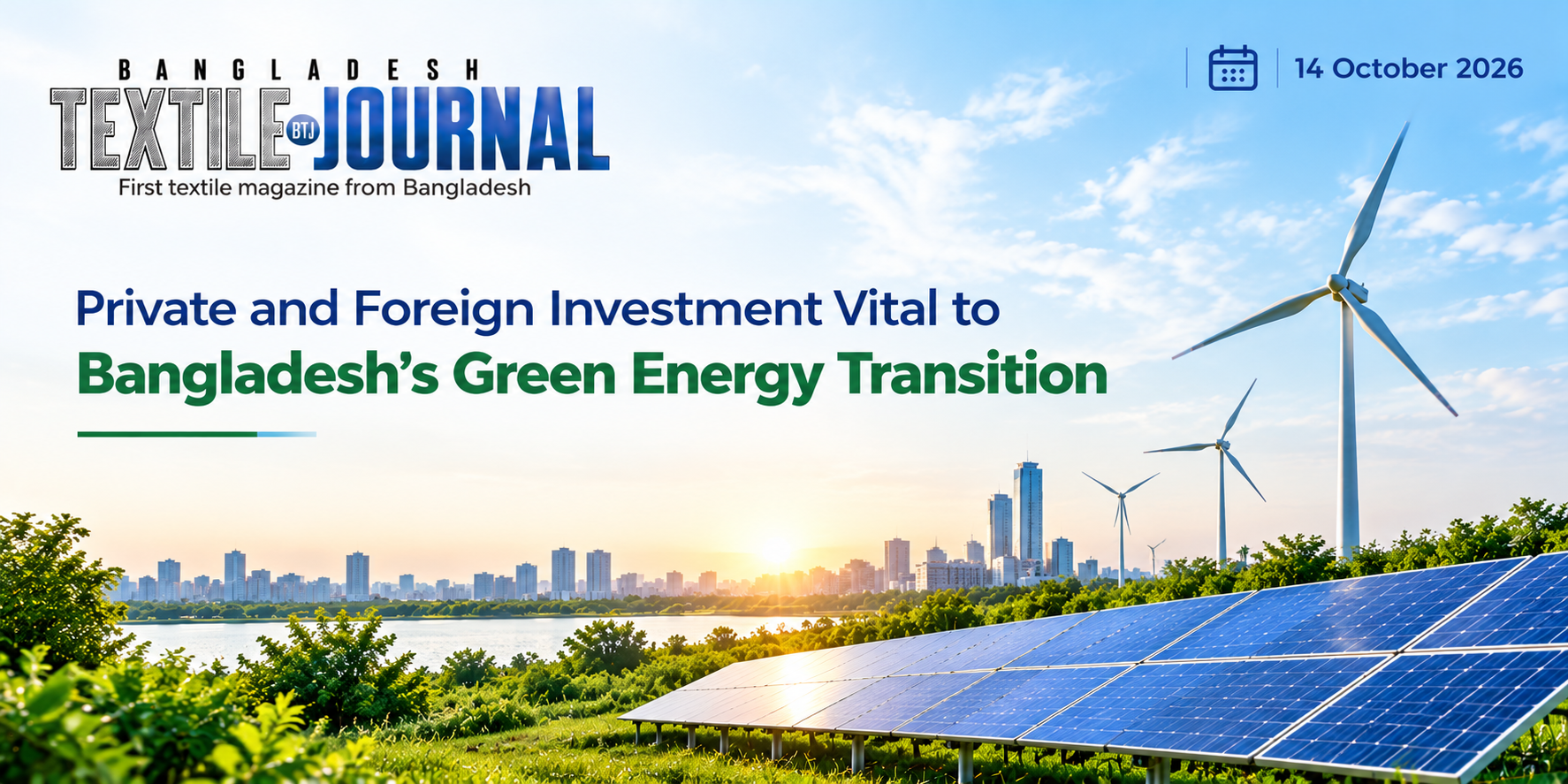
Bangladesh must mobilise greater private-sector investment and international financing to accelerate its transition to clean energy and achieve sustainable green growth, economist Selim Raihan has said.
Raihan, a professor of economics at the University of Dhaka and executive director of the South Asian Network on Economic Modeling (SANEM), said Bangladesh needs an estimated $230 billion between 2023 and 2050 to adapt to climate change. However, the country has yet to secure the required funding.
Mobilising such a substantial amount would be difficult without stronger participation from private investors and international partners, including global buyers and investors, he said.
He made the remarks while presenting a keynote paper at a SANEM policy dialogue titled “Can Green Growth Drive Bangladesh’s Next Phase of Development?” at the Sheraton Dhaka on 13 October.
The dialogue brought together business leaders, economists and government officials to discuss the challenges and opportunities associated with Bangladesh’s green transition. Key issues included rooftop solar power, electricity grid stability, battery storage and disposal, and financing mechanisms such as green bonds and carbon markets.
Rooftop solar faces grid integration challenges
Monzur Hossain, member (secretary) of the General Economics Division of the Bangladesh Planning Commission, said the government was focusing on generating solar electricity from rooftops, particularly in areas along riverbanks.
However, integrating rooftop solar generation into the national electricity grid could create instability and imbalances, he warned. Establishing isolated grids in selected areas could be one possible solution, while work was underway to address the technical challenges.
Hossain said the government was considering these issues in its commercial projects. Private-sector initiatives involving direct electricity sales to the government, meanwhile, would require strict quality control to safeguard public interests.
The discussion highlighted the need to align renewable energy expansion with grid infrastructure, technical standards and reliable power management.
Battery storage raises cost and environmental concerns
Md Fazlul Hoque, administrator of the Federation of Bangladesh Chambers of Commerce and Industry (FBCCI), highlighted practical challenges in implementing solar energy projects, particularly the cost of battery storage and the safe disposal of used batteries.
Solar installations without batteries can reduce upfront costs, but electricity generated during the day cannot be stored for use at night. He said the economic viability of battery-free systems should be assessed in light of lower nighttime electricity demand.
Battery disposal presents a separate environmental and technical challenge, particularly for the garment industry, where compliance requirements are stringent.
Hoque questioned how used batteries would be disposed of safely, describing the issue as highly technical and potentially risky.
Drawing on 12 years of experience with solar energy projects, he said implementing solar initiatives was considerably more complicated than it might appear.
His comments underscored the importance of evaluating the entire lifecycle of renewable energy systems, including installation, storage, maintenance and end-of-life waste management.
Green growth becomes an economic necessity
Fahmida Khatun, distinguished fellow at the Centre for Policy Dialogue (CPD), said green growth had become an imperative for Bangladesh rather than a policy choice.
She stressed that the country needed to pursue domestic policy reforms and practical measures while strengthening international engagement.
Khatun also called for greater use of green bonds and carbon markets to mobilise financing, noting that these mechanisms remained underutilised in Bangladesh.
With public resources limited and competing demands on government spending, she said, market-based financing instruments could play a more significant role in supporting the transition to a greener economy.
Coordinated financing and implementation needed
The dialogue highlighted the scale of Bangladesh’s climate financing challenge and the need to combine public policy, private capital and international support.
For Bangladesh, expanding renewable energy will require more than installing solar panels. Grid integration, energy storage, battery disposal, technical standards and sustainable financing must also be addressed to ensure that green investments deliver lasting economic and environmental benefits.
Greater engagement from international investors, development partners and global buyers could help mobilise the capital and expertise needed to advance the country’s green growth agenda. At the same time, stronger domestic policies and effective implementation will be essential to turn financing commitments into measurable progress.
As Bangladesh pursues its next phase of development, the challenge will be to secure adequate funding while building a reliable, environmentally responsible and financially viable clean energy system.