Bangladesh Garment Manufacturers and Exporters Association has formally disagreed with recent comments made by the Bangladesh Textile Mills Association on yarn imports and bonded warehouse facilities, stressing that key facts and industry realities have been overlooked.
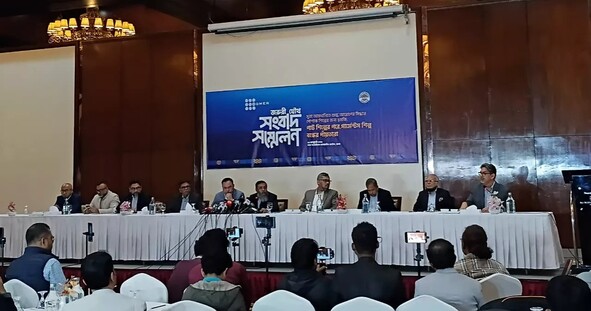
In a detailed statement issued on 20th Jan, BGMEA clarified that the information shared at the joint press conference of BGMEA and the Bangladesh Knitwear Manufacturers and Exporters Association (BKMEA) on January 19 was grounded in verified data and official records, not assumptions.
BGMEA addressed several critical areas, including stakeholder consultation, duty implications, the role of bonded facilities, yarn subsidies, and export rules linked to Bangladesh’s graduation from Least Developed Country (LDC) status.
Regarding stakeholder consultation, BGMEA challenged BTMA’s claim that all parties were consulted before recommendations were made. According to BGMEA, although a meeting took place at the Tariff Commission on January 8—with minutes published on January 13—the Ministry of Commerce had already sent a letter to the National Board of Revenue (NBR) on January 12 recommending the withdrawal of bonded facilities for certain yarn categories. This sequence, BGMEA said, indicates that the views of garment exporters were not given due consideration.
On the issue of duties, BGMEA noted that while BTMA suggested no new duties or safeguard measures were being imposed, the removal of bonded facilities would effectively subject yarn imports to an existing duty burden of around 39%. Such a move, BGMEA warned, would sharply raise production costs for export-oriented garment manufacturers.
BGMEA also rejected the assertion that bonded warehouse facilities benefit only foreign buyers. It emphasized that bonded and back-to-back letter of credit (LC) systems have been central to the growth, competitiveness, and global integration of Bangladesh’s garment industry. Restricting yarn imports, BGMEA cautioned, could lead international buyers to shift orders to competing countries, potentially harming local knitting and composite mills rather than supporting domestic spinners.
On subsidies, BGMEA pointed out discrepancies in BTMA’s figures. While BTMA referred to subsidies of about 50 cents per kilogram in neighboring countries, BGMEA cited the Ministry of Commerce’s January 12 communication, which put the actual figure closer to 30 cents per kilogram—highlighting the need for accuracy in policy discussions.
Finally, addressing claims related to LDC graduation and export benefits, BGMEA clarified that existing “double transformation” rules allow imported yarn to be converted into fabric and then garments domestically, still meeting the required 60 percent value addition threshold. As such, it argued, restricting yarn imports is not necessary to retain trade benefits.
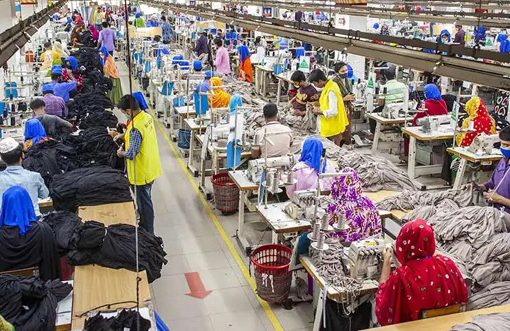
BGMEA reiterated that the garment sector, now the world’s second-largest, remains a cornerstone of Bangladesh’s economy, employing around 40 lakh workers and supporting the livelihoods of nearly five crore people. The association urged all stakeholders to engage in responsible, fact-based dialogue to safeguard the industry’s stability and future growth.
“We sincerely seek the cooperation of all concerned parties to move the industry forward in a balanced and sustainable manner,” the BGMEA said.