Reviving Handloom, Redefining Sustainability: BTJ Talks to Jackie Corlett, Founder of MOTIF
Bangladesh Textile Journal (BTJ) recently sat down with Jackie Corlett, a textile designer, educator, and founder of MOTIF Handmade, to explore her decades-long journey with Bangladesh’s handloom sector, her vision for sustainable textiles, and the future of ethical fashion.
BTJ: Could you briefly introduce yourself and your journey in Bangladesh?
Jackie Corlett: Thank you—it’s always a pleasure to connect with like-minded people. My journey with Bangladesh began back in 1989, and it has truly been a remarkable one.
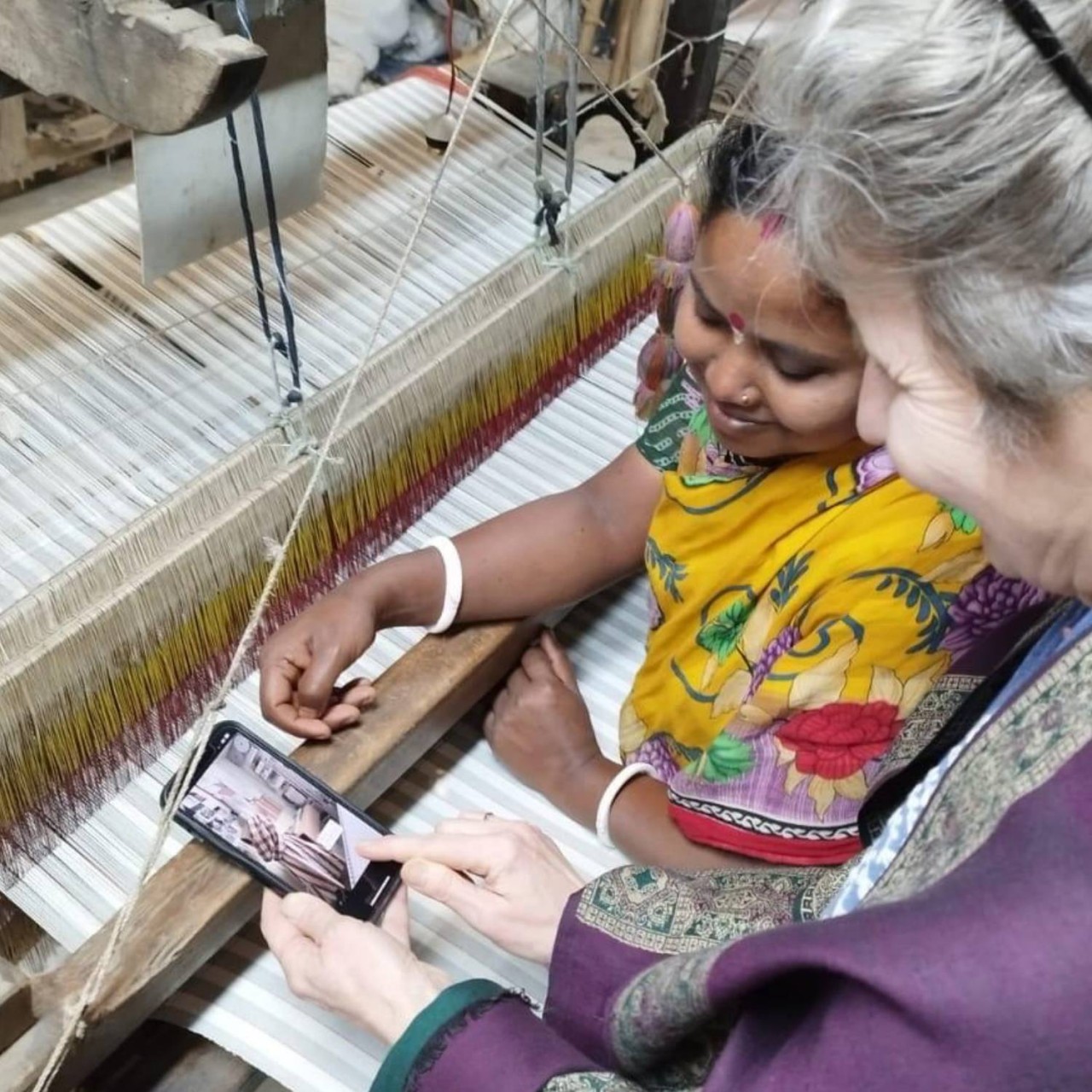 I’m a textile designer by training—a weaver by profession. I initially came to Bangladesh working with an NGO, focusing on developing export-ready designs for local weavers. At that time, the artisans had extraordinary skills, but there was limited exposure to global markets.
I worked with them for about five years before returning to the UK, where I developed design training curricula. I’m proud to say that those early efforts contributed to the first formal textile design curricula at institutions like what is now Bangladesh University of Fashion & Technology and Shanto-Mariam University.
Later, I returned to Bangladesh to teach, train tutors, and work directly with students. Many professionals in the industry today actually came through those early programs.
BTJ: When did you establish MOTIF, and what inspired it?
Jackie Corlett: I founded MOTIF in 1998 after years of working closely with weavers and developing training systems. I stayed in Bangladesh until 2008, when I moved to the United States—after meeting my husband here.
The inspiration behind MOTIF was simple yet powerful: I had seen firsthand how design could transform lives. In Bangladesh, I saw weavers earning better incomes, sending their children to school, and avoiding debt. That impact was deeply meaningful to me.
At that point, I knew I didn’t want to return to London. My heart was here.
BTJ: What was your early experience working with weavers in Bangladesh?
Jackie Corlett: Interestingly, when I first arrived, many weaving communities were still urban. I worked with Bihari weavers around Indira Road in Dhaka but over time, many of these declined. Today, rural handloom communities face challenges such as migration, income instability, and even social vulnerability. However, a strong handloom ecosystem can stabilize communities, create employment, keep families together, and reduce vulnerabilities like poverty.
A strong handloom industry doesn’t just create products—it stabilizes entire communities. It prevents migration, and even human trafficking in border regions.
BTJ: MOTIF focuses on sustainability and ethical production. How have you implemented this?
Jackie Corlett: It’s encouraging that sustainability and ethical supply chains have become central discussions in the last 5–10 years. Many of us have been working in this space for decades, so it’s exciting to see wider awareness.
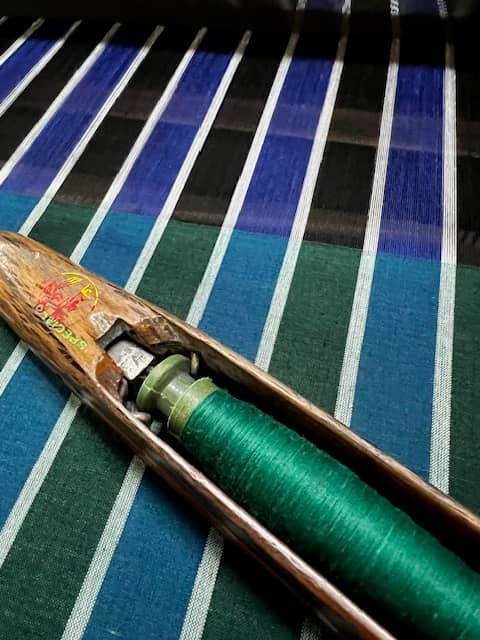 At MOTIF, we go beyond simply replacing unsustainable materials. We work with designers to rethink their entire design approach. Designers are creative problem-solvers—they can address systemic challenges, not just material choices.
We collaborate with small, independent brands to develop custom-designed fabrics rather than relying on off-the-shelf sourcing. These fabrics are:
• Made using recycled yarns (such as CYCLO)
• Handwoven (almost zero carbon)
• Produced with no new dyes
• Fully traceable and fair trade
This creates a deeply ethical and transparent supply chain.
BTJ: How does your business model work commercially?
Jackie Corlett: We connect designers with weavers and co-create unique fabrics tailored to each brand. Production is done in Bangladesh, particularly in regions like Rajshahi and Thakurgaon.
The model is “weave-to-order,” meaning:
• Designers place small minimum orders (around 150 yards)
• Fabrics are reproducible and scalable
• Workshops with 40+ looms can produce up to 5,000 yards per month if needed
Even while ensuring fair wages, the short supply chain allows competitive pricing.
BTJ: Tell us about your current market?
Jackie Corlett: Our primary markets are overseas—mainly the United States, along with some clients in Europe, including Denmark, Belgium, and the UK.
Growth is happening, but gradually. It requires a shift in how brands think about sourcing and design.
BTJ: How can Bangladesh scale its handloom sector?
Jackie Corlett: The key lies in integration, not replacement. I’m not suggesting handloom will replace the RMG sector. But even if brands introduce just one handloom-based product in their collections, it can create meaningful impact and demand.
We also need:
• R&D collaboration between designers, factories, and weavers
• Investment in supply chain adaptation
• Stronger market positioning for handcrafted textiles
Countries like India have succeeded due to strong domestic demand, government support, and entrepreneurial ecosystems.
Bangladesh has the skills—it now needs coordinated effort.
BTJ: What role can government and institutions play?
Jackie Corlett: Government support could be transformative—especially through agencies like the Export Promotion Bureau, and the Bangladesh Handloom Board.
Policy support could include:
• Incentives for integrating handloom into mainstream production
• Training programs in rural areas
• Funding for R&D and pilot projects
However, implementation is key. Policies must translate into real action.
BTJ: What are your thoughts on the decline of the handloom sector?
Jackie Corlett: It’s not just about global competition. When I first came to Bangladesh, around 65% of handloom production was consumed locally. By 2008, that dropped to about 25%. The decline is largely due to:
• Reduced local demand
• Influx of cheaper imported textiles
• Changing consumer behavior
Reviving local appreciation could significantly boost the sector again.
BTJ: What practical steps would you recommend for industry players?
Jackie Corlett: Start small but intentional.
• Introduce one handloom-based product as a pilot
• Accept initial imperfections—it’s a learning process
• Design garments that reflect the value of handcrafted fabric
• Invest in storytelling and brand positioning
Success will come through experimentation and persistence.
BTJ: What is your vision for the future?
Jackie Corlett: I truly believe Bangladesh has a unique opportunity right now. By integrating handloom into its broader textile ecosystem, the country can:
• Diversify exports
• Strengthen rural economies
• Address climate and sustainability goals
• Preserve cultural heritage
Because here’s the truth:
“If a factory shuts down, you can rebuild it.
But if a craft disappears, it’s gone forever.”
BTJ: Any final thoughts?
Jackie Corlett: We just need pioneers—people willing to take the first step. Whether it’s brands, policymakers, or entrepreneurs—if they start experimenting, collaborating, and investing in this space, the impact could be enormous. We’re in this journey together!
For any related discussion, Jackie Corlett can be reached at jackie@motifhandmade.com