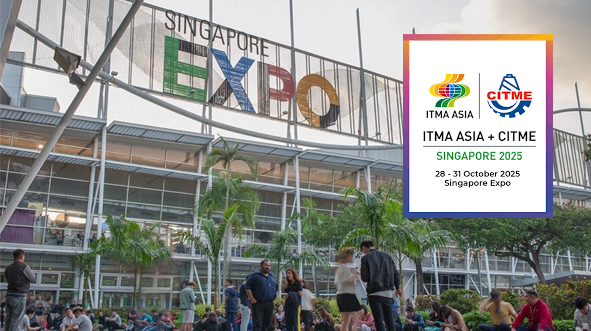
ITMA ASIA + CITME 2025, ready to stage at the Singapore Expo from October 28–31, 2025, is one of the mostimportant gatherings for the textile and garment technology sector in Asia. Bringing together more than 700–800 exhibitors across Halls 2–8, the show presents live machinery demonstrations and a focused sustainability agenda—from fiber and yarn formation through fabric formation both from weaving and knitting, to finishing, dyes & chemicals, digital printing, and the emergent role of AI and automation. This report summarizes the show’s historical context, the strengths of Singapore as a new ITMA Asia venue, the major technologies and sustainable solutions on display, highlights from leading manufacturers and where to meet them in which halls, and practical takeaways for mills, brands, and service providers.
Key Takeaways
ITMA’s brand and the combined ITMA ASIA + CITME format position the event as the pre-eminent global sourcing and innovation platform for textile machinery and processes.
Singapore Expo (Halls 2–8) provided compact logistics and easy access for demonstration-heavy exhibits— especially valuable for live demos of digital printing, compact spinning and robotics.
Innovations focused on three converging themes: sustainability (circularity, low-water, and low-chemistry processes), automation & AI (smart mills), and flexible digital production (on-demand/short run, phygital products).
Brief History
ITMA and ITMA Asia + CITME
Why this show matters
ITMA began in 1951 and, over seven decades, has grown into the world’s largest textile and garment technology exhibition, run under the CEMATEX umbrella and held every four years in Europe. ITMA showcases end-to-end technologies across the textile supply chain—fiber, yarn, fabric formation, and finishing—and it is widely regarded as the industry’s ‘Olympics’ for machinery and process innovation.
ITMA ASIA was launched to serve the growing Asian manufacturing base and buyer community; since 2008, ITMA ASIA + CITME (the combination with China’s major textile exhibition) has been the principal regional platform for reaching Asian mills, converters, and brands. For 2025 the event expanded its reach by adding Singapore as a second, strategic location to complement earlier biennial events in Shanghai—giving buyers across South and Southeast Asia improved access to live demos and supplier meetings.
Singapore as a New Venue
Advantages and what it changed
Moving ITMA ASIA + CITME to Singapore Expo (Halls 2–8) for 2025 brought logistical advantages that matter for a modern machinery fair: Reduced travel time for regional visitors, compact pavilion layouts that make visiting multiple vendors in a day feasible, and better infrastructure for live processing demonstrations through power, rigging, digital connectivity. The organizers also emphasized a sustainability track and a CEMATEX half-day forum on green transition, building the show around circularity, and low-impact manufacturing. These choices reflected a trend: Buyers and engineers increasingly prioritize solutions that reduce water, chemicals, and waste, while delivering on agility and cost control.
Major Show Themes and Technology Trends Observed
From fiber to finished product—an integrated lens
2025 show reinforced ITMA’s traditional strength: the full value chain under one roof. Exhibitors and sessions were grouped by product sectors (spinning, winding, weaving, knitting, finishing, nonwovens, digital printing, dyes & chemicals, circular solutions, automation & digital), enabling technical teams to see upstream and downstream implications of new systems. The integrated approach helps mills understand how a new carding line, for example, affects downstream spinning stability and dyeing performance.
Sustainability & circularity—not optional any more
Sustainability dominated booths and forums. That pushed a two-pronged industry response:
(a) Process optimization to reduce energy, water, and chemical use (e.g., zero-liquid discharge dyeing, CO2 laser screen engraving, closed-loop finishing), and
(b) Textile-to-textile recycling technologies capable of handling blended fibers—moving beyond cotton-only recyclers to mixed cotton-polyester streams. Companies touted lifecycle metrics, digital traceability (factory passports), and lower water/chemical footprints as decision criteria for buyers.
Digitalization, AI and Automation—the new productivity toolkit
The show floor is filled with AI-enabled control systems, real-time quality monitoring, predictive maintenance, robot-assisted material handling (AGVs for cans and bobbins), and integrated mill management platforms (SaaS + on-premise hybrids). The narrative: automation reduces manual touchpoints, AI analyses quality and process drift, and digital twins speed new product launches. Several companies demonstrated systems that link CAD/CAM/PLM with 3D sampling and automated pattern engineering.
Digital printing and on-demand production
Digital printing vendors showed evolution in throughput, ink chemistries (low-impact pigment and reactive inks), and pre/post processes that reduce steaming and washing steps. Vendors emphasized short runs, mass customization and near-on-demand fulfilment, complementing on-demand manufacture at distribution hubs. Kornit and other digital specialists presented zero-water and low-energy machines for direct-to-fabric and DTF workflows.
Spinning
What would be showcased, who will lead the
discussion
Spinning remains a core focus of ITMA ASIA; solutions aim to boost throughput, reduce space and energy, and improve automation for quality consistency.
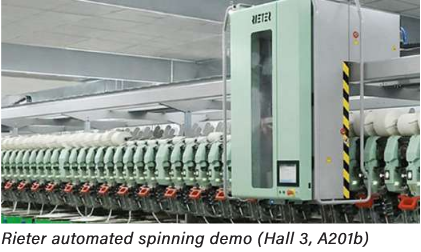
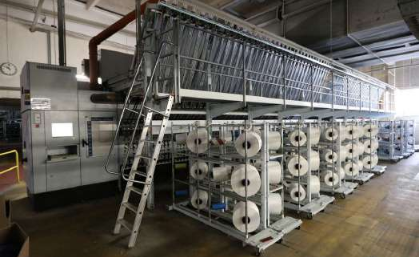
Full-line automation for spinning mills : Integrated can transport robots, fully automated winding, and in-line quality monitoring. Rieter positioned a model of the ‘fully automated spinning mill’—showing can-transport robotics, digital mill management and automated doffing systems. (Meet Rieter: Hall 3, Booth A201b).
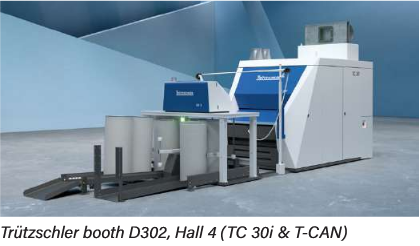
High-productivity carding & feeding: Trützschler’s TC 30i card and IDF 3 integrated draw frame were showcased as high-speed, resource-efficient preparations (Meet Trützschler: Hall 4, Booth D302). Trützschler also unveiled T-CAN—a smart sliver transport automation aimed at cutting manual handling and shortening lead times.
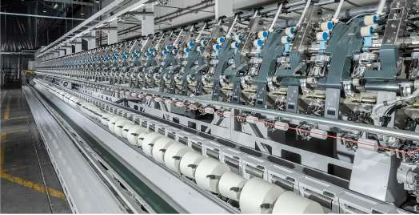
Smart winding & spinning: Savio emphasised AI-driven winding and air-jet spinning (Proxima Smartconer®, Lybra Smartspinner) aimed at minimizing downtime and improving yarn package quality. (Meet Savio: Hall 4, Booth A302/Hall 8, Booth C38).
Rotor & compact spinning advances: New compact systems and rotor feeding concepts that reduce pre-spinning stages were demonstrated, with several vendors highlighting cost and energy improvements.
Practical implications for mills
• Automating internal transport (cans, cops) reduces labor burden and handling damage—a near-term ROI in high-wage environments.
• Integrated sliver libraries and standardized patterns shorten trial cycles for specialty fibers.
• AI-based sensors deliver early detection of anomalies (count variations, hairiness, defects), lowering waste in downstream processes.
Weaving
Performance, flexibility, and specialty fabrics
Weaving exhibitors concentrated on modular looms, digital sheds, and large-format/technical weaving. Machines that reduce setup time (quick rapier changeovers, electronic jacquards integrated with CAD) and looms optimized for coated or composite fabrics drew interest.
Notable exhibitors & where to meet them
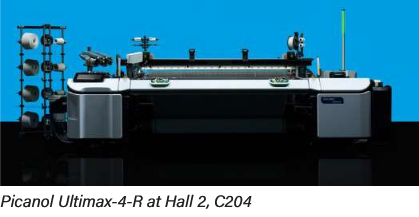
Picanol presented its latest machines including the Ultimax-4-R 360 Coating for high-speed coated fabrics. (Meet Picanol: Hall 2, Booth C204)
 Vandewiele/Sedo Treepoint (weft insertion, tension control modules, automation) showcased solutions for stable weft feeding and tufting gauge parts (Meet Vandewiele & Sedo Treepoint in Hall 8)
Groz-Beckert had a major presence illustrating precision components (needles, carding parts) and digital support systems. (Meet Groz-Beckert: Hall 5, Booth B301)
Technologies trending
Electronic drive packages and IoT for loom monitoring,
Integrated on-loom quality sensors linked to MES for immediate correction,
Solutions for coated fabrics, medical textiles and industrial composites.
Knitting, Circular Knitting & Seamless Garment Production
Knitting manufacturers showcased whole-garment knitting, circular knitting automation, and integrated yarn-to-garment workflows. The trend is to reduce cut-and-sew steps with whole-garment knitting, lowering waste and shortening production lead times.
Key product categories
• Whole-garment systems with integrated 3D patterning and post-processing
• Smart knitting feeders with yarn tension control and package recognition
• Seamless body mapping and technical sportswear solutions
Dyeing, Finishing, & Printing The sustainability battleground
This was the area with some of the most visible sustainability claims. Two converging fronts dominated: (1) chemistry and process changes that reduce water, energy, and toxic discharge; (2) digital printing and finishing that enable short runs and on-demand production.
Sustainable dyes & chemicals: what’s new
Low-impact reactive and pigment inks for digital and conventional dyeing with improved fixation rates and lower salt/alkali use. Vendors emphasized formulations that reduce wastewater treatment burden. Kornit and other digital printers promoted water-free or low-water digital systems.
Enzyme and ozone finish to replace harsher wet chemistry for processes such as denim finishing, with better repeatability and lower effluent. Jeanologia and other denim specialists are expanding laser and eco-finishing suites that dramatically reduce water and chemical use—crucial for denim’s environmental footprint.
Closed-loop and reclaim technologies: Systems that recover process baths, reuse water and recover dyes/ chemicals for reuse. These technologies improve compliance with increasingly strict buyer requirements and regulatory frameworks.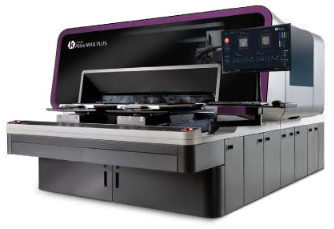 Digital printing and finishing
Kornit Digital highlighted industrial zero-water direct-to-fabric and DTG systems for fast, on-demand production,good for fashion and soft home textiles. (Meet Kornit: Hall 6, Booth C204)
SPGPrints and other hybrid suppliers demonstrated integrated rotary and digital workflows—allowing brands to choose between high-efficiency rotary runs and fast, customized digital production.
Finishing innovations
CO2 laser engraving for screen production (e.g.,SPGPrints’ Larch) reduces water and consumable usage in screen engraving; one-step dry processes shorten pre-press time and cut environmental footprint.
Plasma & corona treatments for improved printing adhesion and lower chemical loading.
Recycling & Circular Solutions
Blends and blended waste
A major barrier to textile circularity is blended fiber waste (cotton-polyester blends). ITMA ASIA 2025 showed that
the industry now has two pragmatic directions:
Mechanical + chemical hybrids can break down blended materials and regenerate quality fibers. Pilot projects and
commercial lines for textile-to-textile recycling were on display, demonstrating potential for post-industrial and
selected post-consumer streams.
Design for recycling + digital traceability—packaging products with digital IDs/factory passports to manage
materials end-of-life and enable recyclers to know fiber composition and finishing history. Multiple projects and
workshops emphasized cross-stakeholder collaboration (brands, suppliers and recyclers) to secure quality
feedstock and scale economically.
AI and Industry 4.0
Examples and outcomes
The show floor revealed many examples of applying AI to textile manufacturing:
Predictive maintenance: Vibration, thermography, and sound sensors feed AI models that predict bearing failures, unbalances, or belt wear before catastrophic failure—reducing downtime and maintenance costs.
Quality control: Camera-based vision systems classify yarn and fabric defects, automatically removing, or tagging bad packages for rework. This reduces inspection labor and improves first-pass yield.
Process optimization: Machine learning models identify optimal process windows for dye fixation, saving energy and chemicals while maintaining color fastness.
Digital twins & 3D simulation: Platforms that simulate the product journey from 3D design to pattern to production—enabling virtual prototyping and fewer physical samples. Trützschler’s T-CAN and Rieter’s integrated spin mill narrative exemplify how companies link hardware with digital orchestration systems.
Company Spotlights
Who to meet and what to expect
Below are short vendor profiles with what they will showcase at ITMA ASIA 2025 and where to find them on the show floor.
Trützschler—Spinning, card clothing & nonwovens (Hall 4, Booth D302) Trützschler highlighted its T-CAN automation for sliver transport, the TC 30i card and IDF 3 draw frame, plus nonwovens solutions (X-Series cards and ATB developments). The booth emphasized high productivity for man-made fibers, waste reduction (WASTECONTROL) and smart automation to address labor shortages and energy goals. (Meet: Hall 4, D302).
Rieter—The fully automated spinning mill (Hall 3, Booth A201b) Rieter presented a modular concept of the fully automated spinning mill, with integrated robotics, mill management software and digital services aimed at productivity, traceability and energy saving. The firm reinforced the case for vertical integration of hardware + digital services. (Meet: Hall 3, A201b).
Picanol—Weaving systems & coating solutions (Hall 2, Booth C204) Picanol showcased weaving innovations including the Ultimax-4-R 360 Coating, offering high speed, precise fabric formation for coated and technical substrates—useful for industrial textiles and coatings. (Meet: Hall 2, C204).
Groz-Beckert— Needles, components & digital services (Hall 5, Booth B301) Groz-Beckert’s display emphasized high-precision components for knitting, weaving, tufting and sewing, augmented by digital services and AR/VR elements to visualize product assembly and lifespan. (Meet: Hall 5, B301).
Murata/Muratec—Winding & spinning automation (Hall 4, Booths B301 & B302) Murata Machinery (Muratec) featured automated winders, vortex spinning solutions and smart support systems—positioning themselves as a full-line partner from spinning to winding. (Meet: Hall 4, B301 & B302)
Savio—Smart winding & spinning solutions (Hall 4, Booth A302/Hall 8 C38) Savio focused on AI-driven winding solutions (Proxima Smartconer®), Lybra Smartspinner and Phoenix winder with automation and package traceability to reduce downtime and defects. Check exhibitor map for exact stand. (Meet: Hall 4, A302 and Hall 8 C38)
Marzoli—Ring and compact spinning systems (Hall 3, Booth D301) Marzoli presented compact and ring spinning systems with emphasis on energy efficiency and process stability for fine and coarse yarns. (Meet Marzoli at Hall 3, Booth D301)
Jeanologia—Eco-efficient finishing & denim solutions Jeanologia continues to push laser finishing, ozone/eco-finishing and process transparency for denim and premium fashion—aiming to cut water and chemical use.
(Meet them at H6-D201)
Kornit Digital—Zero-water digital printing (Hall 6, Booth C204) Kornit highlighted direct-to-fabric technologies offering zero-water printing and integrated workflows enabling on-demand production for fashion and soft furnishings. (Meet Kornit at Hall 6, C204)
SPGPrints—Digital + rotary printing, CO2 engraver (Hall H6 C301) SPGPrints promoted its new digital textile printer alongside rotary systems (Teak, Eucalyptus) and the Larch CO2 laser engraver for water-free screen production—a notable sustainability story.
Stäubli International AG—combining speed, automation, and sustainability in weaving operations. (Booth B201 in Hall 2). They will present the SAFIR PRO S37 automatic drawing-in machine for filament yarns and the electronic rotary dobby S3280 for air-jet weaving up to 1,200 rpm. They will also display their LX PRO Jacquard, TIEPRO warp knotting, and rotary dobby models S3017/S3018 for water-jet weaving.
Saurer Intelligent Technology—automation, modularity, and flexibility (Hall 3, C301) Saurer is likely to highlight its digital/intelligent solutions for spinning, twisting, and yarn processing, integrating smart control, IoT, and predictive maintenance. They may also demonstrate system integration with upstream and downstream machine connectivity.
Oerlikon Barmag—Filament spinning, twisting, and texturing technologies (Hall 4 C204) They are expected to bring their latest, likely with improved energy efficiency or use of recycled polymers. Oerlikon often emphasizes sustainability, lower energy consumption, and enhanced process control in its new releases. It is likely they will also showcase connectivity or digital monitoring features in their latest machines.
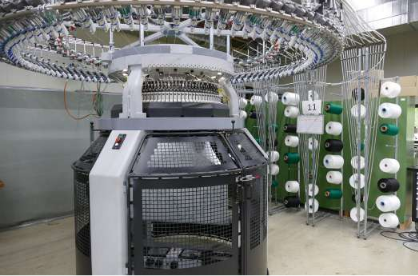
Mayer & Cie.—circular knitting machines (Hall 5 D301) Mayer & Cie. is anticipated to showcase new circular knitting machines incorporating Industry 4.0 readiness, automation, and fabric quality enhancements. Their machines may emphasize flexibility (fast changeovers), lower energy consumption, and integration with digital controls. Expect them to also highlight new software modules for predictive maintenance or real-time performance metrics.
Sun Chemical—printing inks, coatings, and functional chemical formulations (Hall 6 C111) They are likely to exhibit advanced printing inks, coatings, and functional chemical formulations tailored for textile applications (e.g., durable, eco-friendly, low-VOC). Their innovations may include digital printing inks, specialty finishes, or reactive coatings compatible with sustainable practices. They might also showcase systems for color management, consistency, and process control in textile printing.
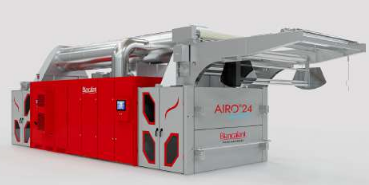
Biancalani—Finishing/washing/processing lines (Hall 7 B512) Biancalani, as a known Italian textile machinery manufacturer, may showcase new finishing/washing/processing lines or specialty finishing equipment. Their new machines are likely to emphasize energy and water savings, automation, and modular design. Also, possible presenting innovations in digital monitoring and process stability in finishing.
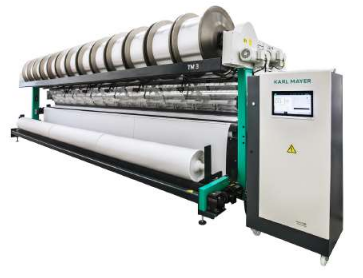
Karl Mayer Group—tricot machines (Hall 5 A301) They will present two new tricot machines—a next-generation 2-bar tricot machine for elastic fabrics, and a 4-bar tricot machine aimed at cost-sensitive markets. They will also emphasize their core strengths in warp knitting and warp preparation, including CASCADE steam/condensation systems and the WARPDIRECT warping machine. Their booth “WE WARP. WE KNIT. WE CARE.” will also promote his digital support tools, customer portal, after-sales services, and sustainability themes.
Uster Technologies—yarn testing and quality control systems (Hall 3 B301) Uster is expected to exhibit its latest yarn testing, monitoring and quality control systems, likely enhanced with real-time data analytics, AI/machine learning features. Their innovations might include inline sensors, defect detection, and automated feedback loops to upstream machinery. They will likely highlight integration with mill floor automation to reduce waste and ensure consistent quality.
Habasit—conveyor belts, technical textile belting systems (Hall 3 A114) Habasit is likely to display advanced conveyor belts, technical textile belting systems, web handling solutions, emphasizing durability, low friction, and energy efficiency. Their new products may include smart belt systems with sensors or monitoring capabilities. They may also showcase modular or upgradeable belt/drive systems for textile mills.
Jakob Müller—Inspection, winding, and web handling systems (Hall 2 A205a) Jakob Müller is expected to present its newest narrow fabrics, inspection, winding, and web handling systems, possibly with enhanced automation, modularity, and sustainability improvements. They may also highlight in-line defect detection/quality control integrated into winding/inspection lines. Their innovations may target reduction in machine stop times, better energy use, and flexibility for different fabric types. Loepfe Brothers—yarn clearing/quality sensors (Hall 4 A302c)
Loepfe Brothers—yarn clearing/quality sensors (Hall 4 A302c) Loepfe is anticipated to showcase improved yarn clearing/quality sensors, including perhaps next-generation optical/electronic sensor technologies with greater sensitivity and speed. Their systems may integrate smart analytics, feedback control, and remote monitoring. They may also show solutions to reduce false positives and enhance defect detection accuracy. 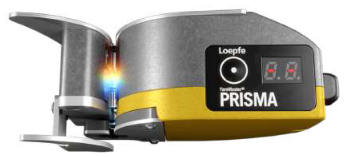
Benninger—yarn/fabric finishing & dyeing line technologies (Hall 8 B202) Benninger is to present updated yarn/fabric finishing & dyeing line technologies, focusing on energy savings, process control, and water reuse. Their new machines might include advanced continuous finishing lines, coating or padding systems, or modular retrofit solutions. They will also emphasize on improved control systems, consistency, and integration with digital mill management systems.
Important Note: ITMA ASIA app and the official exhibitor list/floor plan are the definitive sources for exact booth numbers and real-time changes—use them to map visits and book demos.
Sustainable Chemistry
Players and practical applications
Major chemical and dye suppliers used the show to frame their product portfolios around environmental impact metrics:
Low-resource dyeing is (less salt and alkali; improved fixation) for both reactive and pigment systems. These chemicals reduce effluent load and energy demands.
Auxiliaries for water-less printing: Binders and fixation systems that enable pigment inks to perform with shorter fixation cycles and lower wash-off volumes.
Biobased auxiliaries and enzymes: Substitute harsh chemicals in desizing, scouring and finishing, enabling milder process baths and easier wastewater management.
Audit & certification support: Several chemical suppliers provided tools to show compliance across ZDHC (Zero Discharge of Hazardous Chemicals) and other frameworks.
Brands and mills were actively evaluating chemical suppliers on two fronts: real performance (technical trials) and supply-chain traceability (documented provenance & compliance).
Nonwovens, Technical Textiles, and Industrial Applications
Nonwovens exhibitors focused on hydroentanglement, needle-punch and ATB technologies for hygiene, filtration and automotive markets. Trützschler Nonwovens (X-Series) and other suppliers showed carding and bonding systems targeted at biodegradable pulp blends and ultra-fine bicomponent processing for premium hygiene layers.
Services, Software, and Enabling Ecosystems
The trade show wasn’t only hardware: Software vendors (MES, PLM, color management, and lab automation) will demonstrate integrations with shop floor machines to enable data continuity, digital traceability, and e-commerce readiness. Factory Passport initiatives, digital verification and AI pattern engines were discussed as necessary infrastructure for circular and on-demand economies.
Conferences, Forums, and Knowledge Tracks
The central sustainability forum of CEMATEX half-day session will be addressed, focusing on E.U. policy alignment, circular business models, and financing for green transformation. Live demo schedules allowed delegates to visits so they could see machinery under production conditions—a valuable departure from static displays. The show’s educational content helped accelerate buyer confidence in higher-cost, lower-impact technology investments.
Practical Takeaways for Bangladesh Mills and Exporters
For RMG suppliers and mills in Bangladesh, the show offers concrete implications:
1. Prioritize modular automation—start with low-friction interventions (automated winding, can transport, vision quality systems) that reduce labor dependencies and error rates.
2. Invest in low-water finishing and digital printing—water-constrained regions benefit from zero/low-water digital printing and CO2 engraving for screen preparation.
3. Plan for circular feedstocks—collaborate with brands, recyclers and local collection systems to secure blended waste streams that newer recycling technologies can process at scale.
4. Use AI and sensors for quality first—small investments in vision and process AI can yield measurable savings in rejects and rework.
5. Follow regulatory & buyer trends—buyers increasingly require supplier environmental metrics; factory passports and digital ESG reporting tools are becoming procurement essentials.
Challenges Observed
Cost vs sustainability trade-off: Many sustainable technologies have higher CAPEX; Convincing price-sensitive buyers requires clear TCO models and financing options (leasing, supplier financing).
Feedstock quality for recyclers: Textile-to-textile recyclers need consistent sorted streams; collection & sorting infrastructure is a bottleneck.
Skills gap: AI and automation require new skillsets (data science, mechatronics) that not all mills have in-house. Upskilling programs and vendor training were commonly discussed.
Recommendations for Delegates and Procurement Teams
• Use the ITMA app to prebook live demos—live machine demos fill up fast; book early.
• Bring real fabric/yarn samples when talking to dye/finishing vendors—lab trials or at-show trials accelerate validation.
• Ask for TCO and sustainability KPIs—require vendors to provide energy, water and chemical metrics (per 1 kg fabric or meter) to compare solutions.
• Explore supplier finance or leasing models for high-capex sustainability lines.
• Plan pilot projects: choose one process (winding, pre-spinning, dyeing) to digitize and pilot metrics before full roll-out.
Conclusion ITMA Asia 2025’s legacy
ITMA ASIA + CITME 2025 in Singapore confirmed a clear direction for the textile industry: The next decade will be defined by the speed at which manufacturers adopt automation, digital decision systems and low-impact processes. The show’s compact, demo-driven format in Singapore facilitated rapid technical assessment and commercial conversations—an ideal environment for mills seeking low-risk adoption pathways. For export-oriented developing country suppliers, the messages were explicit: Invest where you see measurable gains (energy/water reduction, reduced rework, shortened lead times), and partner with suppliers who can offer integrated hardware + digital services and robust training.