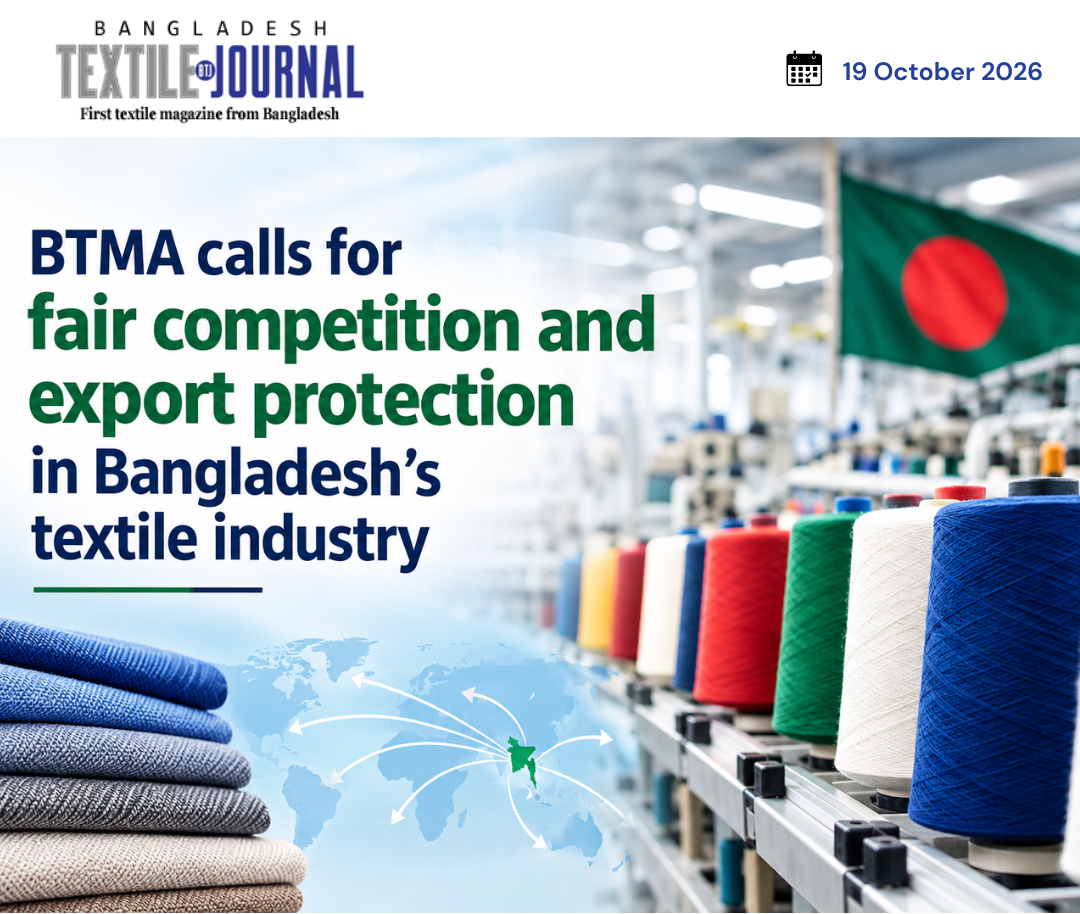
Bangladesh Textile Mills Association (BTMA) has called for a balanced policy framework to protect domestic spinning mills, ensure fair competition, safeguard employment and strengthen Bangladesh’s export competitiveness, while maintaining a reliable supply of raw materials for the textile and apparel industry.
In a press release issued on 18th October 2026, BTMA said that recent media reports concerning the withdrawal of bonded warehouse facilities for certain categories of cotton yarn imports had prompted concerns within the industry. The association urged policymakers to consider the interests of domestic textile manufacturers alongside the operational requirements of genuine exporters.
BTMA emphasised that the withdrawal of bonded warehouse facilities should not be interpreted as a ban on yarn imports or the introduction of new customs duties. Under the relevant arrangement, imports remain possible against bank guarantees equivalent to the applicable duties and taxes, rather than through the previous duty-free bonded facility.
The association said the policy should be implemented in a way that prevents the misuse of facilities, safeguards government revenue and ensures fair competition between locally produced and imported yarn.
Protecting domestic investment, production and employment
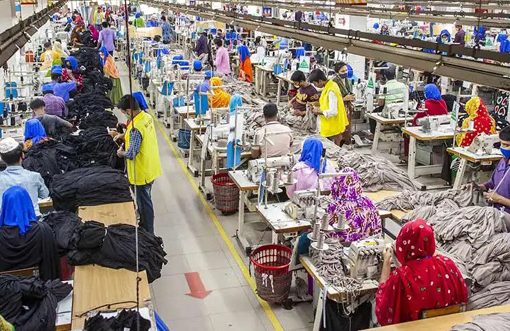
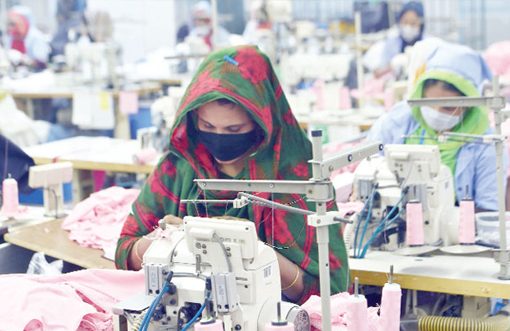
BTMA noted that Bangladesh’s spinning industry has made substantial investments in production capacity and contributes significantly to employment generation and the domestic textile supply chain.
According to the association, weakening the competitiveness of domestic spinning mills could affect not only yarn production but also the wider textile and apparel manufacturing ecosystem. Restoring the competitiveness of the sector would help preserve existing jobs while creating opportunities for additional employment. A stronger spinning industry could also support investment recovery, reduce financial pressure on manufacturers and contribute to the country’s long-term economic stability.
BTMA stressed that the issue should be viewed not merely as a question of yarn prices, but as one involving industrial investment, employment, financial stability and national economic interests.
Yarn pricing and cross-border relocation require comprehensive assessment
BTMA cautioned against decisions concerning yarn prices or the relocation of garment orders to competing countries based solely on differences in raw-material costs.
The association said that a comprehensive assessment should consider yarn quality, product specifications, processing costs, applicable duties and taxes, production efficiency, technology, supply-chain reliability and delivery schedules.
International buyers make sourcing decisions based on multiple factors, including price, quality, compliance, manufacturing capabilities and the reliability of suppliers. Therefore, differences in yarn prices alone should not be treated as the sole explanation for decisions to relocate orders.
BTMA called for evidence-based analysis before drawing conclusions about the competitiveness of Bangladesh’s textile and apparel industry.
BTMA seeks government consideration of two policy proposals
In its appeal to the Honourable Prime Minister and the relevant government authorities, BTMA proposed the following measures:
1. Maintain the current import arrangement for specified cotton yarn counts
BTMA requested that the existing policy concerning the withdrawal of bonded warehouse facilities for cotton yarn in the range of 10–30 count (Ne), remain in place, while retaining the bank-guarantee-based import facility for genuine exporters.
The association said the arrangement should help prevent the misuse of bonded warehouse facilities without unnecessarily restricting access to imported yarn for legitimate export-oriented production.
2. Establish a roadmap for domestic value addition
BTMA proposed a structured policy framework for cotton yarn imports by non-bonded factories, linked to bank guarantees and a requirement for 30% domestic value addition.
The association also called for consideration of World Trade Organization (WTO) provisions, Rules of Origin and applicable two-stage transformation requirements when developing policies for the post-Least Developed Country (LDC) graduation period.
It proposed a gradual policy roadmap aimed at achieving 40–60% domestic value addition in the post-LDC period, subject to the relevant trade rules and applicable conditions.
BTMA said such a framework could encourage greater use of locally produced yarn, strengthen domestic manufacturing capacity and support the long-term development of Bangladesh’s textile value chain.
Call for dialogue and a long-term industrial policy
BTMA urged the government to review its proposals through constructive consultation with relevant stakeholders, including textile manufacturers, exporters and other industry representatives.
The association called for a transparent and practical policy framework that balances domestic industrial development, export competitiveness, employment generation, revenue protection and compliance with international trade rules.
BTMA concluded that domestic spinning mills and garment manufacturers are complementary parts of Bangladesh’s textile value chain. Strengthening the competitiveness of both sectors through coordinated policymaking, it said, could support sustainable industrial growth, employment and export development.