Vietnam’s economy is set to maintain strong momentum through the end of 2025, with gross domestic product (GDP) projected to expand by 7.2 % in the fourth quarter, bringing full-year growth to around 7.7%, according to United Overseas Bank (UOB). The bank noted, however, that growth is likely to moderate toward year-end due to a high base effect and lingering uncertainty surrounding global tariff policies.
UOB expects Vietnam to remain one of the fastest-growing economies in ASEAN in 2025, underpinned by a resilient manufacturing sector, robust export performance, recovering domestic consumption and sustained public investment. Supply-chain realignments linked to ongoing US–China trade tensions have continued to favour Vietnam, with the United States now accounting for roughly 30 % of the country’s total exports.
Despite the strong growth outlook, UOB flagged potential pressures on the Vietnamese dong. The bank projects the USD–VND exchange rate to weaken to around 26,300 in the first quarter of 2026, before gradually strengthening to about 25,900 by the end of the year. The currency is expected to underperform some regional peers amid external uncertainties and capital flow dynamics.
Suan Teck Kin, Executive Director of Global Economics and Markets Research at UOB, said Vietnam’s impressive performance in 2025 reflects its expanding manufacturing base and export competitiveness. However, he cautioned that the economy’s heavy reliance on exports also increases vulnerability to a potential global slowdown, particularly if demand from the United States weakens. He added that rising wages, if not matched by productivity gains, could erode competitiveness over time, highlighting the importance of continued investment in infrastructure, skills development and export market diversification in 2026.
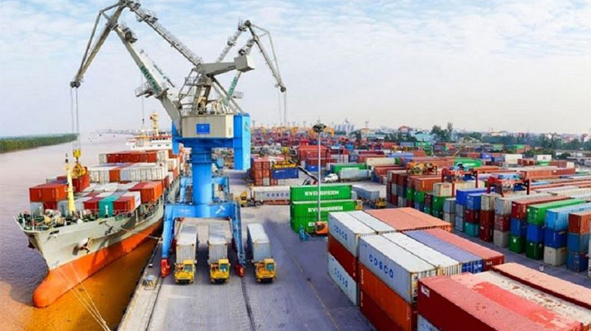
Trade data underline the strength of Vietnam’s external sector. Exports rose 16.8 % year on year during January–October 2025, extending the strong growth seen in the previous year. Shipments to the United States surged 28.1 %, supported by the reduction of reciprocal tariffs to a global base rate of 10 %, which encouraged buyers to bring forward orders.
At the same time, Vietnam’s trade surplus narrowed to US$18.7 billion by October, down from US$22.4 billion in 2024, as imports of raw materials and intermediate goods increased to support export-oriented manufacturing. Manufacturing output climbed 10.8 % in the first nine months of 2025, compared with 9.4 % a year earlier, while four consecutive Purchasing Managers’ Index (PMI) readings above the 50 mark signalled sustained expansion in industrial activity.
Overall, UOB expects Vietnam to enter 2026 with solid economic fundamentals, though policymakers and businesses will need to navigate external demand risks, currency pressures and competitiveness challenges in a more uncertain global trade environment.