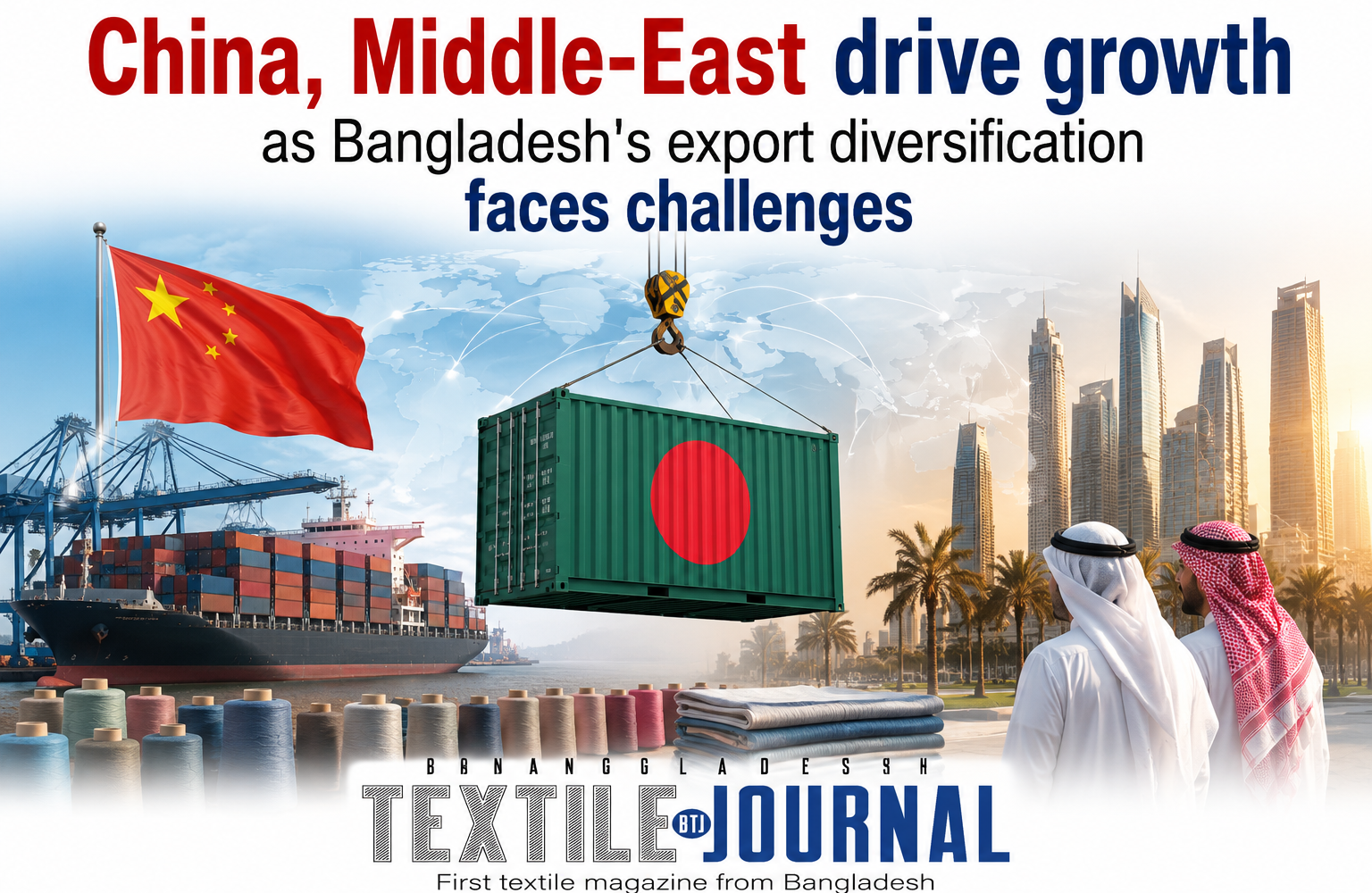
Bangladesh’s export diversification efforts delivered mixed results during the July–May period of FY2025-26, with strong growth in China and several Middle Eastern markets offset by declining shipments to key non-traditional destinations such as India, Australia, Turkey and Russia.
According to Export Promotion Bureau (EPB) data, exports to China rose 15.76% year-on-year to $742.5 million, driven by garments, jute products, leather goods and footwear. Saudi Arabia, the UAE, Malaysia and Brazil also recorded positive growth, reflecting expanding opportunities across Asia, the Middle East and Latin America.
However, exports to India—the largest non-traditional market—fell 3.44% to $1.61 billion. Shipments to Australia declined 8.62%, while exports to Turkey dropped 11.63%. Exports to Russia also weakened amid ongoing geopolitical uncertainties.
The trend was mirrored in the apparel sector, where garment exports to non-traditional markets declined 5.95% to $5.68 billion. Overall ready-made garment exports fell 3.41% to $35.31 billion during the period.
Industry leaders say Bangladesh must accelerate market and product diversification ahead of its graduation from least developed country (LDC) status. While China has shown promising diversification beyond garments into leather, footwear and jute products, many other markets remain heavily dependent on traditional export items.
Exporters have urged stronger trade diplomacy, improved market access and the conclusion of more trade agreements to reduce dependence on traditional markets and sustain export growth in the post-LDC era.