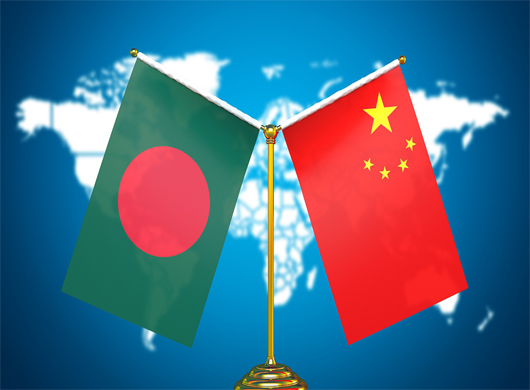
Bangladesh is expecting a significant boost in Chinese investment following Prime Minister Tarique Rahman’s official visit to China from 23–26 June, according to the Bangladesh Investment Development Authority (BIDA).
BIDA currently has around $400 million worth of potential Chinese investments in its pipeline and expects the figure to grow as a result of high-level engagements during the visit. A major investment conference is scheduled in Beijing, where Bangladesh will showcase opportunities in key sectors including electronics, semiconductors, electric vehicle batteries, advanced textiles, logistics, medical devices, and IT-enabled services.
Several bilateral meetings between the prime minister and leading Chinese companies are also expected to take place during the visit.
Nahian Rahman Rochi, Executive Member and Head of Business Development at BIDA, said Chinese investment has the potential to become one of Bangladesh’s largest sources of foreign direct investment in the coming years. He noted that investment prospects are expanding around strategic initiatives such as the Chinese Economic Zone, creating opportunities for both countries.
According to BIDA, nearly 70 companies from 20 countries are currently included in its investment pipeline, which was established in 2025 and now contains proposals worth approximately $1.5 billion. The agency aims to double the pipeline to $3 billion by the end of 2026.
Meanwhile, progress on the government-to-government Chinese Economic and Industrial Zone in Anwara, Chattogram, is expected to be a key agenda item during the visit. Discussions may also advance plans for a second Chinese economic zone in Mongla and the establishment of a Bida representative office in China.
China has remained one of Bangladesh’s leading sources of foreign investment in recent years. According to Bangladesh Bank data, net FDI inflows into Bangladesh rose 39.36% year-on-year to $1.77 billion in 2025, with China ranking as the country’s second-largest source of foreign investment after the Netherlands.