

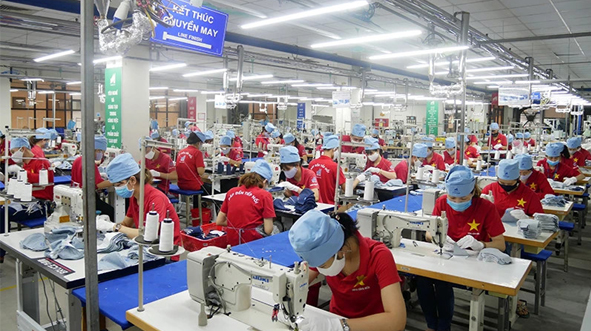
Vietnam’s textile and garment industry is heading for a record-breaking year in 2025, targeting exports of US$47–48 billion on the back of strong orders, expanded market reach, and upgraded production models.
From January to July 2025, Vietnam exported US$26.33 billion, a 9% rise year-on-year. Exports must average over US$4 billion per month in the remaining months to reach the ambitious annual target — a goal industry leaders consider achievable.
According to the Vietnam Textile and Apparel Association (VITAS), the country now exports to 132 markets, up from 104 in 2024, including high-quality garment shipments to China, Russia, CIS, and ASEAN. Vietnamese companies are also investing overseas in Mexico, Myanmar, India, and Egypt, strengthening their role in global supply chains.
Key growth drivers include:
· Leveraging 17 new-generation free trade agreements (FTAs).
· Transitioning from traditional cut-make-trim (CMT) to higher-value models such as FOB, ODM, and OBM.
· Prioritizing green and sustainable production to comply with EU and other major markets’ strict environmental standards.
· Accelerating digital transformation and R&D integration to boost productivity and innovation.
Recommendations for Bangladesh RMG Exporter
Industry experts note that Vietnam’s trajectory offers critical lessons for Bangladesh as it prepares for LDC graduation and seeks to diversify its export base:
1. Expand Market Reach: Bangladesh should move beyond reliance on the US and EU, exploring emerging markets in ASEAN, Africa, and the CIS.
2. Maximize FTAs and Trade Partnerships: Proactively pursue new trade agreements and optimize existing preferential access to remain competitive post-2026.
3. Shift to Higher-Value Models: Encourage exporters to move from basic CMT contracts to FOB, ODM, and OBM, capturing greater value in design, branding, and distribution.
4. Invest in Green Production: Adopt sustainable practices, renewable energy, and circular economy models to meet growing buyer demand for eco-compliance.
5. Encourage Overseas Investments: Like Vietnam, Bangladesh can explore strategic overseas ventures (logistics hubs, joint ventures, or backward linkages) to strengthen global positioning.
6. Digital & Supply Chain Resilience: Improve digitalization, traceability, and supply chain integration to withstand disruptions and meet new compliance norms.
With Vietnam setting an aggressive export benchmark, Bangladesh’s RMG sector must move quickly to enhance value addition, sustainability, and global diversification in order to safeguard its status as the world’s second-largest apparel exporter.








Comment here