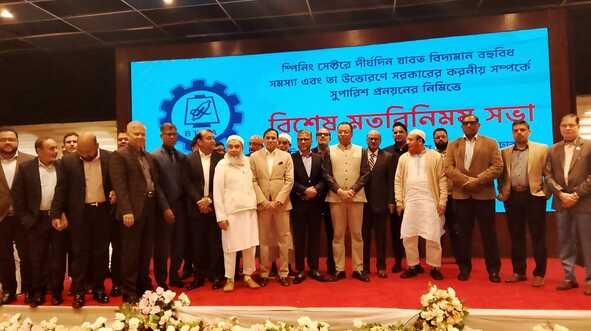
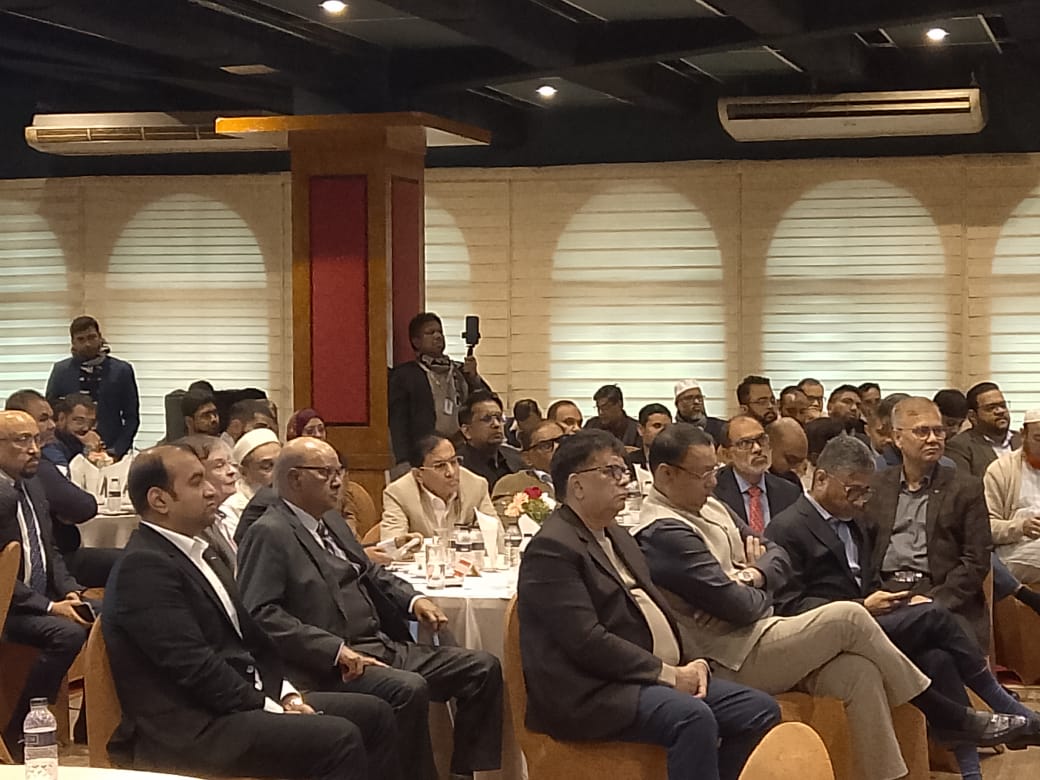
Bangladesh’s spinning sector is facing a severe crisis, with at least 50 textile mills already shut down amid mounting economic, political and policy challenges, Bangladesh Textile Mills Association (BTMA) President Shawkat Aziz Russell said today in an ‘Exchange of views’ meet up in Gulshan Club, Dhaka.

Speaking at a stakeholder dialogue organised by BTMA at Gulshan Club, Russell warned that the situation could worsen further unless the government takes urgent policy decisions within the next 72 hours to protect the spinning industry.
He said aggressive dumping of Indian yarn at prices around 30% lower than local production costs has crippled domestic mills, leading to widespread closures and the loss of nearly 200,000 jobs. Yarn imports from India have surged by 137% over the past 15–20 months, while no effective policy response has been seen, he added.
Mr. Russell disclosed that one of his own cotton spinning mills has already closed, and expressed concern that more shutdowns may follow. “Closing a mill is not easy. Bank liabilities must be settled first. If this continues, Bangladesh may soon see a BTMA president without any textile factory,” he said.
According to BTMA, the closed mills represent investments ranging from Tk 500 crore to Tk 700 crore, and restarting them would be extremely difficult once operations cease.
The meeting, titled “Existing Problems in the Spinning Sector and Policy Recommendations for Recovery,” was convened to formulate urgent proposals for government intervention. Russell noted that while countries like India can introduce policy support within hours, Bangladesh often takes years to respond, pushing local industries to the brink.
BTMA reiterated its demand for immediate policy support within 72 hours to prevent further closures and safeguard the country’s primary textile base, which supplies raw materials to the export-oriented apparel sector.