Bangladesh’s newly signed Economic Partnership Agreement (EPA) with Japan is expected to result in an annual revenue loss of less than Tk 20 crore from reduced import duties on Japanese goods, while opening up major opportunities for export growth, employment, and long-term market access to the world’s fifth-largest economy.
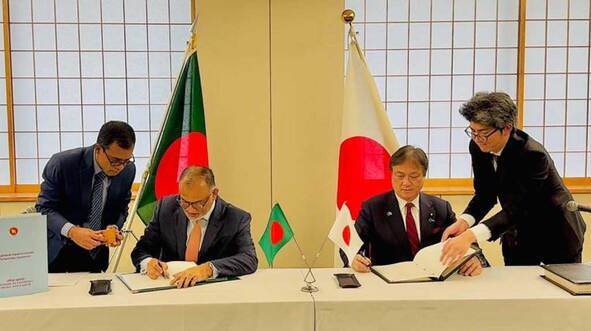
The agreement was signed on February 6 in Tokyo and creates a highly asymmetric trade framework that strongly favors Bangladesh, according to Commerce Adviser Sk. Bashir Uddin. He shared details of the deal during a briefing at the Ministry of Commerce in Dhaka on Sunday.
Under the EPA, Japan will immediately grant duty-free access to 7,379 Bangladeshi products, while Bangladesh will extend similar benefits to only 1,039 Japanese items. The number of Japanese products eligible for duty-free treatment will be expanded gradually over an 18-year transition period.
The readymade garment (RMG) sector, Bangladesh’s largest export industry, is expected to be a major beneficiary. Commerce Secretary Mahbubur Rahman said the agreement allows single-stage transformation, enabling Bangladeshi exporters to enjoy zero-duty access to Japan even when garments are produced using imported fabrics.
This provision addresses a long-standing bottleneck for exporters, as Bangladesh continues to depend on imported textiles due to limited domestic fabric production capacity. Bangladesh has also secured special flexibilities as a least developed country (LDC). One key concession is a 10-year relaxation on intellectual property rights, under which Japan will not enforce patent rights on goods during the first decade after the EPA comes into effect.
Beyond merchandise trade, the EPA opens new avenues for labor mobility. The agreement facilitates access for Bangladeshi professionals—including doctors, nurses, caregivers, and domestic workers—to Japan’s labor market, which is facing acute shortages due to its ageing population.
Commerce Adviser Bashir Uddin said Japanese investors have already begun establishing Japanese language training centers in Bangladesh to prepare workers for employment opportunities. He expressed optimism that students and skilled professionals would increasingly find pathways to work in Japan, potentially creating a new source of foreign remittances.
In services trade, Bangladesh gained access to 120 Japanese sub-sectors, while offering Japanese investors entry into 98 sub-sectors across 12 service categories—again reflecting a favorable balance for Bangladesh.
The timing of the EPA is particularly significant as Bangladesh is set to graduate from LDC status later this year, a transition that typically leads to the loss of preferential market access. Although Japan has separately extended existing LDC trade benefits for Bangladeshi goods until 2029, the EPA establishes a more durable and rules-based framework for long-term access.
This marks Bangladesh’s first comprehensive bilateral trade agreement with a major developed economy, following a limited preferential trade agreement with Bhutan in December 2020. The government is currently pursuing similar arrangements with other key trading partners to safeguard export competitiveness in the post-LDC era.
The agreement now awaits ratification by Japan’s parliament, the Diet, which is expected shortly following Japan’s general election held on February 8. Seven rounds of negotiations were conducted before finalizing the deal. The EPA was signed by State Minister for Foreign Affairs of Japan Horii Iwao on behalf of Japan and Commerce Adviser Sk. Bashir Uddin representing Bangladesh.
Photo Courtesy by : bdnews24