

 Cotton production is both a contributor to and a ‘victim’ of climate change. Climate change will have both positive and negative effects on cotton. Higher levels of CO2 may increase yield in well-watered crops, and rising temperatures will extend the length of growing season (especially in current short season). However, higher temperatures may result in significant fruit loss, lower yields and increased water requirements (Bangeet al., 2009).
StoryAny declining availability of water resources as a result of climate change will increase competition for these resources between irrigated cotton production, other crops and environmental uses. Region-specific effects will need to be assessed thoroughly,especially those related to rainfall.
Focuses on the actions and investments needed today to unlock short term gains, such as jobs and economic growth, as well as deliver the longer-term benefits of resilience, De-carbonization, cleaner air and water, healthier oceans, and more sustainable food and agriculture systems. “The big challenge is how do we build back greener and build back better in a new environment as we come out of the recovery,” said World Bank Group President David Mal pass in his opening remarks. “People need to make the right investments now.”(World Bank-A Sustainable Recovery for People and Planet; October 14th, 2020).
Cotton covers about 2.5% of the world’s arable lands (Cotton Incorporated, 2009), and would thus be related to a rough estimate of 0.1% to 0.3% of global GHG emissions. It is therefore not a principal source of GHG emissions. Yet cotton can contribute to mitigating climate change, in particular by increasing efficiency and reducing emissions from the more efficient use of carbon-based fuels and inputs made there with (irrigation water, fertilizers, pesticides, etc and adoption of low input and organic practices).
GHG emissions per unit of cotton lint vary greatly with both location (e.g. climate,rainfall patterns, soil type) and production system (e.g. level of mechanization, use of irrigation water, fertilizer choice and management) (IPCC, 2007;Grace et al., 2010).Carbon Trust (2011) estimated that global cotton production up to ginning generates global emissions of 220 Mt CO2 e, accounting for 3.6–4.3% of GHG emissions from agriculture or 0.4% of overall global emissions.
Agricultural (including crops, livestock, fisheries and forestry sector) production,processing, trade and consumption contribute up to 40% of the world’s emission. Cotton production contributes to between 0.3% and 1% of total global GHG emissions. Production, particularly in the tropical regions of the world, looks set to suffer under predicted rising temperatures, decreased soil moisture and more extreme weather events and flooding.
The impact of cotton production and consumption on climate change and the options and incentives for reducing emissions. It also examines the impact of climate change on cotton production and the options for adaptation.
Agriculture is extremely vulnerable to climate change. Higher temperatures eventually reduce yields of desirable crops while encouraging weed and pest proliferation. Changes in precipitation patterns increase the likelihood of short-run crop failures and long-run production declines. Although there will be gains in some crops in some regions of the world, the overall impacts of climate change on agriculture are expected to be negative, threatening global food security (IFPRI, 2009).
Climate change will affect cotton production as a result of higher concentrations of CO2 and increases in temperature. Both these changes will set off a series of other actions that will have direct and indirect impacts on cotton production, for example through water availability and the incidence of cotton pests and diseases. Following is an inventory of how serious these actions and impacts may be for cotton as a crop.
THE AGRONOMY OF COTTON
Cotton is a perennial plant by nature, but has long been grown as an annual crop. Varieties grown commercially today belong to four species of Gossypium. Gossypium hirsutum, or Upland cotton, produces the bulk of cotton worldwide. G. barbadense comes in second. It is associated with high staple length. Cotton is grown mainly in the longitudinal band between 37°N and 32°S; yet cultivation has been extended to 45°N in China (Chaudhry & Guitchounts, 2003).
Cotton needs favorable growing conditions with respect to temperature, sunshine and soil moisture. A marked dry season is also essential for the bolls to open properly and for harvesting.
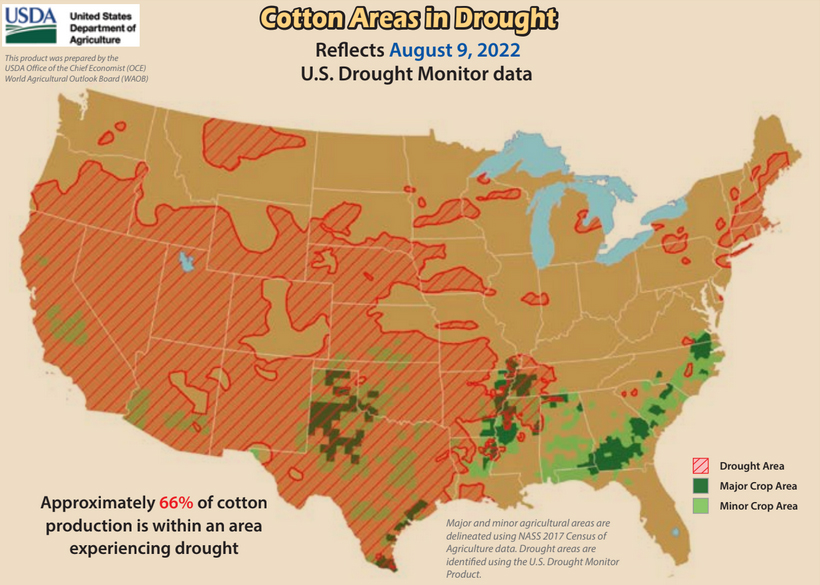
The cotton plant, once established, rapidly develops a vertical tap root that provides resilience against drought during the growing season. The vertical tap root gives the plant access to lower soil layers and nutrients than cereal crops such as rice, maize, pulse or other field crops can access. This makes cotton a particularly useful plant in crop rotations. However, the vertical tap root makes cotton sensitive to stress from water logging after floods or heavy rains. Cotton requires a total of 105 to 125 days of sufficient soil moisture to grow. In tropical regions, 2 to 4 mm of water are needed daily at the beginning and the end of the growing period, while at the height of flowering 5 to 7 mm are required daily according to climatic zone. Thus 500 to 700 mm of water are sufficient for the crop to grow fully. Rain-fed cotton, however, can in practice only be grown in regions where average annual rainfall is 700 mm or more, since inter-annual and intra-annual rainfall variability,and the amount of resulting run-off, have to be taken into account (Sément, 1988). Cotton exhibits a certain degree of tolerance to salt and drought and it is therefore grown in arid and semi-arid regions. However, higher and consistent yield and fiber quality levels are generally obtained with irrigation or sufficient rainfall.
Cotton is resilient to sub-optimal growing conditions. Cotton responds to loss of vegetation or fruiting parts (buds, flowers, bolls) through so-called ‘compensatory growth’. If a flower bud, flower or boll is shed, the cotton plant quickly tries to compensate that loss hrough the production of more flower buds or even retaining buds that would otherwise have been shed (Chaudhry & Guitchounts, 2003).
IMPACT OF SPECIFIC CLIMATIC CHANGES
Cotton plants respond to changing environments. The response depends on the stage of development the plant exists in that stress period. Key stages in cotton plant development are: a) conditions at the time of planting; b) plant development in early season; c) flowering, d) boll formation and e) conditions towards the end of the season.
TEMPERATURE
Climate change is leading to a rise in average temperatures, changes in the water cycle and precipitation.
patterns, and to an increase of some extreme weather events. Depending on the region, higher temperatures may for example lead to a longer growing season and more rainfall or to lower rainfall and a shorter growing season. Extreme weather events may affect the plants anytime of the season, and are by definition hard to predict.
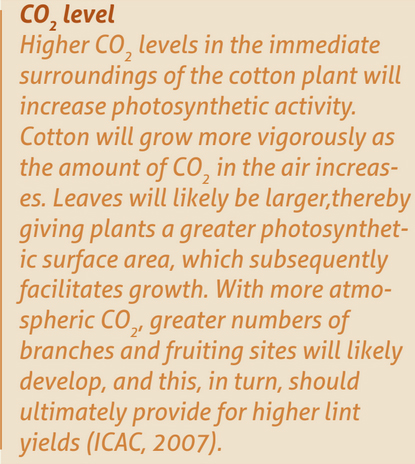 Higher temperatures could affect different regions in different ways. Low soil temperatures at planting time hamper timely planting of cotton in many countries. Rising temperatures will benefit those countries and regions as they will be able to plant cotton much earlier than they do right now. Conversely, higher temperatures in cotton producing areas and regions already suffering from high temperatures could have a negative impact as a result of increased shedding of flower buds. The rise in temperature could have a positive effect on yields, though, in those areas and regions where the effective fruiting period is squeezed between two phases of lower temperatures: one early in the season to start effective flowering and boll formation and one at maturity that results in termination of fruit formation. Boll retention is more sensitive to high temperatures than any other condition, except for nutrient deficiency, which is relatively easy to correct. While it is not possible to avoid the effects of high temperatures, this condition can produce bud shedding, which is the most common reason for loss of fruit forms (Reddy et al., 1999). Reddy et al. (1999) also observed that temperature regimes alter boll development: boll size and the maturation period both decreased as the temperature increased.
Reddy et al. (2000; cited in ICAC, 2007) determined that boll growth decreases significantly and fruit is shed 3–5 days after blossom in temperatures over 32o C. Thus, the upper limit of cotton for blossom and fruit period is 32o C. However, referring to the monthly average maximum temperature, ICAC (2009)stresses that cotton production is currently viable also in hotter environments. Cotton is successfully grown at 28.2o C in China and 37.6o C in India, 36.8o C in Pakistan and 41.8o C in Sudan. It has not been established that 41.8o C is the upper limit, but experience in many countries, particularly in India, Pakistan and the Syrian Arab Republic, has shown that heat stress is a big constraint to increasing yields. These countries successfully developed heat tolerant varieties during the 1970s and 1980s.
There are opportunities to produce cotton at slightly higher temperatures than current averages. If global warming continues,some countries could experience a positive impact on yields as a result of a rise in temperatures of only a few degrees Celsius. Conversely, regions that are already producing cotton at close to 40o C would seem to be at a disadvantage. They already have longer growing seasons and any rise in temperature could induce sterility and inhibit boll formation. Breeding in these countries will have to focus on heat tolerance (ICAC, 2009).
Rising temperatures will not only have a complex effect on plant growth and yield, depending on the site, but
also on fiber characteristics. Literature reveals that increased temperatures could result in higher micronaire values (fineness and maturity of fiber), stronger fiber and more mature fibers. While higher micronaire values are not a desirable characteristic when they are already close to the upper limit, they could have a desirable effect in areas characterized by low-micronaire and low-maturity cotton (ICAC, 2007).
However, increased photosynthesis will first foster vegetative growth. Vegetative growth may translate into an increase in fiber yield but reproductive growth is not automatic. Also, the impact of atmospheric CO2 on growth is conditioned by temperature. According to Reddy et al. (1998), at temperatures greater than 30o C most of the fruit was aborted regardless of CO2 concentration (ICAC, 2007).
Higher levels of photosynthesis expressed in the form of greater growth may lead to an increased demand for inputs, including water and soil nutrients, particularly if the balance is inclined towards vegetative growth. Especially in marginal production areas where water is not available in sufficient quantities, the result could then be quite negative (ICAC, 2007).
Another impact of higher atmospheric CO2 is that weeds will be growing more vigorously as well. When cotton is in the seedling stage, competition with weeds is critical. In spite of the fact that cotton planting and development will start earlier as temperatures rise, the same development will be observed in weeds. The critical period in the development of cotton and weeds will coincide. Unlike cotton, which is a C3 plant (a classification describing how it fixes carbon; in the right conditions, these plants let in more carbon dioxide, but carbon losses through photo respiration are high), most weeds are C4 plants and will show less reaction to CO2 (C4 plants let in even more carbon dioxide than C3 plants, and this reduces, and sometimes eliminates, carbon losses by photo respiration). That is why cotton can compete with weeds more effectively under conditions where there is enough water and nutrition (Kaynak, 2007).
Yet, climate change will affect the entire cotton-weed relationship. Climatic change will likely be more beneficial to weeds due to the fact that genetic variations and selective ecological adaptations are more developed in weeds than in cultural plants (Grenz and Uludag, 2006). Some weed species may already exist in cotton areas but not yet be considered important species. Weed species carrying tropical characteristics can benefit from increasing temperatures and may turn into dangerous species (Kaynak,2007). Weed control will then become more critical to achieving optimal cotton plant development and yield.
Furthermore, increases in atmospheric CO2 will decrease the nutritional value of leaves for pests due to an increasing ratio of carbon to nitrogen in plant tissues. That is why increasing CO2 levels and temperature fluctuations were assumed to affect pest population (Conroy, 1992). Global warming will have some inevitable effects on pests because of the fact that pests can better adapt their body temperatures to their environment. Several studies have exhibited that global warming will influence the pest’s metabolism and increase their population rate, spreading to the cooler terrains in the North and South, and resulting in the existence of different plant variations and novel species. An increase in pest pressure is expected (Karl etal., 2009).
Pest control would therefore become more critical in achieving optimal growth and yield. Furthermore, atmospheric CO2 levels and higher temperatures may also have an impact on the effectiveness of certain pest management tools currently in use, such as certain seed varieties or insecticides. Wu et al. (2007) report that genetically modified Bacillus thuringiensis (Bt) cotton shows less Bt toxin after exposure to elevated CO2 , which might affect plant-bollworm interactions. Karl et al. (2009) state that higher temperatures, reduce the effectiveness of certain classes of pesticides (pyrethroids and spinosad).
The Central Institute for Cotton Research (CICR) found that selected conventional cotton varieties/hybrid sare well adapted to elevated CO2 levels alone – due to better morpho-physiological and biochemical attributes. The productivity of cotton in terms of total number of bolls and weight increased significantly(73%). Fibre quality also improved significantly. Elevated CO2 levels in the atmosphere of up to 650 ppm and temperature of 40o C was found to be optimum for cotton plant growth. It thus appears that cotton will benefit from the changed atmospheric scenario during the later part of the 21st century, yet studies indicate that the pest problem will be aggravated. By and large, though, research in India indicates that the impact of climate change on cotton production and productivity will be favorable (Kranthi, 2009).
WATER AVAILABILITY
Plants need adequate water to grow and to maintain their temperature within an optimal range. Without water for cooling, plants may suffer heat stress. In many regions, irrigation water is used to maintain adequate growing and temperature conditions for cotton. The amount and timing of water availability during the growing season, through precipitation or irrigation, are critical for cotton. If water supply variability increases, it will affect plant growth and cause reduced yields (Karl et al., 2009).
Irrigation is also a vital importance to current cotton production. Cotton surface that is dedicated to irrigation is already high; about 53% of the total area (So the tal.,1999; cited in Chapagainet al., 2005). However, yields for irrigated cotton are much higher (3,000–4,000 kg of seed cotton/ha) than in rain-fed cotton (1,000–2,000 kg of seed cotton/ha). Therefore, no less than 73% of all cotton fiber worldwide has actually been grown under some conditions of irrigation (full or supplementary irrigation).
With increasing demand and competition for freshwater supplies, water availability may in many countries become an important factor limiting cotton production. Globally, agriculture is by far the heaviest user of fresh water, primarily for irrigation, with about 70% of the total. The sheer size of agricultural water use for irrigation implies that any pressure on freshwater resources from other sectors of society will translate immediately into pressure on agriculture to cut down its current water footprint.
Cotton’s share of the global agricultural water footprint is estimated at 3% (Hoekstra and Chapaga in,2007).
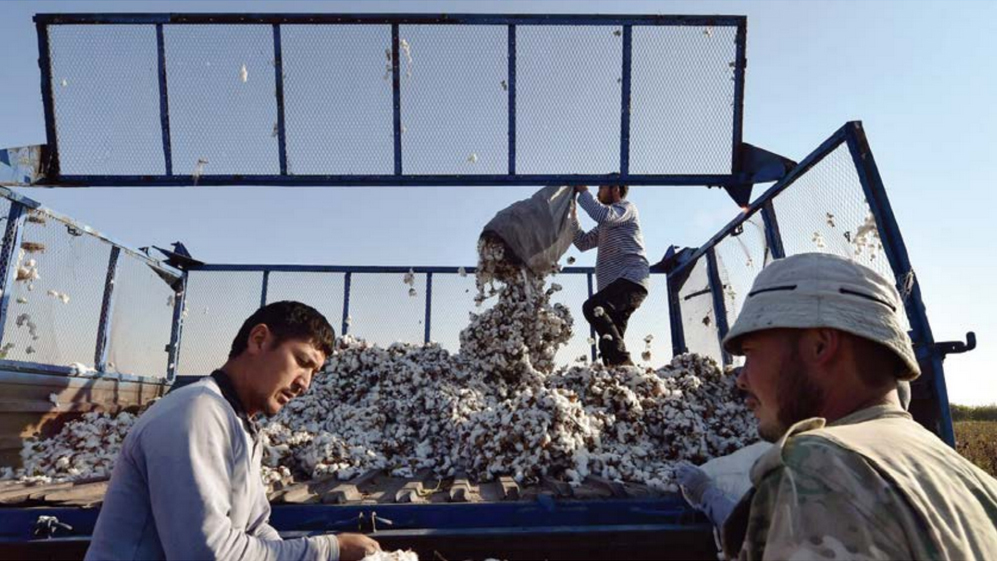
This is proportionate to cotton’s global land use footprint of 2.5% (Cotton Incorporated, 2009) but will of course be very pronounced in large irrigated production areas. Cotton affects freshwater both quantitatively and qualitatively, through fertilizers and pesticides in effluents, and it also plays a significant role in soil degradation through a rising water table and salt build up in surface soils (WWF, 2005). Where demographic pressure is high and land resources are limited, such as in China and in many parts of India, competition from food crops for land and water will further impact on the scale and the regional distribution of cotton production.
PESTS AND DISEASES
Insects are a recognized threat to cotton production throughout the world. Most insects can adapt their body temperature to the temperature of the environment. The effect of global warming on living organisms is slow enough for cotton insects to adjust to rising temperatures and other changes accruing from global warming. Thus, the insects currently plaguing cotton are expected to continue to be live and possibly thrive in new environmental conditions (ICAC, 2007).
Many fear that global warming will affect insects’ metabolism, allowing them to increase their multiplication rate. Rising temperatures will open new areas for colonization by insects and more of them will spread to newer areas. Increases in the populations of currently important insects, such as boll-worms, may also take place as a result of higher multiplication rates, along with the elimination of the need to go into diapauses during winter to avoid colder temperatures. The effects could be further amplified under conditions where alternate host plants are already available for wintering (ICAC, 2007).
Global warming could also impact disease control in three ways: through its effect on pathogens; by creating disease-propitiating environments; and by affecting host tissues. It is feared that a rise in temperature will affect some disease control methods as a result of changes in the pathogen emergence time. Chemical control methods may also become less effective due to the possibility of faster decomposition of chemicals under higher temperatures. According to Chakraborty et al. (2002), higher CO2 levels will increase the severity of diseases, induce fungal growth and spore formation, and will destroy more plant tissue. In general, the disease problem will become more important (ICAC, 2007).
ADAPTATION-OPTIONS TO COPE WITH CLIMATE CHANGE
Forecasting climate change and its impacts, and thus the adaptation needs of farmers, is site-specific and associated with high levels of uncertainty. The limited studies available on climate change adaptation for cotton production system syndicate that in comparatively cooler cotton-growing areas, an increase in average daily temperatures will enhance crop growth (node development, rate of fruit production, photosynthesis and respiration), while the rising number of warm days per growing season will decrease crop losses due to frosts and also improve crop maturity. In warmer agro-ecological conditions – for example, as found in African production systems – temperature increase is not expected to have positive impacts on yield. Elevated atmospheric CO2 concentration, on the other hand, is likely to be appreciated by cotton as a C3 plant through increased photo synthesis and water use efficiency, provided there is sufficient availability of other crop needs (Oosterhuis, 2013; Reddy et al., 2007).
The main negative effects forecast are: increased frequency of severe high temperatures, changes in the amount and pattern of precipitation, frequency of droughts and floods, and changed conditions for pests. Increased heat stress causes reduced photosynthesis (Bibi et al., 2008), smaller boll size and slower maturation (Reddy et al., 1997), in creased shedding of flower buds and reduced boll retention. Shifting and erratic rainfall patterns increase the risk of low germination rates and associated crop failure in rainfed cotton production systems, and reduce the reliability of water in-flows to irrigation water storages. Reduced total precipitation diminishes yields, especially when below 700 mm of annual precipitation or a total of 105 days of sufficient soil moisture in tropical conditions (Ton, 2012). Gwimbi and Mundoga (2010) and Hulme (1996) argue that water needs will further increase to compensate for the loss of soil moisture from elevated evaporation rates. Higher temperatures may extend the favorable range for pests and increase their population growth rates (ITC, 2011).
At the production level, the cotton plant’s genetic makeup allows it to make limited adjustments to changes in climatic conditions (ICAC, 2007). Following stress, cotton responds to the loss of vegetation or fruiting parts (buds, flowers, bolls) through ‘compensatory growth’. Cotton’s vertical tap root provides resilience against spells of drought, but also makes it vulnerable to water-logging. Irrigation allows half of today’s cotton acreage (and three-quarters of production) to take place in are as where cotton could not normally be productively sustained.
This makes cotton particularly vulnerable to the availability of freshwater or groundwater for irrigation.
The following potential adaptation measures have been identified:
• Stop any unnecessary loss of nutrients for the farming system, preventing soil erosion and abandoning the burning of cotton crop residues where still applied.
• Favor a cropland design that has plant diversity and that favors soil fertility management; for example, through the inclusion of cover crops or perennials.
• Adjust sowing dates to offset moisture stress during the warm period, to prevent pest outbreaks, and to make best use of the length of the growing season.
• Minimize the period that land lays bare, in order to slow down loss of organic matter and soil moisture, and soil erosion in general.
• Minimize soil tillage in order to prevent loss of soil organic matter – a natural source of soil fertility and a means of storing water for plant uptake.
• Breed cotton varieties that are more resistant to heat stress, drought spells, weeds, pests and diseases, etc Besides these a number of adaptation strategies include:
• For better plant population enhancing seedling Transplanting
• Maximizing plant diversity;
• Flexibility of sowing dates;
• Maintaining soil cover;
• Minimizing soil tillage;
• Breeding more resistant cotton varieties.
As climate change alters the economics of production, rural cotton farming communities will have to formulate different adaptation strategies including planting different crops and seeking alternative non farm in come streams. This entails complex and resource intensive responses from government and international aid flows.
MITIGATIONS-OPTIONS TO REDUCING GHG GAS EMISSION
The main sources of GHG emissions and carbon sequestration offsets relevant to cotton production at farm level are:
• Direct emissions of N2O from soils due to denitrification of N-fertilizer and organic nitrogen sources;
• Direct emissions of CO2 from the combustion of fossil fuels for agricultural machinery (including irrigation facilities);
• Indirect emissions of CO2 created by production, packaging, storage and transport of fertilizers, herbicides, fossil fuels and other inputs;
• Direct emissions from residue burning; and
• Sequestration and preservation of carbon in soil through the incorporation of organic manure, compost and crop residues and the application of beneficial soil management practices (reduced tillage, crop rotation etc.). On a field level, the following mitigation measures can be identified in order to increase cotton crop efficiency in terms of yield per unit of GHG emitted:
• Minimize soil tillage on cotton cropland in order to prevent soil to air emissions;
• Minimize carbon-based fuel mechanization and transport;
• Minimize the use of synthetic fertilizers in general and nitrogen fertilizers in particular, because these are an important source of N2O emissions;
• Minimize the use of irrigation water, because of its carbon-based fuel footprint, and reduce competition for fresh water for man and nature;
• Minimize the use of industrial preparations such as pesticides, herbicides and defoliants because of their carbon fuel footprint;
• Minimize the burning of cotton crop residues where still applied, and recycle these for soil fertility management when not used as a fuel for cooking and heating;
• Adopt where feasible organic farming practices.
ak.zaman64@gmail.com
Bibliography:
Abdullaev, I., M. Giordano and A. Rasulov (2007). Cotton in Uzbekistan: Water and Welfare. In: Kandyoti(ed.) (2007). The cotton sector in Central Asia, pp. 112–128. School of African and Asian Studies (SOAS).University of London. Agricultural Carbon Market Working Group (2010). Australia (2008). Australia statement. In: ICAC (2008). Statement to the 67th ICAC Plenary Meeting, pp. 60–63. International Cotton Advisory Committee (ICAC). Washington, D.C., United States of America. November 2008. Australia (2009). Statement at the 68th ICAC Plenary Meeting. In: ICAC (2009). The role of cotton in economic development and ensuring food security during a period of global economic crisis, pp. 94–97. International Cotton Advisory Committee (ICAC). Washington, D.C., United States of America. September 2009. Bange, M. (2007). Effects of climate change on cotton growth and development. In: The Australian Cotton Grower (June-July 2007). pp. 41–45. Barik, A. (2009). Impact of TMC with special reference to Bt cotton on small farmers of India. Presentation(.ppt) at the 68th ICAC Plenary Meeting. International Cotton Advisory Committee (ICAC). Washington,D.C., United States of America. Boko, M., I. Niang, A. Nyong, C. Vogel, A. Githeko, M. Medany, B. Osman-Elasha, R. Tabo and P. Yanda(2007). Africa. In: Parry et al. (2007). Climate Change 2007: Impacts, Adaptation and Vulner ability. Contribution of Working Group II to the Fourth Assessment Report of the Intergovernmental Panel on Climate Change (IPCC). 433–467. Bolwig, S and P. Gibbon. (2009). Counting Carbon In the Marketplace: Overview Paper, Paper contribution to the to the Global Forum on Trade ‘Trade and Climate Change’, OECD Conference Centre, Paris 9–10 June. haudhry, R. and A. Guitchounts (2003). Cotton Facts. International Cotton Advisory Committee (ICAC).Washington, D.C., United States of America, 158 p. China (2004). The Peoples’ Republic of China’s Initial National Communication under the United Nations Frame work Convention on Climate Change. UNFCCC, Switzerland, 156 p. CICR (2009). Constraints analysis of cotton in India. Central Institute for Cotton Research (CICR). India. (website). Cotton Council International (2009). 2009 Buyers’ Guide. Cotton Council International, Washington, D.C.,United States of America. Cotton Council International (2010). 2010 Buyers’ Guide. Cotton Council International, Washington, D.C.,United States of America. Cotton Incorporated (2009). Summary of Life Cycle Inventory Data for Cotton (Field to Bale–version 1.1 –2 July 2009). Cotton Incorporated, United States of America, 31 p. Gillham, F.E.M., T.M. Bell, T. Arin, G.A. Matthews, C. Le Rumeur and A.B. Hearn (1995). Cotton production prospects in the next decade. World Bank, United States of America, 277 p. Glover J., H. Johnson, J. Lizzio, V. Wesley, P. Hattersley and C. Knight (2008). Australia’s crops andpastures in a changing climate can biotechnology help? Australian Government, Bureau of Rural Sciences, Canberra, 67 p. Grace, P. (2009). Life Cycle Assessment of 100% Australian T Shirt. Presentation (.ppt) to Climate Change and Cotton R&D Coordination Workshop – Sydney 21 July 2009 Australia, September 2009. Graham, P. (2009). Brazil. In: Cotton Outlook (2009) Cotton trading relationships with China, pp. 22–26. Cotton Outlook, Special Feature. June 2009. Haire, R. (2009). Climate change, carbon trading and cockey’s. Presentation (.ppt) to ICAC’s Private Sector Advisory Panel (PSAP). Queensland Cotton, Australia, May 2009. Hsu, H. and F. Gale (2001). Regional shifts in China’s cotton production and use. In: Cotton and Wool Situation and Outlook (November 2001). pp. 19–25. US Department of Agriculture. ICAC (2007). Global warming and cotton production – Part 1. In: ICAC Recorder, Vol. 25, No. 4 (December2007). pp. 12–16. International Cotton Advisory Committee (ICAC). United States of America. ICAC (2009). Global warming and cotton production – Part 2. In: ICAC Recorder, Vol. 27, No. 1 (March 2009). pp. 9–13. International Cotton Advisory Committee (ICAC). United States of America. ICCCA (2009). Impacts of Climate Change on Chinese Agriculture. Summary of results, 4 p. IFPRI (2009). Climate change: Impact on agriculture and costs of adaptation. International Food Policy Research Institute (IFPRI). Washington, D.C., United States of America. October 2009, 19 p. India (2004). India’s Initial National Communication to the United Nations Framework Convention on Climate Change. Ministry of Environment and Forests, India, 292 p. IPCC (2007). Climate Change 2007: Synthesis Report. Intergovernmental Panel on Climate Change (IPCC). Germany, 52 p. ITC (2007). Cotton Exporters’ Guide. International Trade Centre, Switzerland, 361 p. ITC (2011) Trade Map, International Trade Centre, Switzerland. http://www.trademap.org/ Kapur, B., R. Kanber, M. Özfidaner, S. Tekin, M. Ünlü and D.L. Koç (2008). Climate change effects on cotton production in the Seyhan river basin of Turkey. In: ICAC Recorder, Vol. 26, No. 1 (March 2008). pp. 3–7. International Cotton Advisory Committee. Karademir, C. (2006). Cotton situation in Turkey. Presentation (.ppt) at ICAC Research Associate Programme, Washington, D.C., United States of America. April 2006, 22 p.





Comment here