

Introduction
 As climate change accelerates and resource scarcity becomes more pressing, the construction industry faces growing pressure to adopt environmentally responsible practices. Green Building Certification systems—such as LEED (Leadership in Energy and Environmental Design) and BREEAM (Building Research Establishment Environmental Assessment Method)—serve as powerful tools to drive this change. These certifications are not just labels; they represent a measurable commitment to reducing environmental impact, conserving resources, and creating healthier spaces for occupants.
This article explores what green building certificates are, how they work, why they matter, and how they shape the future of sustainable construction.
What is a Green Building Certificate?
A green building certificate is an official recognition awarded to a building or construction project that meets a defined set of sustainability criteria. These criteria typically cover aspects such as energy efficiency, water conservation, waste reduction, indoor environmental quality, and responsible material use.
Green certifications act as a public declaration of a building’s dedication to environmental stewardship, helping project owners:
· Reduce their ecological footprint
· Lower operational costs
· Enhance marketability
· Contribute to healthier, more resilient communities
Global Leaders in Green Certification: LEED and BREEAM
LEED (Leadership in Energy and Environmental Design)
· Origin: Developed by the U.S. Green Building Council (USGBC)
· Scope: Widely recognized across over 180 countries
· Focus Areas: Energy efficiency, water efficiency, sustainable site development, materials selection, indoor air quality
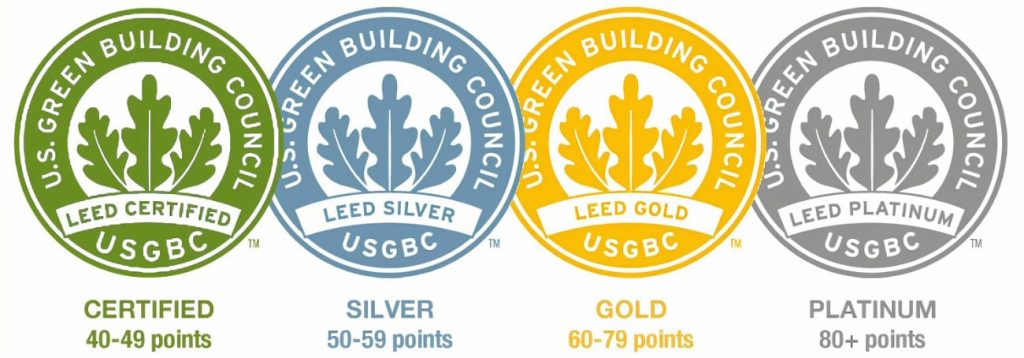
· Certification Levels:
· Certified (40–49 points)
· Silver (50–59 points)
· Gold (60–79 points)
· Platinum (80+ points)
Projects earn points in categories such as Location & Transportation, Energy & Atmosphere, and Materials & Resources, with higher scores reflecting deeper sustainability integration.
BREEAM (Building Research Establishment Environmental Assessment Method)
· Origin: Developed in the United Kingdom by the Building Research Establishment (BRE) in 1990
· Scope: Used in over 80 countries worldwide
· Assessment Areas: Energy, health & well-being, innovation, land use, materials, management, pollution, transport, waste, and water
· Scoring Levels: Pass, Good, Very Good, Excellent, Outstanding
Compared to LEED, BREEAM takes a broader environmental perspective, often incorporating ecological and biodiversity factors alongside traditional resource efficiency metrics.
LEED vs. BREEAM: Key Differences
While both systems share the same ultimate goal—advancing sustainable construction—they differ in approach:
· LEED places heavier emphasis on energy efficiency and carbon reduction.
· BREEAM evaluates ecological impact, management processes, and pollution control more comprehensively.
· Regional Relevance: LEED tends to dominate in the Americas and parts of Asia, while BREEAM is more widely used in Europe and the Middle East.
Why Obtain a Green Building Certificate?
Economic Advantages:
· Increased Market Value – Certified buildings often command higher rents and resale prices.
· Lower Operating Costs – Reduced energy and water bills through efficiency measures.
· Attraction of Premium Tenants – Environmentally conscious businesses and individuals prefer sustainable spaces.
Environmental Impact:
· Reduced greenhouse gas emissions
· Lower water usage
· Better waste diversion and recycling rates
Health & Well-being Benefits:
· Improved indoor air quality
· Enhanced thermal comfort and natural lighting
· Reduction in sick building syndrome cases among occupants
Water Efficiency and Emerging Technologies: The Role of Wint
One critical component of sustainability is efficient water management. Modern green buildings integrate smart water management systems, like Wint, to:
· Detect and prevent leaks (Escape of Water – EoW)
· Optimize irrigation and plumbing systems
· Provide real-time consumption analytics
By integrating solutions like Wint, certified buildings can exceed baseline requirements for LEED and BREEAM water credits, contributing to long-term operational savings and resource conservation.
The Future of Green Building Certifications
The global shift towards Net Zero Carbon Buildings will likely evolve certification frameworks further, incorporating:
· Life-cycle carbon analysis
· Circular economy principles (reuse and recycling of materials)
· Resilience to climate risks
· Integration of renewable energy and energy storage
As environmental regulations tighten and ESG (Environmental, Social, and Governance) standards grow in importance, obtaining a green building certificate will become less of an option and more of a baseline expectation in global real estate and construction.
In Summary:
Green building certifications like LEED and BREEAM provide a trusted, measurable framework for sustainable construction. They reward innovation, promote efficient resource use, and deliver healthier environments for occupants. By combining these frameworks with emerging technologies—such as intelligent water management systems—projects can achieve deeper sustainability outcomes, contributing to a greener and more resilient future.







Comment here