Woolley & Wallis are excited to offer 36 works from the private collection of one of the most pivotal figures in London’s mid-century art scene, the art dealer, sculptor and philanthropist William Ferdinand Charles Ohly (1883-1955). British-born, German-raised Ohly, an accomplished sculptor in his own right, as well as painter and printmaker, was an ethnographic art collector and founder of the renowned Berkeley Galleries in London’s Mayfair in 1942. He also opened the Abbey Art Centre and Museum in Hertfordshire and both locations were pioneering art hubs of the mid-1900s.
Breaking boundaries at the time, he exhibited African and Oceanic artefacts, as well as antiquities, such as ancient Near Eastern, Classical, Egyptian, medieval and Oriental objects, alongside works by emerging contemporary artists. In 1946, Ohly expanded his vision with the creation of the Abbey Art Centre in New Barnet, Hertfordshire, a three-acre estate, which featured a reconstructed Kent tithe barn, a Congo hut, a Dinka hut and a Chinese temple.
Estimate £4,000-£6,000 (lot 298)
To showcase his own private collection, he opened the Abbey Museum, which displayed a diverse variety of cultural artifacts from around the world. Nearby buildings were adapted into studios for modern artists, establishing a lively art hub that remains under the care of his family today. Among those associated with the centre was Reg Butler, Keith Grant and Frank Dobson, alongside regular visitors such as Francis Bacon, Lucian Freud and Henry Moore. Together, they forged the centre’s reputation as a vital hub of artistic experimentation and cultural exchange.
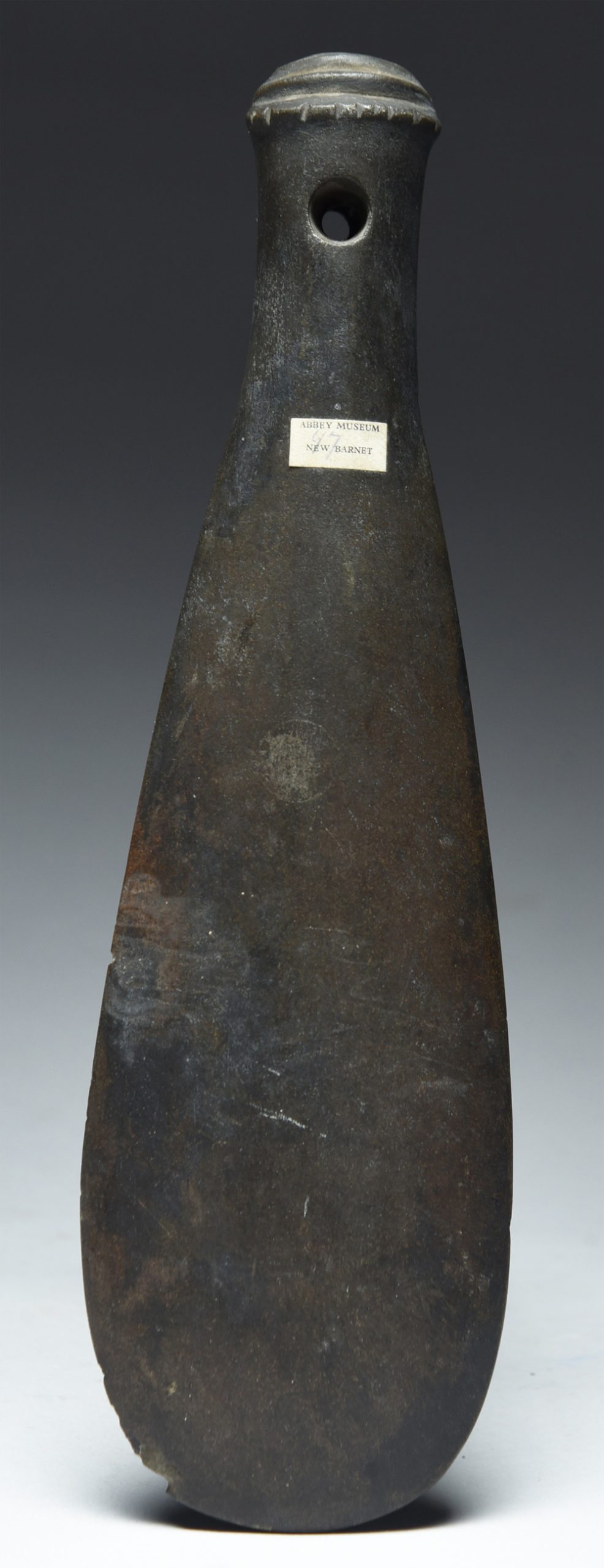
Among the works on offer from his extensive collection are two Māori hand club patu onewas, which were the traditional weapons of the Māori tribe in New Zealand and used from the time of early Māori settlement in the 13th/14th century CE until the 19th century, when the country was introduced to iron and firearms through European trading.
Warriors would wield the hand club in combat, not only to deliver crushing blows, but also to target vulnerable points with deadly accuracy. Usually carved from durable basalt as in these examples, they represented more than simply weapons, they were symbols of resilience and the martial traditions of the Māori people. The clubs are retained to this day for ceremonial and historical importance. Those in the sale are rare examples, with one carrying an estimate of £4,000-£6,000 (lot 298) and the other an estimate of £800-£1,200 (lot 297).
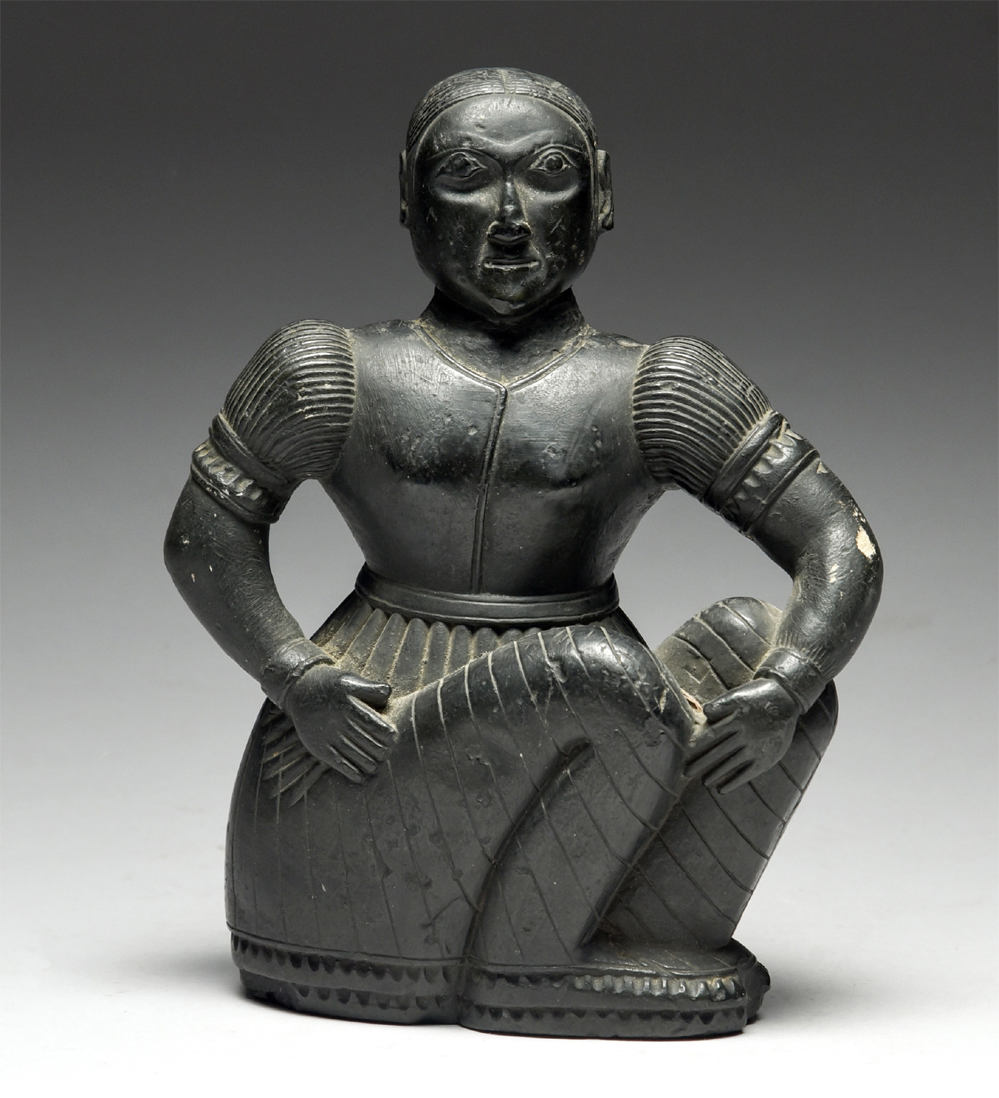
Another exceptional piece in the sale is a carved figure of a seated woman by the Haida people of Haida Gwaii, the islands located off the northern coast of British Columbia, Canada. The Haida figure is exceptionally rare and highly sought after, as it is carved in argillite, the famous black variety of fine-grained sedimentary rock only found at Slatechuck Mountain on Haida Gwaii. The stone is a unique, non-renewable resource and the Haida people have exclusive rights to it. Carvings in this stone are also admired due to the complexity of carving with it. Argillite is a temperamental, high-moisture stone which requires specialized skills and techniques to prevent cracking or flaws, making the end result even more impressive. The figure carries an estimate of £4,000-£6,000 (lot 320).
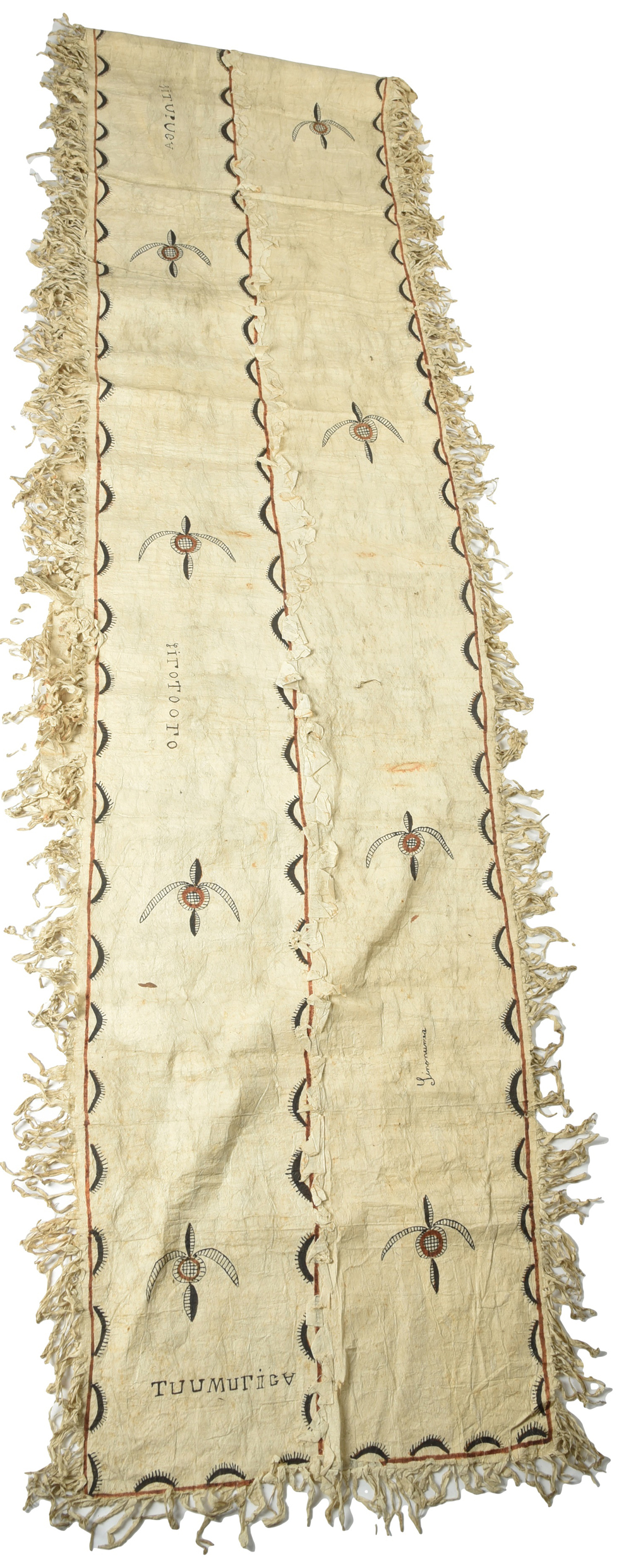
Among other works in the sale is a Fijian long tapa cloth from the eastern part of Melanesia, hand-crafted by the indigenous inhabitants of the region. Production was often communal, with women working in groups. The cloths were made from the inner bark of the paper mulberry tree, which was stripped, soaked and beaten with wooden mallets into thin sheets. These sheets would be overlapped to make long continuous lengths, which was significant, as it symbolised honour and wealth. They would then be decorated with motifs that represented a family, clan, or regional identity. This example comprises two narrow strips which are painted with stylised turtles and bordered by spiked crescents. It carries an estimate of £800-£1,200 (lot 315).
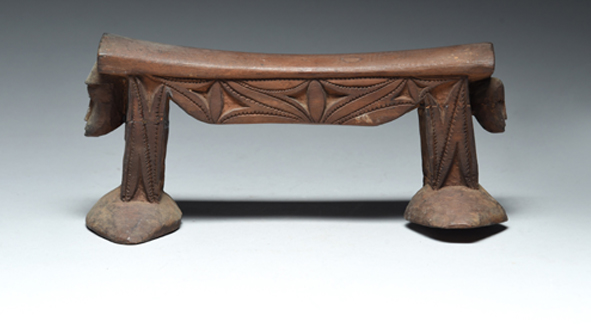
A decorative carved wooden headrest or ‘Urunga’ from the Solomon Islands is another of the interesting pieces on offer. These functional objects were used to rest the head in such a way as to preserve an elaborate hairstyle! The head was regarded as a sacred part of the body, so they were also used as a status symbol reserved for important individuals, which reflected their prominence in society. Their popularity gradually declined however after the mid-19th century, by the arrival and teachings of Christian missionaries. They are made from a single piece of hardwood and can be carved into elegant, distinctive shapes. This example features carved stylised leaves and frigate bird heads, each end with a relief head and it sits on lozenge-shape feet. It carries an estimate of £600-£800 (lot 303).
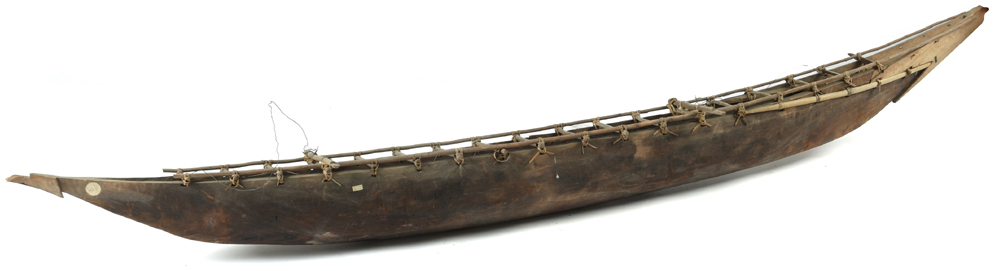
Among a selection of primitive canoe models is one from the remote Nicobar Islands in the Bay of Bengal. These model canoes serve as valuable cultural artifacts, offering us an insight into the design and construction methods of traditional Nicobarese vessels. The full-sized versions show the significance of these vessels in their culture – they were key to survival and progression of the Nicobarese people, who used them to trade and fish. The models help to preserve the history of traditional maritime practices of the region for future generations. They are exceptionally rare from this region in particular, as the Nicobar Islands Protection of Aboriginal Tribes Regulation of 1956 prohibits travel to the island, or any approach closer than five nautical miles, in order to protect the remaining tribal community. The models were made of locally available wood, such as palm wood and bound together with leaf fibres. This example carries an estimate of £500-£800 (lot 309).
Commenting on the collection Will Hobbs, African & Oceanic Art & Antiquities specialist at Woolley & Wallis, said: “The thirty-six lots from the William Ohly Collection encapsulate a man’s fascination with the art of the world, from ancient to modern.” The works will be offered in Day 1 of the Arts of Africa, Oceania and the Americas and Antiquities sale at Woolley and Wallis on Wednesday September 17, 2025 (lots 297-298).