Bangladesh has called for increased Chinese joint venture investment in its textile and apparel manufacturing sector—particularly in sick, idle, or underperforming industrial units—as part of a new strategy to modernise the industry, boost export capacity, and attract technology-driven partnerships.
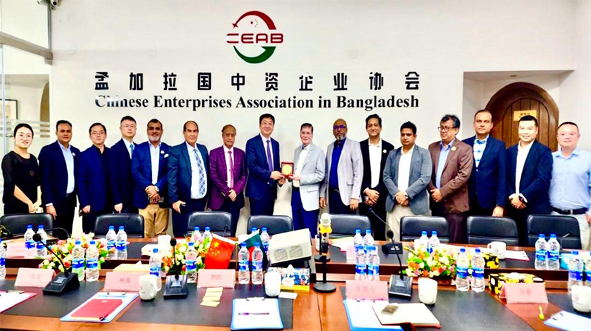
The appeal was made during a meeting between leaders of the Bangladesh-China Chamber of Commerce and Industry (BCCCI) and the Chinese Enterprises Association in Bangladesh (CEAB), held on 25th November at the CEAB office in Dhaka. The session brought together senior representatives from both business communities to explore new avenues for industrial cooperation and targeted investment.
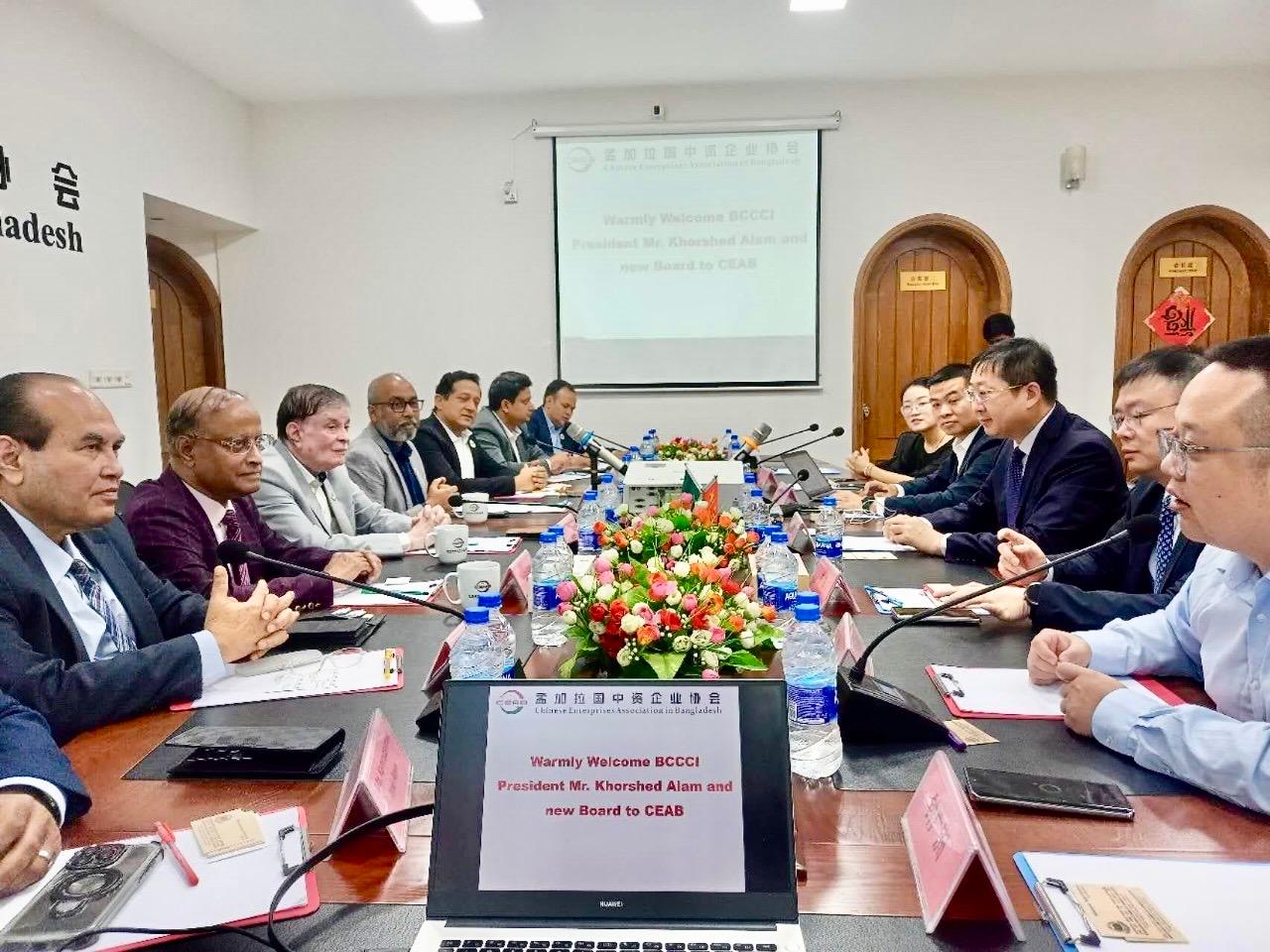
According to a press release, BCCCI President Md Khorshed Alam said Bangladesh’s textile and spinning sectors hold significant potential for joint ventures with China, especially in the rehabilitation of sick or non-operational factories. He noted that dozens of industrial units across Bangladesh require technological upgrades, capital infusion, and operational restructuring—areas where Chinese investors have strong expertise and proven capability.
“Revitalising dormant manufacturing facilities through joint ventures will deliver faster, more sustainable commercial returns compared to establishing entirely new factories,” Mr. Alam said. He added that modernising these units would not only reduce investment risks but also accelerate Bangladesh’s shift towards higher efficiency and value-added textile production.
Mr. Alam further assured CEAB members that BCCCI is prepared to extend full support, including facilitating regulatory procedures such as securing necessary approvals, accelerating SB (Sanction Board) clearance processes within the legal framework, and promoting linkages with local supply chains.
CEAB President Han Kun highlighted that China places strategic importance on deepening cooperation with Bangladesh across multiple sectors. He pointed to infrastructural development, Government-to-Government (G2G) projects, power generation and renewable energy, and the trade of construction materials as high-priority domains for collaboration. The textile and garments sector, he added, remains a key focus due to Bangladesh’s global competitiveness and China’s technological strength.
Han noted that Chinese enterprises operating in Bangladesh continue to seek reliable local partners, clear investment guidelines, and coordination mechanisms that reduce procedural delays. He expressed confidence that stronger synergies between BCCCI and CEAB would help resolve operational bottlenecks, improve policy understanding, and expand two-way trade and investment flows.
During the meeting, BCCCI Vice President Jamilur Rahman proposed the formation of a joint working body comprising representatives from both organisations. The platform would identify and address trade-related disputes, logistical hurdles, licensing delays, and other challenges faced by Chinese and Bangladeshi investors, with a mandate to develop actionable policy recommendations for the government.
Industry observers note that Bangladesh is increasingly encouraging foreign investment in backward-linkage industries—such as spinning, weaving, dyeing, chemicals, and man-made fibre (MMF) processing—to enhance competitiveness in the global apparel market. Chinese investment, in particular, has historically played an important role in machinery supply, capital-intensive production facilities, and technology transfer in Bangladesh’s textile value chain.
Also present at the meeting were AZM Azizur Rahman, senior vice president of BCCCI; Mike Ge, president of the CEAB Textile and Garments Branch; Tao Tao, marketing director of CEAB Bangladesh Branch; Ma Rui, vice president of CEAB; and Zhou Meimei, secretary of CEAB.