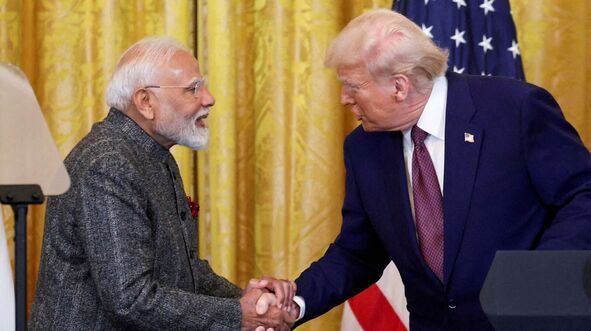
In a major development in global trade, the United States and India have agreed on a trade deal that sharply reduces tariffs on Indian goods entering the US market, a move expected to reshape bilateral commerce and boost exports. Under the agreement announced on 2–3 February 2026, Washington will lower tariffs on Indian imports to 18%, down from previously much higher rates, while India has signaled reciprocal tariff cuts for US products.
The tariff reduction follows months of negotiations and diplomatic engagement between US President Donald Trump and Indian Prime Minister Narendra Modi, aimed at easing trade tensions and enhancing economic ties. The revised tariff rate replaces earlier punitive duties that, at times, had reached effective levels as high as 50% due to additional levies imposed in 2025.
Key elements of the deal include:
- Tariff cuts: The US will apply a reduced reciprocal tariff of 18% on Indian goods, helping make Indian exports more competitive in the American market.
- Removal of penalties: The agreement removes additional punitive tariffs previously linked to India’s past purchases of Russian oil, a major point of contention in trade relations.
- Indian concessions: India has committed to progressively cut tariffs and non-tariff barriers on US products — potentially to zero — as part of broader trade liberalization talks.
- Strategic cooperation: Leaders framed the pact not just as a trade initiative but as part of wider cooperation in energy, technology and other sectors, with India expected to increase its imports of American goods across multiple categories.
The move is seen as a significant reset in US–India economic relations, with potential implications for global supply chains and export dynamics across Asia and beyond. Economists say the tariff changes could help Indian exporters gain an edge over regional competitors, even as questions remain about the long-term structure of the bilateral trade relationship and forthcoming implementation details.
Both governments have welcomed the deal as a step toward deeper economic integration and job creation, though analysts note that full effects will depend on follow-up negotiations and the removal of remaining trade barriers in key sectors.