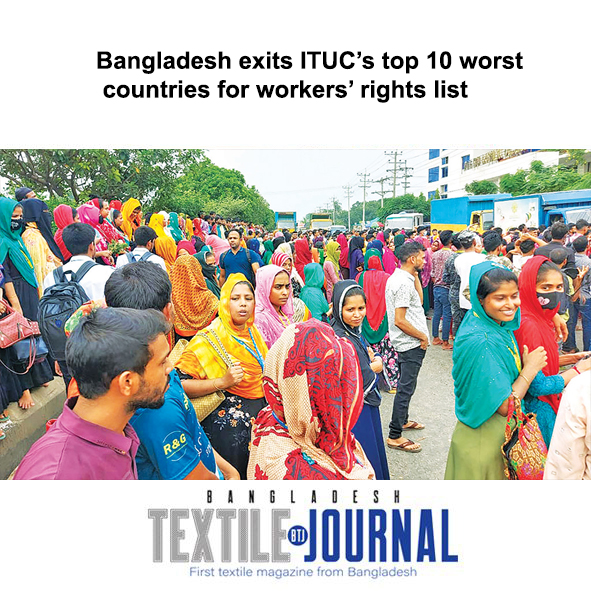
Bangladesh has, for the first time in nine years, been removed from the list of the world’s top 10 worst countries for workers’ rights, according to the Global Rights Index 2026 published by the International Trade Union Confederation (ITUC).
The improvement was attributed to a series of labor law reforms introduced in 2025, including easing trade union registration requirements, extending paid maternity leave to 120 days, expanding labor protections to domestic and agricultural workers, and bringing the shipbreaking sector under labor regulations.
The report noted that trade unions can now be formed with the support of as few as 20 workers, depending on company size, compared to the previous requirement of approval from 20% of the workforce.
Despite the progress, Bangladesh retained a rating of 5 in the index, placing it among countries where workers have “no guarantee of rights.” The report highlighted ongoing challenges, including restrictions on freedom of association, employer resistance to union activities, and incidents of police intervention against worker protests.
The ITUC also cited the use of tear gas against workers demanding unpaid wages in April 2025 as an example of continued repression of labor rights.
Labor rights expert Syed Sultan Uddin Ahmed welcomed Bangladesh’s removal from the top 10 worst countries list, describing it as a positive development. However, he stressed that administrative barriers to union registration and broader legal protections for all workers still need to be addressed.
The 13th edition of the Global Rights Index assessed workers’ rights conditions in 152 countries and found a continuing global decline in labor rights protections across most regions.