Bangladesh Garment Manufacturers and Exporters Association (BGMEA) has broadly welcomed the proposed national budget for FY2026-27, describing it as people-oriented, business-friendly, and supportive of long-term economic development.
BGMEA praised the government’s efforts to maintain macroeconomic stability, encourage investment, and establish policy continuity amid ongoing global and domestic economic challenges. The association noted that the budget’s focus on education, healthcare, social protection, deregulation, energy security, and investment-driven employment generation would contribute to industrial growth and support Bangladesh’s smooth graduation from the Least Developed Country (LDC) category.
The association particularly welcomed several reform-oriented measures, including a five-year tax policy stability framework, reduction of income tax deduction on cash incentives from 10% to 5%, digitalization of revenue management, simplified business registration procedures, renewable energy incentives, modernization of bond and VAT systems, and support for environmentally friendly industries.
BGMEA also appreciated the government’s initiatives to improve banking sector governance, attract foreign investment, and provide tax incentives for SMEs, women entrepreneurs, and green industries.
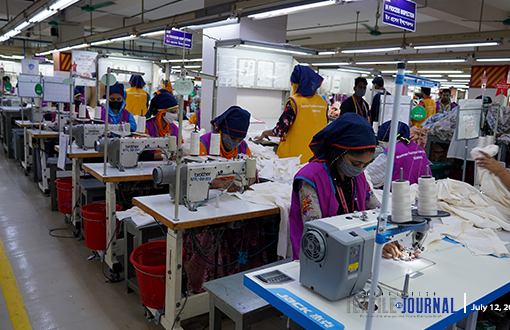
However, the organization emphasized that additional policy support is necessary to protect the competitiveness of the ready-made garment (RMG) sector, which remains Bangladesh’s largest export-earning industry. Citing current industry challenges, BGMEA noted that apparel export earnings declined by 3.41%, average unit prices fell by 1.55%, and back-to-back LCs for raw material imports dropped by 7.93% during the current fiscal year. The association also reported that around 400 factories have closed over the past three years.
To address these challenges, BGMEA urged the government to reduce withholding tax on apparel exports from 1% to 0.65% for the next five years, consider full exemption of income tax on cash incentives, eliminate double taxation in subcontracting processes, maintain existing preferential corporate tax rates for apparel manufacturers, and withdraw proposed import duties on selected man-made fiber raw materials.
The association expressed hope that the government would consider these recommendations in the final budget to help the apparel industry remain globally competitive, particularly in the post-LDC graduation era.