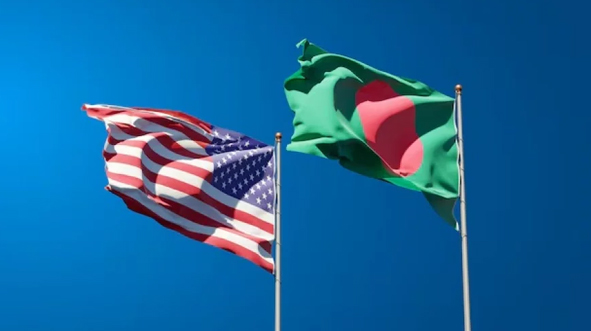
Dhaka has decided to take a cautious stance after the United States announced a 15% tariff on goods from nearly all countries, opting to consult domestic stakeholders before determining its next course of action.
The Ministry of Commerce has convened a meeting with leading exporters and trade economists on 25 February to assess the potential impact of the new duty and formulate a strategic response.
Commerce Secretary Mahbubur Rahman said the government will not immediately initiate discussions with Washington, nor will it proceed with ratifying the previously signed trade agreement at this stage.
“On Wednesday, we will sit with our key stakeholders – exporters and trade-related economists – to hear their views and suggestions. Beyond that, we have no plan at the moment to engage in discussions with the United States,” he said.
Although Bangladesh signed a trade agreement with the US following the earlier announcement of reciprocal tariffs, the agreement has yet to come into effect. According to Rahman, the deal requires ratification and formal notification by both sides before becoming operational.
“The agreement states that it will become effective once both countries ratify it and notify each other. Bangladesh will not ratify the agreement for now,” he said.
He added that if the United States ratifies the agreement and sends formal notification, Dhaka will then seek clarification, particularly in light of the recent ruling by the Supreme Court of the United States, which declared the earlier reciprocal tariff measure unlawful. Despite that ruling, Washington has introduced the 15% global tariff under a different legal provision. Rahman said Bangladesh’s response will depend largely on how the US proceeds. “If a uniform 15% tariff is imposed on all countries and Bangladesh is not given any additional benefit, why should we adhere to the agreement?” he said, adding that any decision to comply would hinge on the specific advantages offered to Bangladesh.
For now, Dhaka is maintaining a wait-and-see policy. Officials indicated that if the tariff is applied uniformly worldwide, Bangladesh’s options may be limited. However, if scope exists for country-specific reductions, the government may consider entering negotiations to secure more favorable terms.