Bangladesh is set to sign its first-ever Economic Partnership Agreement (EPA) with Japan by the end of January 2026, marking a major milestone in the country’s trade diplomacy and export strategy as it prepares for graduation from least developed country (LDC) status.
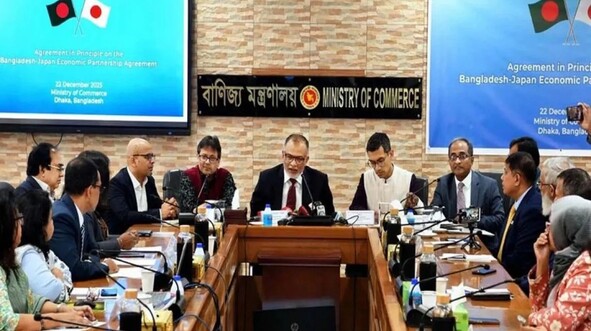
The announcement was made by Commerce Adviser Sheikh Basir Uddin at a press conference at the Bangladesh Secretariat on Monday, 22nd Dec, 2025, following the completion of negotiations and finalisation of the draft agreement. He said the two governments had, in principle, agreed to move towards signing the EPA after a recent telephone discussion with Japanese Foreign Minister Motegi Toshimitsu.
According to the commerce adviser, negotiations concluded after eight formal rounds of talks, and the agreement will be signed once the ratification processes in both countries are completed. Under the EPA, around 97% of Bangladeshi products are expected to enjoy duty-free access to the Japanese market.
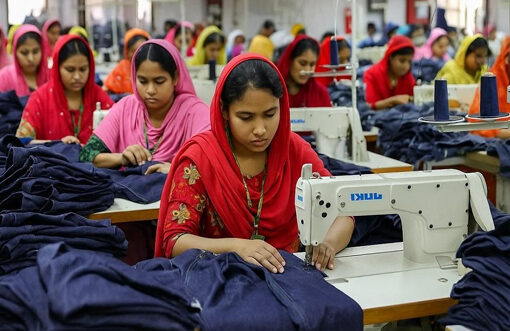
A key highlight of the agreement is immediate duty-free entry for Bangladesh’s major export items, particularly readymade garments (RMG), from the very first day of implementation. A Commerce Ministry statement said Bangladesh will receive duty-free access for 7,379 products in Japan, while Japan will gain similar access for 1,039 products in the Bangladeshi market.
The EPA also includes commitments on services and investment. Bangladesh has agreed to open 97 sub-sectors to Japan, while Japan will open 120 sub-sectors to Bangladesh across four modes of supply. The commerce adviser clarified that about 95% of Bangladesh’s concessions will take effect immediately, while Japan’s market access will be phased in over an 18-year period.
The briefing was also addressed by Special Envoy to the Chief Adviser on International Affairs Lutfey Siddique, Bangladesh Investment Development Authority (BIDA) Executive Chairman Ashik Chowdhury, and Commerce Secretary Mahbubur Rahman.
Sheikh Basir Uddin said the EPA is expected to significantly boost Japanese investment in Bangladesh, particularly through technology transfer, value addition and new business opportunities. He described the agreement as a strategic step towards expanding Bangladesh’s network of EPAs and free trade agreements in the post-LDC era, supported by an increasingly capable government negotiating team.
Lutfey Siddique praised the outcome of the negotiations, noting the coordinated efforts of all stakeholders in shaping the agreement. Meanwhile, BIDA Executive Chairman Ashik Chowdhury said the EPA would create a more structured and predictable environment for Japanese investors. He noted that Japan’s cumulative investment in Bangladesh currently stands at around US$500 million, and the agreement could help diversify investment beyond traditional sectors such as manufacturing and energy.
The agreement has also been welcomed by the Japanese business community. Manabu Sugawara, president of the Japanese Commerce and Industry Association in Dhaka (JCIAD), also known as Shoo Koo Kai, described the EPA as a landmark development in bilateral economic relations. He said JCIAD plans to promote effective utilisation of the agreement through information dissemination and outreach once the full details are clarified.
With the EPA, Bangladesh and Japan are poised to usher in a new phase of economic cooperation, strengthening trade ties, enhancing investment flows and reinforcing Bangladesh’s position in global value chains.