Introduction
In recent years, the global fashion and textile industry has come under intense pressure to reform its unsustainable
practices. With growing concerns over environmental degradation, chemical pollution, and textile waste, brands and
consumers alike are shifting toward eco-conscious alternatives. Among the most intriguing innovations emerging
from this sustainability revolution is mycelium-based bio-fabric—a material grown from the root structure of fungi.

Unlike synthetic fibers that rely heavily on petrochemicals or traditional animal leather which demands high water use and harmful tanning processes, mycelium fabrics offer a nature-grown, biodegradable alternative. These materials can be cultivated using agricultural waste, require minimal inputs, and decompose harmlessly after their life cycle ends—embodying the core principles of the circular economy.
From luxury fashion houses like Stella McCartney and Balenciaga to biomaterial startups across Europe and North America, mycelium is now being tested and applied in fashion-forward applications—shoes, bags, jackets, and even couture collections. These developments hint at a radical transformation of how we think about materials.
Yet in regions like Bangladesh, a global leader in apparel manufacturing, such innovations are still at a nascent
stage. With a vast supply of agro-waste and a strong textile foundation, Bangladesh holds immense potential to xplore mycelium-based solutions—not just for environmental benefit, but also to lead in sustainable textile innovation for the future. As the global industry pivots toward climate-conscious production, the question is no longer if mycelium fabrics will shape the future of fashion—but when and how fast they will scale.
What Is Mycelium BioFabric?
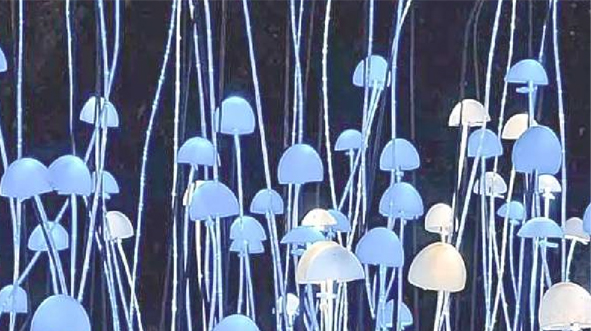
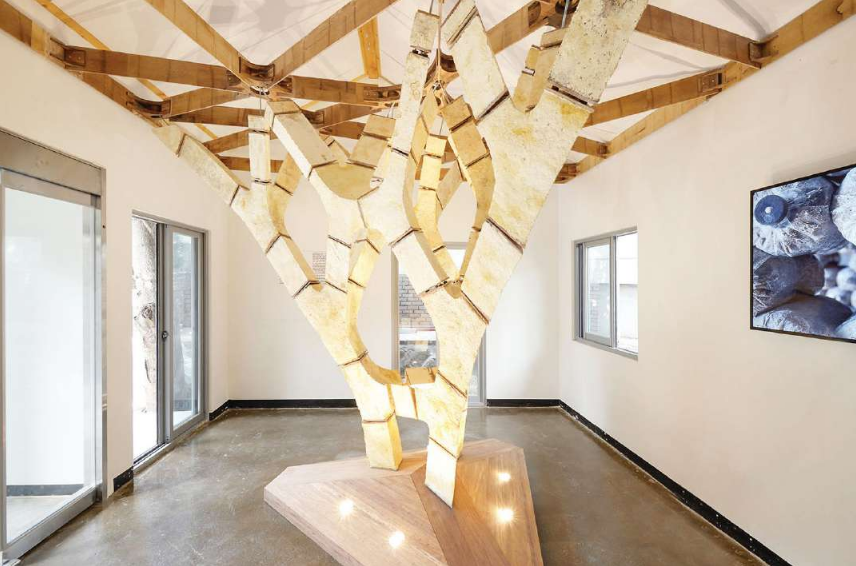
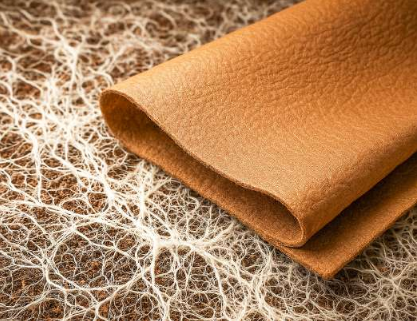 Mycelium is the root-like structure of fungi, composed of a dense network of threadlike filaments known as hyphae. When grown under carefully controlled conditions on organic substrates—such as agricultural waste, sawdust, husks, or lignocellulosic materials—mycelium spreads across the surface, forming an interwoven mat or mass. This fungal structure can then be dried, pressed, molded, and treated to create leather-like or textile-like fabrics that are biodegradable and eco-friendly.
Unlike conventional leather (which relies on animal farming, toxic tanning chemicals, and water-intensive processes), or synthetic leather (which is plastic-based and non-biodegradable), mycelium bio-fabrics are grown using minimal resources and offer a sustainable alternative aligned with circular economy principles.
How Mycelium Fabric Is Made?
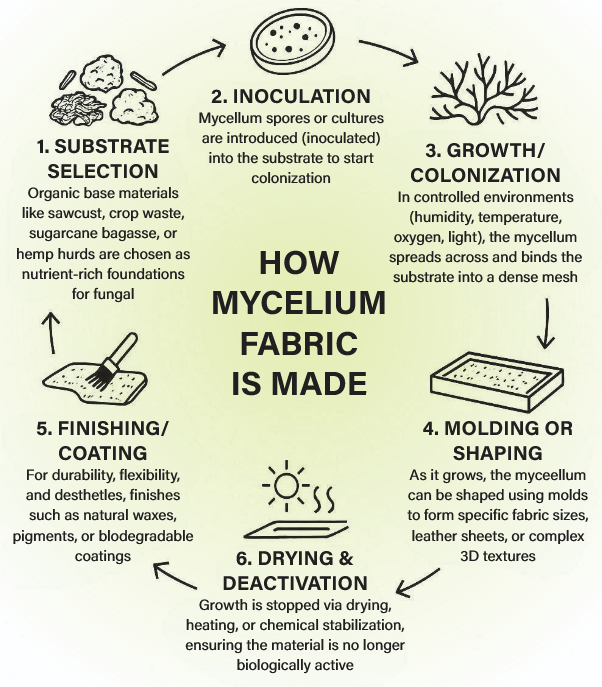
1. Substrate Selection: Organic base materials like sawdust, crop waste, sugarcane bagasse, or hemp hurds are chosen as nutrient-rich foundations for fungal growth.
2. Inoculation: Mycelium spores or cultures are introduced (inoculated) into the substrate to start colonization
3. Growth/Colonization: In controlled environments (humidity, temperature, oxygen, light), the mycelium spreads across and binds the substrate into a dense mesh.
4. Molding or Shaping: As it grows, the mycelium can be shaped using molds to form specific fabric sizes, leather sheets, or complex 3D textures.
5. Drying & Deactivation: Growth is stopped via drying, heating, or chemical stabilization, ensuring the material is no longer biologically active.
6. Finishing/Coating: For durability, flexibility, and aesthetics, finishes such as natural waxes, pigments, or biodegradable coatings may be applied.
Advantages & Promises of Mycelium Bio–fabric:
Biodegradability & Low Environmental Impact
Pure mycelium-based materials are intrinsically biodegradable. As the base material is biological, it can return to the environment under suitable conditions without leaving microplastics or toxic pollutants. This property makes mycelium fabrics ideal for circular fashion systems.
Lower Carbon Footprint
Unlike animal-based leather (which involves livestock farming, methane emissions, and tanning chemicals), mycelium composites require significantly less water, energy, and processing. The carbon footprint is dramatically reduced, making it more climate-friendly.
Versatility & Tunability
Mycelium can be grown and shaped into materials with a wide range of textures and mechanical properties. By adjusting environmental conditions and post-processing (e.g., drying, pressing, coating), it can mimic soft fabric, firm leather, or even semi-rigid composites.
Integration with Waste & Circularity
Mycelium thrives on agricultural and textile waste, turning discarded biomass into usable fashion materials. This circular model transforms ‘waste’ into ‘resource’, closing the loop and minimizing landfill impact.
Challenges & Barriers of Mycelium BioFabric
While mycelium bio-fabrics hold immense promise, there are significant challenges that currently hinder their widespread adoption and commercialization. Understanding these barriers is crucial in charting a realistic roadmap for future development.
Scale & Production Cost
• Producing large volumes with consistent quality is still a major hurdle. Many current deployments are at prototype or small-batch scale, which limits economies of scale.
• Substrate sterilization, controlled environment growth chambers, clean rooms, and post-processing equipment add to capital costs.
• Logistics of scaling (space, maintenance, quality assurance) drive up unit cost, making them currently less competitive with mass-produced synthetic materials.
• Researchers note that unless input costs (substrate, power, labor) drop significantly, widespread adoption will remain challenging.
Mechanical Properties
• Matching the mechanical performance of conventional leather or engineered textiles is nontrivial:
# Tear strength, tensile strength, abrasion resistance, and puncture resistance often remain below industry standards.
# Flexibility over repeated cycles, aging under UV/light, thermal stability, and resistance to humidity/temperature fluctuations are still under study.
• Some mycelium composites may crack, delaminate, or degrade when exposed to harsh conditions over time.
• Achieving uniform mechanical behavior across large sheets remains technically difficult.
Finishing & Additives
• To make mycelium bio-fabrics more durable, water-resistant, colored, or textured, additional coatings or additives are often applied.
• These treatments (synthetic polymers, resins, dyes, crosslinkers) can compromise the intrinsic biodegradability of the material.
• Finding biocompatible, biodegradable finishing agents that do not degrade performance is an active research frontier.
• Moreover, the compatibility between the mycelium matrix and coating agents must be managed to avoid delamination or cracking.
Regulation, Standards & Consumer Acceptance
• For the fashion and textile industry, rigorous standards for safety, durability, consistency, and certification (e.g. OEKO-TEX, ISO norms) exist, and new materials must meet them.
• Consumer trust is another barrier: People are accustomed to leather or synthetic materials, and convincing them to adopt mycelium alternatives will require strong marketing, transparency, and performance evidence.
• Regulatory frameworks regarding new biomaterials—especially those involving living organisms initially—are complex. Biocompatibility, toxicity, allergens, fungal byproducts, and long-term stability must be proven.
• Quality control across batches is challenging: Biological growth processes inherently vary, so ensuring consistent color, texture, thickness, etc. cross production lots is nontrivial.
Real-World Examples & Innovations in Mycelium-Based Fashion
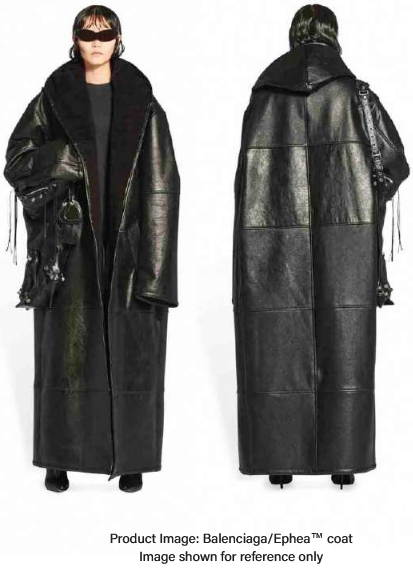 Mycelium is no longer confined to the laboratory. In recent years, it has stepped onto global fashion runways and into commercial product lines. Below are some of the most groundbreaking examples, where fungal biofabric has been successfully turned into wearable fashion or scalable prototypes: Ephea/Sqim + Balenciaga (2022).
In 2022, Balenciaga became the first luxury brand to launch a product made from Ephea, a mycelium-based leather alternative created by Sqim, a Milan-based biotech company.
• Ephea is grown using patented fermentation techniques that control texture and thickness.
• Balenciaga’s oversized black coat made from Ephea was part of a Paris Fashion Week showcase—signaling fungal fabrics’ leap into high fashion.
• Ephea met rigorous environmental standards, being plastic-free and biodegradable.
MycoWorks & Reishi Mycelium Leather
 MycoWorks, a San Francisco-based biotech company, pioneered ‘Fine Mycelium’, an engineered form of mycelium used to create Reishi—a luxury-grade, plant-grown leather alternative.
• Reishi has been used by high-end brands in hats, handbags, wallets, and small leather goods.
• The product mimics the feel, grain, and durability of calf leather.
• In 2023, MycoWorks opened a factory in South Carolina, scaling up for broader commercial distribution.
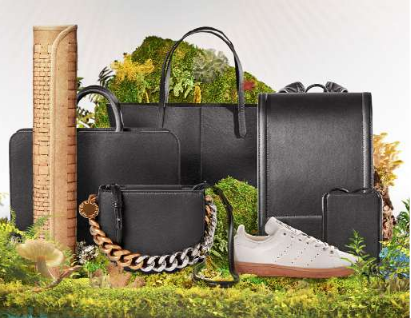 Bolt Threads & Mylo—with Stella McCartney, Adidas & Lululemon
Bolt Threads, a U.S.-based biomaterials company, developed Mylo, a mycelium-based alternative to leather with a soft and supple texture. Mylo was used in collaboration with:
• Stella McCartney (handbags, bustiers)
• Adidas (a concept Stan Smith shoe)
• Lululemon (yoga mats, accessories)
Academic & Research Projects
Universities and research labs around the world are actively exploring bio-fabricated textile innovations using mycelium:
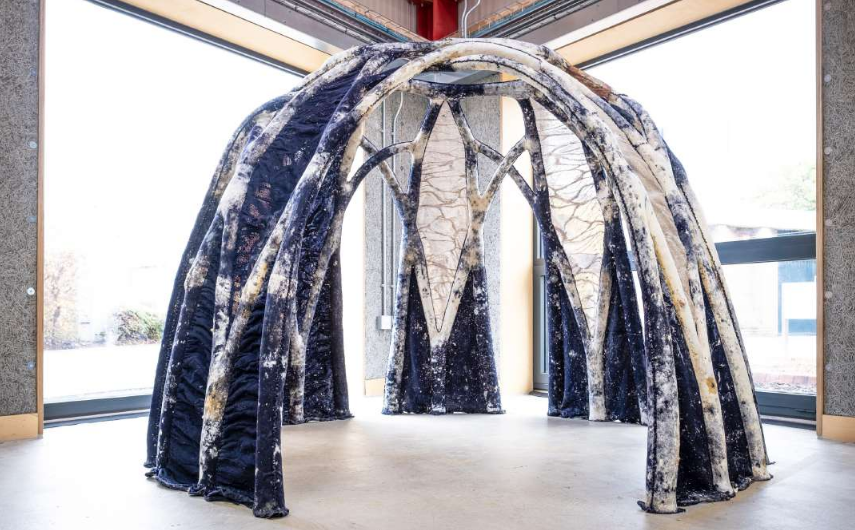
• University of the Arts London (UAL): Created 3D mycelium-textile composites via scaffolded knitting techniques.
• Wageningen University (Netherlands): Studies on flexible mycelium panels and bio composite performance.
• Stanford & MIT: Researching ‘smart fungus materials’—sensors embedded in growing fabric for responsive wearables.
• Labs are working on integrating mycelium with 3D printing, aerogels, and microbial dyeing.
Status in Bangladesh—Opportunities & Gaps
Despite Bangladesh’s prominence as a global leader in textile and garment manufacturing, mycelium-based bio-fabric is yet to be commercially explored or adopted in the country. There is no public record of industrial-scale production, pilot initiatives, or consumer-level availability of fungal-based textiles. However, the ground reality reveals untapped potential that could allow Bangladesh to emerge as a regional pioneer in sustainable bio-fabrication if proper interventions are made.
Why Bangladesh Holds Immense Potential?
1. Abundance of Agricultural Waste (Bio-Substrates)
• Bangladesh generates millions of tons of agricultural byproducts annually:
o Jute sticks & leaves
o Rice husk
o Sugarcane bagasse
o Coconut shells, wheat straw, corn stalks
• These lignocellulosic materials are highly suitable as substrates for mycelium cultivation.
• Unlike imported synthetic fibers, these raw materials are local, renewable, and often discarded, representing
a circular economy opportunity.
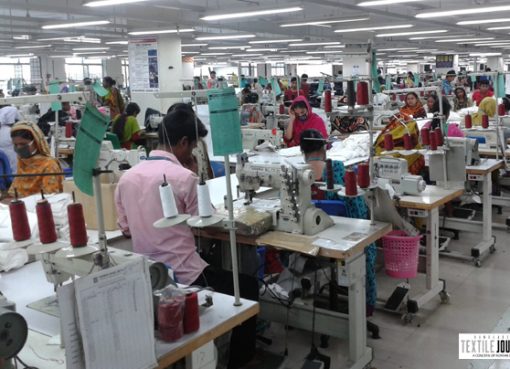
2. Strong Textile & RMG Manufacturing Ecosystem
• Bangladesh has:
o 4,500+ RMG factories
o Dozens of textile universities
o Hundreds of dyeing, finishing, and spinning facilities
o Thousands of trained textile engineers and chemical technologists
• This infrastructure provides a ready-made platform to experiment with bio-materials at scale from lab to pilot to factory floor.
3. Growing Academic & Research Capacity
• Institutions like:
o BUTEX (Bangladesh University of Textiles)
o BUET (Bangladesh University of Engineering and Technology)
o DU, RU, SUST, AUST, and private universities
• These institutes host biotech, microbiology, chemical engineering, and textile departments that can initiate fungal-based textile research.
• There is also an emerging interest in bio-fabrication, fermentation, and circular textile economy across academic forums.
4. Global Market Shift to Sustainability
• Major buyers of Bangladeshi garments (e.g., H&M, Zara, Levi’s, Uniqlo) are increasingly prioritizing:
o Low-carbon fabrics
o Waste-to-fashion concepts
o Vegan and cruelty-free materials
• Mycelium fits directly into these demands. If Bangladesh can locally develop or adapt these fabrics, it strengthens export competitiveness.
Key Gaps & Challenges
Lack of Awareness & Expertise
• Most industry stakeholders in Bangladesh are unawareof fungal materials or skeptical of their performance.
• There’s a lack of technical training, specialized knowledge, or exposure to international fungal textile innovations.
No Pilot Projects or Case Studies
• Till now, no public-private partnership, university project, or startup have ventured into this space.
• As a result, the ecosystem lacks proof-of-concept, slowing investors, and policy interest.
Limited R&D Funding for Biomaterials
• Public R&D grants in Bangladesh are often focused on agriculture, food, or conventional textiles—not on bio-innovation.
• Without seed funding, labs cannot acquire spores, fermentation equipment, or post-processing tools.
Lack of Certification Frameworks
• Bangladesh lacks a clear certification mechanism for emerging biomaterials, including mycelium.
• For exports, buyers require certifications like OEKOTEX, REACH, GOTS, USDA Biobased, etc.
Conclusion
As the global fashion and textile industry pivots towards sustainability, innovation, and circular economy principles, mycelium-based bio-fabric stands out as a revolutionary material of the future—bridging the gap between nature and next-generation textile technology. While countries in Europe and North America have already begun piloting and commercializing fungal leather and fabrics, Bangladesh is yet to explore this transformative potential. However, the nation is uniquely positioned with several key advantages:
• A massive volume of agricultural waste ready to be repurposed as bio-substrate
• A globally competitive RMG and textile infrastructure
• A growing academic ecosystem ready for biomaterials research
• And a buyer market that is increasingly demanding low-carbon, biodegradable, cruelty-free products
Yet, critical gaps remain, including the lack of awareness, technical knowledge, R&D funding, pilot case studies, and certification pathways.
To unlock the full potential of this innovation, Bangladesh must act now. A coordinated strategy involving universities, industry leaders, government bodies, and international partners is essential. Through targeted pilot programs, smart partnerships, and visionary policy support, Bangladesh can not only catch up—but lead South Asia in sustainable fashion innovation.
The opportunity is real. The resources are here. Now is the time to grow.
 About the Author
Md. Mehedi Hasan Chomok
Fashion Designer | Menswear Specialist
Design Studio, Square Fashions Ltd.
Md. Mehedi Hasan Chomok is a menswear-focused fashion designer currently working at the Design Studio of Square Fashions Ltd. He holds a degree in Fashion Design from Shanto-Mariam University of Creative Technology and previously worked at Epyllion Group, where he specialized in knitwear and casualwear. His design approach blends innovation, sustainability, and production practicality.