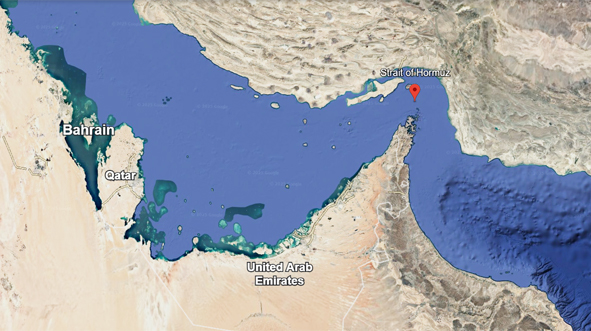
Bangladesh’s exporters are bracing for longer shipment lead times and higher freight charges amid fears that escalating tensions in the Middle East could disrupt global trade routes, particularly through the strategic Strait of Hormuz.
Business leaders warn that any closure of the strait, one of the world’s most critical maritime chokepoints, would sharply increase transport costs and extend delivery times, placing fresh strain on the country’s already fragile external trade sector.
A significant portion of vessels sailing from Chittagong Port to Europe passes through the Strait of Hormuz. If the route becomes inaccessible, ships would be forced to reroute via longer corridors such as the Cape of Good Hope, adding thousands of kilometers to journeys and substantially increasing freight expenses.
Exporters say the broader geopolitical fallout, rather than Bangladesh’s limited direct trade exposure to Iran, poses the greater threat to export competitiveness and shipment reliability.
Commerce Secretary Mahbubur Rahman said the government is closely monitoring developments in the Middle East and preparing contingency measures to safeguard supply chains.
“We held discussions at our respective levels and are now working on plans to ensure the supply chain remains smooth,” he said.
Industry representatives say the situation is particularly concerning for time-sensitive shipments to Europe and North America, where buyers often rely on air freight to meet tight delivery schedules. However, airspace closures across parts of the Middle East have already disrupted cargo flights, creating uncertainty for exporters dependent on Gulf transit hubs.
Two major global shipping lines — CMA CGM and Hapag-Lloyd — have reportedly suspended navigation through the Gulf and the Strait of Hormuz until further notice, rerouting vessels around the Cape of Good Hope.
Faruque Hassan, former president of the Bangladesh Garment Manufacturers and Exporters Association (BGMEA), said the conflict could have multi-layered impacts at a time when exporters were expecting a business rebound.
“The prolonged conflict will create further difficulties,” he said, expressing hope for a swift resolution.
Shovon Islam, managing director of Sparrow Group, urged the government to engage with Indian authorities to restore alternative transit facilities for air shipments, as exporters heavily depend on Middle Eastern hubs for cargo destined for Western markets.
Businesses are also concerned about possible disruptions in imports of oil, liquefied natural gas (LNG) and liquefied petroleum gas (LPG) from the Middle East.
However, Prime Minister’s Foreign Affairs Adviser Humayun Kabir said there was no immediate reason for concern over fuel supplies, noting that Bangladesh currently holds adequate reserves.
Despite the Strait of Hormuz’s importance as a global energy corridor, Bangladesh’s bilateral trade with Iran remains minimal. Official data show exports to Iran — primarily jute yarn — reached $10.9 million in FY25, while imports stood at $0.5 million, with overall trade largely stagnant for years.
Exporters say the coming weeks will be critical, as any prolonged disruption could further erode Bangladesh’s competitiveness in key markets amid ongoing global economic uncertainty.