

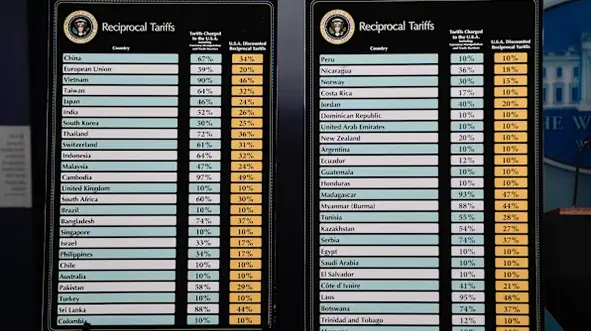
US President Donald Trump has imposed a 37% tariff on Bangladeshi products, raising concerns among economists and apparel industry leaders. The decision, made via executive order, may significantly impact Bangladesh’s economy, prompting calls for export diversification and urgent diplomatic engagement with the US under the Trade and Investment Cooperation Framework Agreement (TICFA).
Economic impact and trade diversification
Experts stress the need for Bangladesh to diversify its export base. Former Dhaka University professor Dr. M M Akash highlights the necessity of a strategic trade approach, balancing protectionism and free trade while strengthening ties with China and India. In contrast, Dr. Mahfuz Kabir of the Bangladesh Institute of International and Strategic Studies (BIISS) warns that Bangladesh’s heavy reliance on apparel exports (85% of total exports) limits immediate alternatives.
The tariff hike could shift apparel orders to competing countries like India, Pakistan, Egypt, and Honduras, jeopardizing Bangladesh’s market share. India, for instance, faces only a 26% tariff, giving it a competitive advantage over Bangladesh. American buyers may also prioritize nations with lower tariffs, exacerbating the trade shift.
Strategic Response and Diplomatic Efforts
Given the severity of the tariff increase, economists advocate for immediate negotiations. TICFA allows for bilateral discussions on trade disputes, but since the tariff was imposed through an executive order, direct negotiations with the White House may be complex. Dr. Kabir suggests that Bangladesh should consider reviewing tariffs on US imports as a bargaining tool.
Industry leaders, including BKMEA President Mohammad Hatem, argue that Bangladesh must leverage its reliance on US-imported yarn to negotiate better terms. Additionally, some experts propose increasing imports of US agricultural products or military equipment to reduce the trade deficit and encourage tariff reductions.
Potential Consequences and Global Trade Shifts
The tariff hike is expected to raise apparel prices, reduce demand, and negatively impact foreign currency earnings. Sparrow Group’s Mr. Shovon Islam notes that, with the additional 17% duty on cotton-blend products, the total tariff on Bangladeshi apparel will reach 54%, nearly matching China’s rate. Consequently, some buyers are already shifting to Jordan, Egypt, and Kenya as alternative sourcing destinations.
To mitigate these effects, Bangladesh must engage in aggressive diplomatic efforts, explore new trade agreements, and push for duty-free access to the US market. The next few months will be crucial in determining whether Bangladesh can navigate this challenge and maintain its competitive edge in global trade.





Comment here