

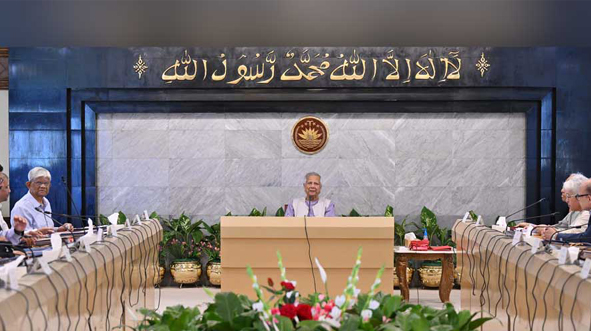
Professor Muhammad Yunus, chief adviser of the interim government, has directed cabinet members to prepare for Bangladesh’s transition from a least developed country to a developing nation by November 2026. This decision dismisses any speculation about a possible deferment, despite concerns from some economists and business leaders who argued that the economy needed more time to recover from the pandemic, the Russia-Ukraine war, and global inflation.
Shafiqul Alam, the chief adviser’s press secretary, stated that the government considered expert opinions and decided to proceed with the scheduled graduation. He assured that if any negative impacts arise, the government will take necessary measures to address them. Additionally, Bangladesh will continue to enjoy LDC-related benefits for three years post-graduation, until 2029.
Despite losing post-LDC preferential trade benefits, which currently support 78% of Bangladesh’s exports across 38 countries, the European Union, the UK, Canada, and Australia have pledged to extend these benefits for three years, with some conditions. The World Trade Organization has also granted a grace period following Bangladesh’s request for a 12-year extension.
Bangladesh has met all three criteria for graduation due to its significant economic progress since independence in 1971. The country, once classified as an LDC in 1975, leveraged trade privileges to become the world’s second-largest garment exporter after China. However, graduation will result in an estimated loss of over $8 billion in trade annually, as Bangladesh will face at least 12% duty on exports.
Government remains confident in Bangladesh’s ability to compete globally and sustain economic growth despite the challenges associated with LDC graduation.





Comment here