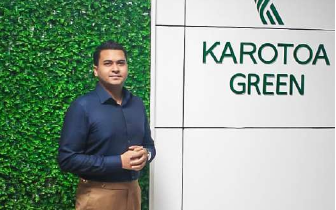
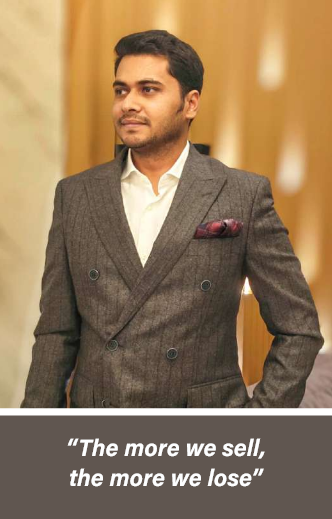
Dr. Md. Abdul Ahad Akil is a visionary industrialist and entrepreneur, whose leadership continues to shape Bangladesh’s spinning and fashion sectors. Currently serving as the CEO and Director of Karotoa Green Spinning Mills Ltd., he is also the driving force behind the Karotoa Group, one of the country’s long-standing textile conglomerates with a growing footprint in sustainable manufacturing.

A graduate of North South University, Dr. Akil began his journey in the family business in 2007, while pursuing his Bachelor’s in Business Administration. His academic achievements include a Master’s in Business Administration from Prime Asia University, a textile technology qualification from London, U.K., and a Doctorate in International Business from the Czech Republic, where he specialized in Executive Leadership.
Beyond business, Dr. Akil is deeply committed to philanthropy, focusing on education, community development, and sustainable initiatives that create lasting social impact. Known for his integrity, resilience, and inspiring leadership, he motivates others while embracing challenges as opportunities for growth.
Expanding his entrepreneurial footprint, Dr. Akil has diversified into fashion, IT, power generation, education, and sports, becoming one of Bangladesh’s most prominent business figures. Guided by innovation, strategic vision, and a passion for societal betterment, he continues to drive sustainable growth and inspire excellence, leaving a meaningful mark on both industry and community alike.
About the Karotoa Group and Its Legacy
The group’s foundation dates back nearly three decades with the establishment of Karotoa Spinning Mills in 1995,
followed by Enayetpur Spinning Mills in 2000, and Tara Spinning Mills in 2002. Over the years, these mills have built a strong reputation for quality yarn production catering to both domestic and export markets.
In 2018, the group diversified into retail fashion with the launch of its own apparel brand, LEND—a name now synonymous with affordable yet stylish fashion for men, women, and children. LEND currently operates 11 outlets across Bangladesh, including at Jamuna Future Park, Bashundhara City, Gazipur, Rangpur, Comilla, and Chittagong. Every step of production—from yarn to finished garment—is vertically integrated under the group’s own facilities. After a challenging pandemic period, LEND has returned to strong growth momentum.
Karotoa Green Spinning Mills Ltd.: A Model for Sustainability
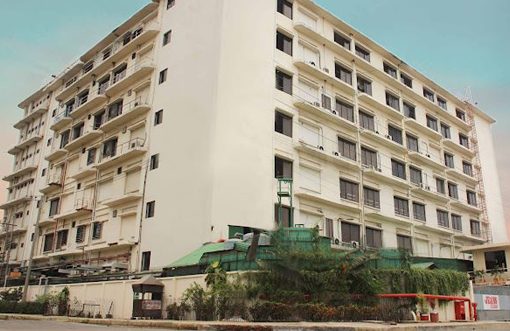
Karotoa Green Spinning Mills Ltd., launched in 2022 and operational since 2024, is Dr. Akil’s flagship sustainability project-a symbol of his vision for a cleaner, more responsible textile future.
The facility is now poised to become Bangladesh’s second ‘green’ spinning mill, pending official certification from the Green Building Council (GBC) within the next three months.
Built with a focus on energy efficiency and worker welfare, the factory features:
• Water reuse systems and rainwater harvesting
• A 1.5 MW solar power plant under installation
• A mosque, bazaar, and dormitories for 1,800 workers (1,200 male, 600 female)
• 40 family residences for staff and management
However, despite its advanced infrastructure, the mill continues to face operational hurdles—most notably the delay in gas supply approval, pending since 2022.
In an exclusive conversation with Bangladesh Textile Journal, Dr. Md. Abdul Ahad Akil opens up about the ongoing challenges facing the spinning industry in Bangladesh, the structural flaws in pricing, and the urgent reforms needed to prevent large-scale collapse.
BDT 94. But by the time the machinery arrived, the rate had shot up to BDT 115–120. Before even running the factory, we incurred losses of around 50 crore BDT due to currency fluctuations alone.
To make matters worse, our gas connection—applied for in 2022—has still not been provided. We are forced to operate on limited electricity, running partial production lines just to keep the factory alive. These are losses no industry can sustain indefinitely.
Despite having all these issues, we are running our mill with a much lower capacity that we have built to make our dream comes true.
BTJ: How are the market prices impacting production sustainability?
Dr. Akil: Here’s an example—we produce Mélange yarn. Our total production cost per kilogram stands at around USD 3.10, considering raw materials, bank interest, and utilities. But the market price is only USD 2.85–2.90. That’s a loss of 20–25 cents per kg, and this has been happening for nearly 18 months.
We cannot stop production because we must pay salaries, bank installments, and utilities. So, like many others, we continue operating at a loss. This is the grim truth of today’s spinning industry—“The more you sell, the more you lose.
BTJ: What led to this unsustainable situation?
Dr. Akil: It didn’t happen overnight. Prices started collapsing over a year ago. There are multiple causes.
First, unregulated market competition—some spinners dump large stock at low prices just to free cash or reduce inventory. Bangladesh Textile Mills Association (BTMA) has no mechanism to set minimum price thresholds or control price wars. I am surprised that even after so many years, BTMA still lacks a pricing policy that reflects raw material costs and global parity.
Second, a few large groups with diversified businesses are driving prices down. For them, textile losses can be offset by profits elsewhere—but smaller mills like ours cannot survive such undercutting. There must be regulations to prevent destructive pricing.
BTJ: How has imported yarn from India affected the local market?
Dr. Akil: This is another major issue. Indian yarn is entering Bangladesh at much cheaper prices, partly due to Indian government subsidies and domestic cotton availability.
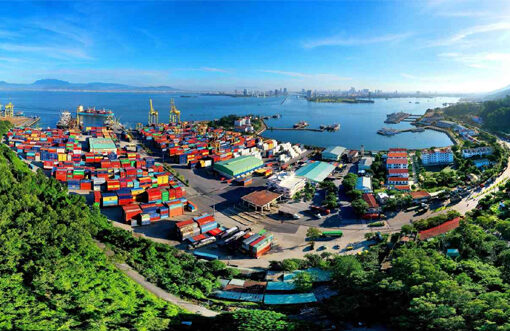
Many RMG manufacturers prefer imported yarn to reduce production costs under buyer pressure. Some Indian ships even anchor near Bangladeshi ports, ready to supply instantly.
If the government imposes import duties or tariffs on Indian yarn, our local products will be competitive again. Otherwise, spinners here will continue losing ground. BTMA must address this urgently.
BTJ: What is the current state of yarn production across Bangladesh?
Dr. Akil: Many mills have cut production drastically—some operate at minimum capacity; others are shut down. Everyone is struggling with gas shortages, high interest rates, and unsellable stockpiles.
I know several factory owners who have stopped operations entirely. For many of us, it’s not about profit anymore—it’s about survival. If this continues another six months, many mills, including ours, may be forced to close.
BTJ: Do global factors such as U.S. tariffs influence your situation?
Dr. Akil: Tariff changes in the U.S. have some indirect effects, especially when buyers insist on American-origin cotton, which is more expensive.
However, American consumers have largely absorbed retail price hikes—brands have increased prices slightly and justified them through the tariff narrative. So, that pressure has stabilized. But from our end, if we are compelled to buy higher-priced U.S. cotton, competitiveness declines again.
BTJ: What urgent measures can save the spinning industry?
Dr. Akil: A few immediate steps can bring relief:
1. Imposing taxes on imported Indian yarn to ensure fair competition
2. Providing cash incentives or subsidies for local spinnering—similar to what competing countries already enjoy
3. Prohibiting foreign vessels from anchoring near Bangladeshi ports to stockpile imported yarn
4. Developing a BTMA price threshold mechanism based on real-time cost data
If these are implemented quickly, I believe the industry can recover. Otherwise, the backbone of Bangladesh’s textile supply chain—spinning—could face irreversible damage.
Conclusion
Dr. Akil’s insights reflect the critical crossroadBangladesh’s spinning sector faces—between sustainability dreams and economic reality. While Karotoa Green Spinning Mills Ltd. stands as a model of environmental commitment and industrial resilience, the broader ecosystem demands immediate policy intervention to prevent a deeper collapse.
His message to stakeholders is clear: “Support the spinners, protect the base—or the entire textile pyramid may crumble.”