Researchers at Kaunas University of Technology (KTU) are pioneering innovative methods to convert textile waste into both energy and high-performance cement materials, offering sustainable solutions for two of the world’s most resource-intensive industries: textiles and construction.
As the EU pushes toward a circular economy—moving away from the traditional “take–make–dispose” model—KTU scientists are demonstrating how waste can become a valuable industrial resource. Their research shows that textile waste, typically landfilled or incinerated, can instead be transformed into materials that strengthen cement while reducing environmental harm.
Textile waste remains a global environmental concern. In Europe, only a small portion of used clothing is collected separately, and just a few percent make it into new fibre-to-fibre products. Most discarded textiles end up in landfills, are burned for energy, or are recycled into low-value products such as padding or insulation.
The cement industry—particularly clinker production—is a major source of global CO₂ emissions. Researchers are therefore actively exploring alternative fillers and binders that can reduce cement consumption while maintaining structural performance.
“The cement industry contributes significantly to environmental pollution. That’s why we’re exploring ways to replace part of traditional cement with alternative materials derived from waste,” said Dr Raimonda Kubiliūtė of the KTU Faculty of Chemical Technology.
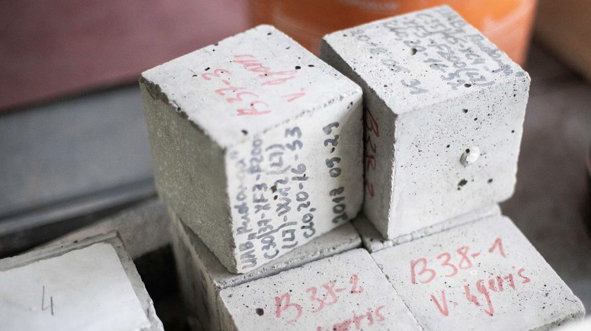
In line with this goal, KTU scientists are examining how ash and fibres from waste textiles can be blended into concrete mixtures. Their work supports broader research trends, including recent findings showing that calcined industrial clay waste can replace portions of Portland cement in LC3-type binders without sacrificing strength.
Adding just 1.5% recycled polyester fibre (sourced from discarded garments) can increase concrete compressive strength by 15–20%. Concrete with textile-derived additives shows significantly improved freeze–thaw durability, enhancing longevity in harsh climates.
These findings suggest that textile waste—including ash produced through controlled combustion—could become a valuable resource in producing stronger, greener cement while helping solve Europe’s growing textile waste crisis.