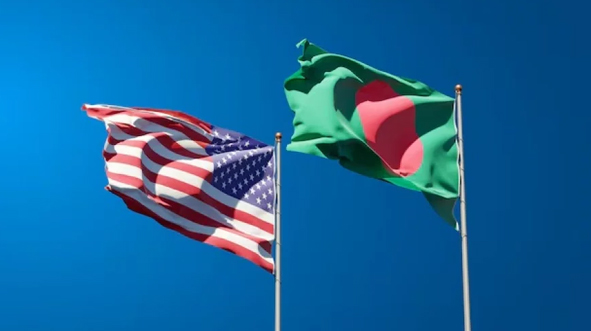
Bangladesh is set to sign a trade agreement with the United States tomorrow aimed at reducing reciprocal tariffs on Bangladeshi exports, particularly garments, while committing to increased imports of American goods to narrow a long-standing trade imbalance between the two countries.
According to Commerce Secretary Mahbubur Rahman, the agreement includes a provision under which the United States will not impose tariffs on garment products exported from Bangladesh that are manufactured using American raw materials such as cotton. The move is expected to bring meaningful relief to Bangladesh’s export-oriented apparel sector, which accounts for nearly 95% of the country’s exports to the US market.
In addition to the material-based tariff exemption, the Donald Trump administration is also expected to further lower the reciprocal tariff rate currently applied to Bangladeshi goods. While government advisers and the commerce secretary have confirmed that a reduction is forthcoming, they have not disclosed the exact percentage that will apply once the agreement comes into force.
The mechanism under the deal allows proportional tariff relief based on the share of US-origin inputs used in garment production. For example, if a T-shirt exported to the US contains 70% American cotton and yarn by value, that portion will be exempt from the 20 percent reciprocal tariff imposed on Bangladeshi goods last year. Given that many Bangladeshi garment manufacturers can source a large share of raw materials from the US, the arrangement is expected to significantly reduce effective tariff burdens.
The anticipated agreement has already begun influencing sourcing decisions. Imports of American cotton and soybeans have risen as Bangladeshi millers and traders shift purchases away from other origins in preparation for preferential access to the US market.
The signing ceremony will be held in a hybrid format. Commerce Adviser Sk. Bashir Uddin and Commerce Secretary Mahbubur Rahman will attend virtually, while a small delegation of senior officials from the Ministry of Commerce will travel to Washington to be present alongside US counterparts. Rahman said official documents would be transmitted electronically, as only a limited number of Bangladeshi representatives will attend in person.
The commerce adviser will not travel due to time constraints, as the government has only one working day remaining before the national elections scheduled for February 12.
The agreement follows months of intensive negotiations triggered by heightened US tariffs on Bangladeshi exports. Bangladesh exports more than $8 billion worth of goods annually to the US while importing roughly $2 billion, resulting in a sizeable trade gap. On April 2 last year, US President Donald Trump announced a 37% additive reciprocal tariff on Bangladeshi exports. Subsequent negotiations led to a reduction of that rate to 20%, conditional on Bangladesh’s commitment to boost imports from the US.
As part of that commitment, Bangladesh has agreed to purchase aircraft from Boeing and significantly increase imports of US cotton, soybeans, liquefied petroleum gas and other commodities. The two sides have also signed an agreement for Bangladesh to import 3.5 million tons of American wheat over a five-year period, of which about 660,000 tons have already been purchased.
Bangladesh Garment Manufacturers and Exporters Association (BGMEA) said discussions with the Office of the United States Trade Representative have been ongoing for more than six months. In a statement, the association said it had been informed that a formal agreement would be signed on February 9 and urged the Ministry of Commerce to ensure the process is completed on schedule.
BGMEA noted that timely completion of the deal is critical so exporters can prepare to take advantage of preferential access based on the use of US cotton, which the association described as the central feature of the agreement.