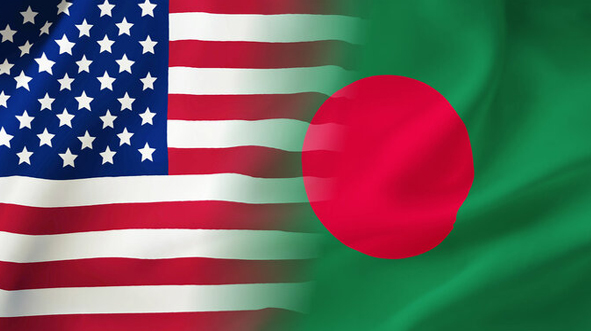
Trade analysts have cautioned that Bangladesh’s newly signed reciprocal tariff agreement with the United States could significantly limit the country’s ability to enter into future trade arrangements with major economies such as China and Russia.
Under the agreement signed on 9 February in Washington between Commerce Adviser Sk. Bashir Uddin and US Trade Representative Jamieson Greer, Bangladesh secured a reduction of the reciprocal tariff on its exports to 19%, down from the previously imposed 37%. Additionally, garments produced using US cotton and synthetic fibers will qualify for zero reciprocal duty.
However, experts say a key clause in the pact poses strategic constraints. The agreement stipulates that if Bangladesh concludes a new bilateral free trade agreement or preferential economic arrangement with a “non-market economy” that undermines the US deal, Washington may terminate the agreement and reimpose the 37% reciprocal tariff following consultations.
The United States currently classifies countries such as China, Russia, Vietnam, Belarus, Tajikistan, Uzbekistan, Moldova and Azerbaijan as non-market economies.
Impact on future trade alignments
Trade analysts argue that this provision could complicate Bangladesh’s potential accession to the Regional Comprehensive Economic Partnership (RCEP), the world’s largest trade bloc, as China is a member and joining would require separate agreements with all participating countries.
Former WTO Cell Director Md Hafizur Rahman and former Bangladesh Trade and Tariff Commission member Mostafa Abid Khan said the clause may restrict Bangladesh’s flexibility in diversifying trade partnerships, particularly given its growing engagement with China in infrastructure and manufacturing.
They noted that much of the 32-page text released by the Office of the US Trade Representative outlines obligations Bangladesh must fulfil to maintain the tariff relief.
Tariff concessions and revenue concerns
According to the agreement, the US will offer tariff concessions on 6,710 product lines, while Bangladesh will receive benefits on 1,638 items. Nevertheless, analysts observed that most existing US tariffs remain in place, with relief granted selectively.
Bangladesh, on its part, has agreed to eliminate or substantially reduce customs duties on a wide range of US goods. Some products will receive immediate duty-free access, while others will see tariffs halved and fully phased out within five to ten years.
Hafizur Rahman warned that reducing duties on US imports—leaving primarily VAT and advance income tax—could weaken revenue collection and reduce protection for domestic industries.
Investment and anti-Dumping risks
The agreement also allows the US to take action against companies operating in Bangladesh if goods are exported to the US at below-market prices. It further permits action if a foreign company exports to third countries at below-market rates and a US firm claims injury.
Analysts say such provisions could deter foreign investors—particularly from China—who view Bangladesh as a cost-competitive production base for exports to the US market.
On defining “market rate,” Abid Khan noted that in past anti-dumping investigations, US authorities have calculated prices based on production costs plus a profit margin of around 20%.
Intellectual property and regulatory commitments
Bangladesh is required to accede to 13 intellectual property treaties beyond the WTO framework within three to five years, including global conventions such as the Berne Convention. Experts described the legal and economic adjustments required as substantial.
The country has also committed to removing non-tariff barriers, easing licensing requirements for US products, accepting US certifications, and aligning with standards set by agencies such as the FDA.
In addition, Bangladesh must expand freedom of association for workers, establish a structured minimum wage review mechanism, resolve pending criminal cases involving factory workers, and strengthen intellectual property enforcement.
Commercial purchase commitments
The agreement includes major commercial purchases by Bangladesh, including the acquisition of 14 Boeing aircraft with an option for additional purchases. The total cost is estimated at Tk 30,000–35,000 crore, payable over 20 years, averaging around Tk 1,500 crore annually.
Other commitments include a 15-year liquefied natural gas offtake deal valued at approximately $15 billion, annual wheat imports of at least 700,000 tons for five years, 2.6 million tons of soy and soy products worth $1.25 billion over one year, and cotton purchases valued at $3.5 billion.
Garment sector gains
Despite the concerns, the agreement is expected to boost Bangladesh’s garment exports by granting zero reciprocal tariffs on apparel made from US cotton. Analysts say this could offer a competitive edge over countries such as India and Pakistan, which rely largely on domestic cotton and may not receive similar benefits.
The agreement is set to take effect 60 days after both sides complete their respective legal procedures. While the reduced tariff rate provides immediate relief for exporters, analysts stress that the long-term implications for Bangladesh’s trade sovereignty, investment climate, and strategic alignment will require careful policy calibration.