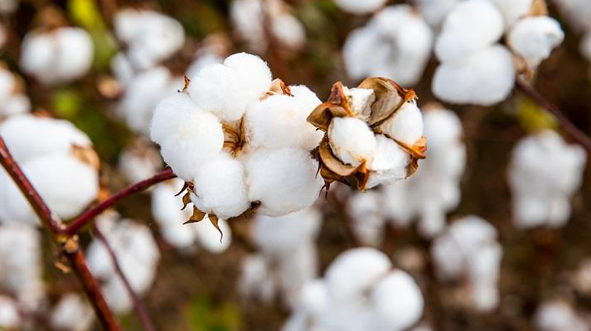
Australia, one of the world’s largest cotton exporters, has seen a steep decline in its export earnings as global market conditions continue to weigh on prices. According to trade data, the country’s average cotton export price has fallen 29% since 2022, sliding to $2.41 per kg in January–July 2025, compared to over $3.40 per kg three years earlier.
The downturn is largely attributed to global oversupply, weak textile demand in key markets, and high carryover stocks from previous harvests. Major consuming countries have slowed their imports amid sluggish apparel sales, while retailers and brands continue to adjust inventories following the post-pandemic boom.
Despite being a high-quality cotton producer—renowned for its contamination-free fibre—Australia has not been immune to international price pressures. Export volumes during the first seven months of 2025 slipped 7.8% year-on-year to 385.6 million kg, while total export value plunged 35.2% to $928.4 million.
Key markets and shifts
China remained Australia’s single largest destination, accounting for 42.6% of shipments, followed by Bangladesh, Vietnam, India, and Indonesia. However, buyers in these countries have been sourcing more competitively from Brazil and the US, where aggressive pricing and logistical advantages are reshaping trade flows.
Bangladesh—ranked the second-largest buyer—saw steady inflows of Australian cotton but at lower unit prices, benefiting spinners who are struggling with rising costs in yarn production and falling global apparel orders.
Market dynamics
The price fall mirrors the global cotton scenario. According to the International Cotton Advisory Committee (ICAC), world cotton production is expected to outpace consumption in 2025, creating a surplus of nearly 1.2 million tonnes. This has pushed benchmark prices on the Intercontinental Exchange (ICE) down by around 20% since mid-2023.
Analysts note that while Australian exports remain competitive in terms of quality, buyers are bargaining harder amid ample supply options. Vietnam and India have increased purchases of US cotton, while Pakistan has turned to Brazil for cost-effective sourcing.
Outlook
Looking ahead, Australian growers are bracing for further pressure as global demand shows little sign of quick recovery. Exporters are focusing on diversifying into premium long-staple markets and strengthening ties with South Asian spinners who value consistent fibre quality.
For Bangladesh’s textile industry, the dip in Australian prices could ease raw material costs in the short term, though fluctuating yarn and fabric demand continues to challenge profitability.