

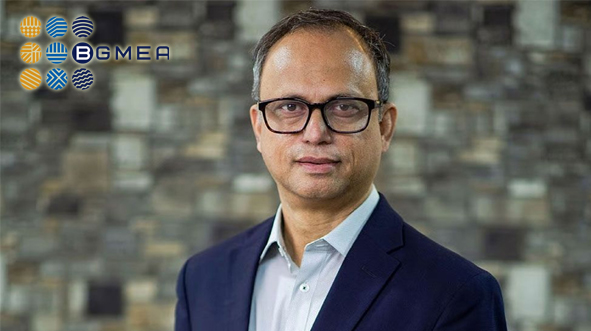
Welcoming the United States’ decision to reduce reciprocal tariffs on Bangladeshi exports from 35% to 20%, BGMEA President Mahmud Hasan Khan Babu has said the move offers significant relief to the country’s apparel sector and a renewed opportunity to expand its global market share—if critical domestic issues are addressed. “For the past three months, we’ve been operating under considerable uncertainty due to reciprocal tariffs. Doing business under such conditions is extremely difficult,” Mahmud said in a statement issued today. He noted that US buyers had also been closely observing the trade developments, which created anxiety on both ends of the supply chain. “Finally, seeing the tariff reduced to 20% offers us some comfort,” he added.
The recent tariff reduction follows months of pressure after the United States imposed a 35% countervailing duty on Bangladeshi goods earlier this year. While still 1% higher than Pakistan’s rate, Bangladesh’s new tariff level is now 5% lower than India’s and 10% lower than China’s—a relative advantage in the competitive global garment market.
Mahmud acknowledged that elevated duties could still disrupt trade volumes in the short term, saying, “Higher import duties mean US buyers will have to pay more upfront, which may strain their working capital. If they fail to arrange additional financing, they might reduce orders—ultimately, these costs could get passed on to US consumers, causing a dip in retail sales.”
He stressed that in earlier rounds of tariff hikes, some buyers had shifted financial burdens onto Bangladeshi suppliers. “This time, I want to be very clear to our BGMEA members: the responsibility to bear these additional duties lies with the importers and buyers. Suppliers must not be forced to absorb the impact,” he asserted.
Mahmud further noted that with China still facing a 30% tariff—with no final figure announced—Bangladesh may continue to benefit from shifting orders away from China. “This presents an opportunity for Bangladesh to grow its market share—but only if we take action,” he warned. He identified three immediate priorities to capitalize on this window:
1. Ensuring uninterrupted energy supply to maintain factory productivity.
2. Expanding Chattogram Port capacity to handle increased export volumes efficiently.
3. Safeguarding political stability to reassure foreign buyers and investors.
On the broader trade deal between Bangladesh and the United States, details of which are still emerging, Mahmud expressed confidence in the country’s negotiators. However, he urged the government to honor its side of the agreement to avoid future setbacks. “These include short-term commitments like wheat, cotton, and LNG imports, as well as long-term promises such as purchasing aircraft. If we fail to fulfill these, it could trigger fresh challenges in trade relations,” he cautioned. With the competitive landscape evolving and global buyers reassessing sourcing destinations, Mahmud Hasan Khan Babu called on all stakeholders—government, industry, and logistics partners—to act swiftly and decisively.





Comment here