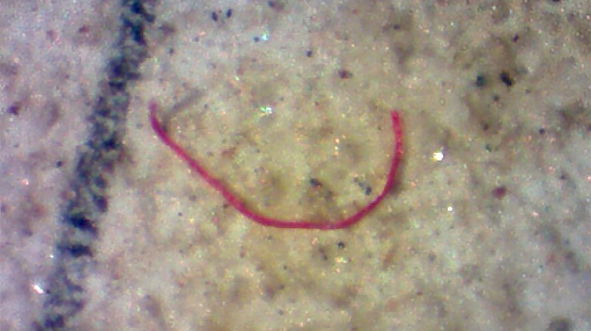
Researchers at the German Institutes of Textile and Fiber Research Denkendorf (DITF) have developed an innovative textile-based cascade filtration system designed to significantly reduce microplastic release from synthetic textiles during washing.
Microfibers shed during laundry—estimated at 12 to 1,400 mg per kilogram of textiles per wash—often pass into wastewater systems and eventually enter aquatic ecosystems and the food chain. While treatment plants can remove up to 99% of microplastics, the sheer volume of wastewater still results in environmental leakage.
The newly developed system features a three-stage cascade filter made from polypropylene fabric and 3D spacer textiles, capable of capturing particles as small as 1.5 micrometers. Its low-pressure operation, simple design, and reduced maintenance requirements make it suitable for industrial-scale use.
Field tests at industrial laundries and municipal wastewater plants demonstrated separation efficiencies of up to 98.5%, highlighting the system’s potential as a scalable and cost-effective solution to tackle microplastic pollution at source.
The researchers noted that the textile-based filtration medium can also be adapted for broader applications, offering promising prospects for sustainable wastewater treatment technologies.