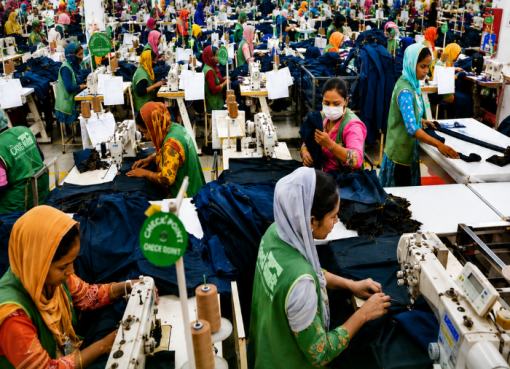
Driving Transparency in Bangladesh’s Textile Supply Chain
BTJ: Could you briefly introduce Aware and its mission?
Muyeed Hassan: Aware™ is a Amsterdam-based, “phygital” (physical + digital) sustainability traceability platform co-founded by Feico van der Veen and Koen Warmerdam in 2020. He observed a major gap in the supply chain—while physical products were available, the authenticity and reliability of data behind those products were often questionable. Suppliers frequently took weeks to provide information, and even then, the data was often inaccurate or misrepresented.
This led to the realization that data integrity is just as important as the physical product, as it builds trust with consumers.
Aware was founded to address this issue. Today, we offer a public blockchain-based platform that allows manufacturers to provide verifiable, real-time data and ensure compliance with global regulations such as:
• EU Digital Product Passport (DPP)
• UFLPA (Uyghur Forced Labor Prevention Act)
• French sustainability regulations
• EPR and ESPR frameworks
We promote a “fiber-forward” approach, where data is captured at each stage—yarn, fabric, and finished product—ensuring full transparency and traceability across the supply chain.
BTJ: Why is traceability becoming so important for manufacturers?
Muyeed Hassan: Traceability is no longer optional—it is driven by government regulations and consumer demand, not just brands.
Authorities, especially in the European Union, want to ensure that imported products are:
• Environmentally responsible
• Socially compliant
• Free from forced or child labor
For example, cotton from certain regions has been restricted due to labor concerns. Countries that could prove responsible sourcing regained market access through proper traceability.
At the same time, today’s consumers are highly conscious. They want to know:
• Where products come from
• How they are made
• What impact they create
So, traceability builds trust with brands, governments, and consumers, and becomes a key differentiator for global competitiveness.
BTJ: Traceability involves cost. Who should bear it, and what benefits do manufacturers receive?
Muyeed Hassan: That’s a critical question. Sustainability must be profitable—otherwise, it cannot be sustained.
Traceability does involve cost, but the goal is shared responsibility across the value chain.
For example, under EU frameworks like EPR and ESPR:
• Compliant companies may receive tax benefits
• Non-compliant ones may face penalties
Brands benefit first, but this value must trickle down to manufacturers.
Manufacturers can also charge a premium for sustainable products, such as organic or recycled textiles. However, collaboration is key—if everyone competes unrealistically (e.g., pushing for 50% recycled content without considering quality), it can lead to greenwashing.
When expectations align with reality, everyone benefits financially.
BTJ: What challenges are you facing in implementing traceability in Bangladesh?
Muyeed Hassan: Adoption is the biggest challenge. Any new system creates hesitation.
Manufacturers already deal with 200–300 audits annually, so additional requirements can feel overwhelming.
However, we are seeing positive change. Leading companies are realizing that:
• If services are brand-nominated, they don’t benefit financially
• But if they provide traceability services themselves, they can set prices and create value
This shift in mindset is encouraging.
BTJ: What percentage of Bangladeshi manufacturers are already involved in traceability?
Muyeed Hassan: Roughly 60–70% of manufacturers are already engaged in some form of traceability.
This is because many are working with:
• BCI cotton
• Organic cotton
• Recycled materials
• Certifications like GRS
However, the real challenge is not traceability itself, but aligning that data with global export regulations.
BTJ: Can you elaborate on the cost structure and benefits of Aware’s platform?
Muyeed Hassan: We operate on a monthly subscription model, typically ranging from €500 to €1,600 depending on usage.
• €500/year package → up to 300,000 tokens
• €1,600/year package → over 1 million tokens
The cost is relatively low compared to the value it creates.
The key benefit is empowerment—manufacturers can:
• Offer Digital Product Passports (DPP)
• Negotiate directly with brands
• Gain pricing power
In short, the return far outweighs the investment.
BTJ: If you could suggest a policy change for Bangladesh’s RMG sector, what would it be?
Muyeed Hassan: The government should provide greater incentives and financial support to exporters.
Previously, there was a 5% subsidy, now reduced to 1.5%, which is insufficient. Meanwhile, competing countries like India and Vietnam are increasing support.
If exporters are not supported, they face financial pressure and struggle with loans.
Providing incentives would:
• Boost exports
• Strengthen the industry
• Increase government revenue
It’s a win-win situation.
BTJ: What is your message to manufacturers who are not yet onboard with traceability?
Muyeed Hassan: Traceability is inevitable—it’s driven by governments and consumers.
The question is:
Do you want to adopt it early and lead, or wait and fall behind?
Forward-thinking companies can turn this requirement into:
• A competitive advantage
• Stronger brand positioning
• Higher profitability
We already see pioneers in Bangladesh investing in innovation and staying ahead of the curve.
My advice is simple:
Act now. Make your supply chain traceable—not just for compliance, but for growth.
BTJ: Thank you for your time.
Muyeed Hassan: It was my pleasure. I look forward to contributing more to the industry.