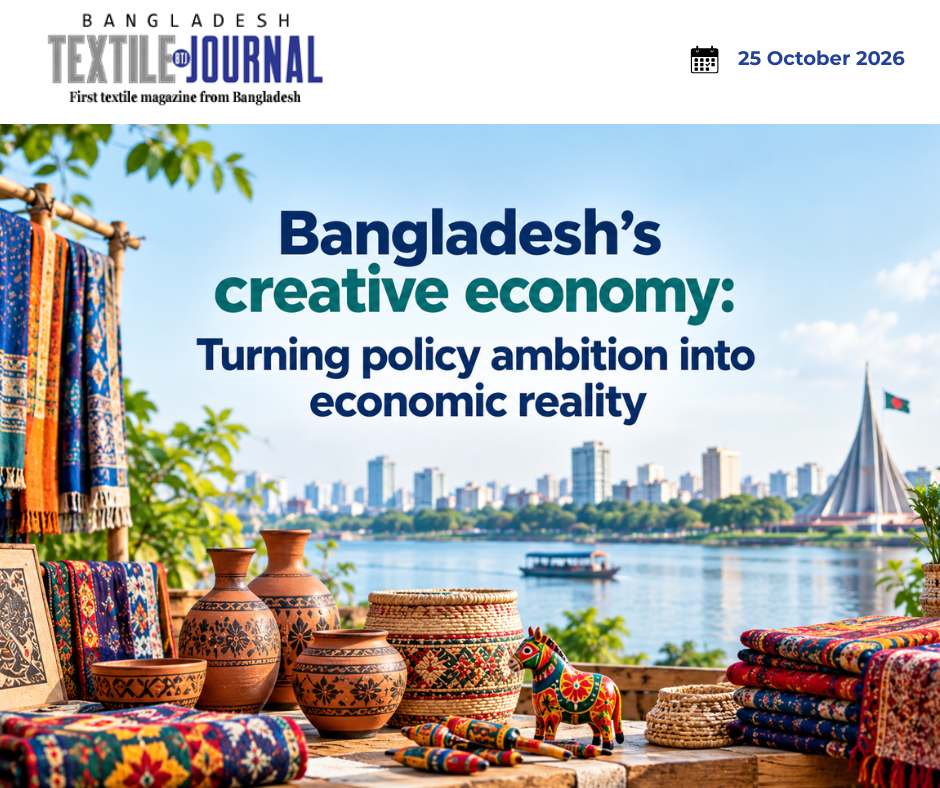
The government’s ambition to establish creative industries as a mainstream economic sector marks an important shift in recognising arts, culture and traditional craftsmanship as drivers of economic growth. Finance Minister Amir Khosru Mahmud Chowdhury recently highlighted plans to support artisans, painters and cultural workers through financing, skills development, design, branding and international e-commerce platforms.
However, turning this vision into a sustainable industry requires addressing several important gaps.
1. Policy and implementation: The government has expressed its commitment, but the reported announcement does not specify implementation timelines, institutional responsibilities, measurable targets or sector-specific development plans.
2. Access to finance: Although budgetary support and private investment are anticipated, details of funding amounts, eligibility criteria and financing mechanisms remain unclear. Accessible grants and affordable financing are essential for artisans and small creative enterprises.
3. Skills and business development: Creative talent must be supported by training in product development, quality control, pricing, packaging, digital marketing and business management. Training should translate into improved sales and sustainable incomes.
4. International market access: Platforms such as Amazon, eBay and Alibaba offer opportunities, but creators also need support with digital storefronts, international payments, shipping, export documentation and quality standards. Different approaches are required for handicrafts, music, films and theatre.
5. Fair prices and intellectual-property protection: Artisans need stronger bargaining power, direct buyer connections and transparent pricing to secure fair returns. Protecting traditional knowledge, original designs and creators’ rights is equally important.
6. Public-private partnerships: Collaboration among government, financial institutions, NGOs and cultural organisations must move beyond events and announcements towards coordinated programmes with clear responsibilities and measurable outcomes.
7. Data and international promotion: A baseline assessment of creative enterprises, employment, earnings and exports is necessary to evaluate progress. International exhibitions, cultural exchanges and distribution partnerships could also strengthen Bangladesh’s global visibility and soft power.
The way forward
Bangladesh needs a coordinated national strategy combining accessible finance, practical skills development, market infrastructure, intellectual-property protection and transparent performance monitoring. Support should be measured not only by funding allocated or programmes delivered, but also by increased creator incomes, sustainable employment, enterprise growth and export earnings.
The government has articulated an important ambition. The next challenge is implementation. Bangladesh’s creative economy can become a meaningful source of growth only when cultural talent is transformed into sustainable livelihoods and creators receive a fair share of the value they generate.