


Abstract
Lotus fiber, derived from the stems of lotus plants, is emerging as a sustainable and eco-friendly textile material with potential for commercial success. This article explores the history, properties, fiber extractions, process of lotus silk manufacturing, traditional and emerging markets, environmental benefits, and commercial viability of lotus silk fabric, positioning it as a promising alternative to conventional textiles in the fashion industry.
Introduction of Lotus Fiber
 Lotus fiber (Nelumbo nucifera), (Nelumbo lutea) extracted from the stems of lotus which grow naturally on Burmese lakes, especially on Lake-Inle. Almost all parts of lotus, i.e., leaves, flowers, seeds, and stems can be used for edible and medical purposes as well as clothing purpose. This is only the fiber that is the nano-fiber from natural fiber that is why it is called eco-friendly fiber. It is antibacterial and self-cleaning as well as superhydrophobic quality containing plant. The lotus stems, apart from being nutritious are much appreciated for its fibers. Delicate, thin strands of fibers are extracted from lotus stems and woven into fabric with silk-like properties and are thus called “Lotus Silk”.
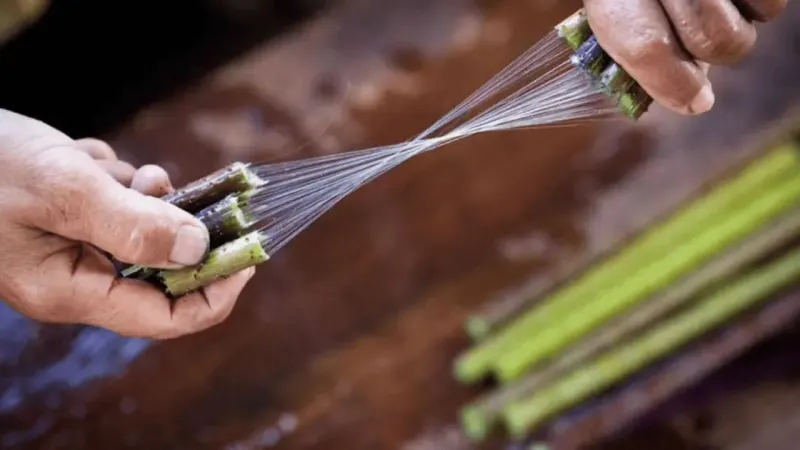
“Eco-friendly” is the new and emerging term in today’s life. Many new fibers are introduced in order to have a sustainable and environment friendly future for next generation. Working in the same direction, one such upcoming fiber is the lotus fiber. The lotus fiber consists of cellulose, hemicellulose, fat waxy, lignin, ash, pectin, amino acids, and so on, (cellulose is the main ingredient). Stems of the lotus plants are collected from the lake for the fiber making process. Then, take the stems bunches and mark a slight cut around them with the help of knives. After doing the slight cut around the stems, they are pulled and broken in to the parts. Twisted to expose fibers and windup on a role in the form of yarn. A spinner can produce up to 250 meters of thread a day. The material made from this fiber is light in weight. It can be dyed with both dyes-natural dyes and chemical dyes. The resulting fabric has the appearance of antique linen or raw silk, it is soft, exceptionally breathable and crease resistant. Due to manual and handy process, it is more expensive, that’s why it is not popular in the world. Around 30 kg of stems is needed to produce 250 meters of thread. The development of this fiber will give people to work in the original environments. It will become the means to support future generations, thus allowing this art to survive and increase their family income status. It is also known as sacred lotus, bean of India, Egyptian bean or simply lotus. This plant is an aquatic perennial. It has been cultivated very widely all over India, ranging from central and northern India (at altitudes up to 1,400 m or 4,600 ft. in the southern Himalayas). It has a very long history (c.3,000 years) of being cultivated for its edible seeds, and it is commonly cultivated in water gardens. It is the national flower of India and Vietnam. It is a symbol of divine purity and immortality in many Asian cultures, appearing in the hand of sacred Buddha. It has medical and cultural uses.
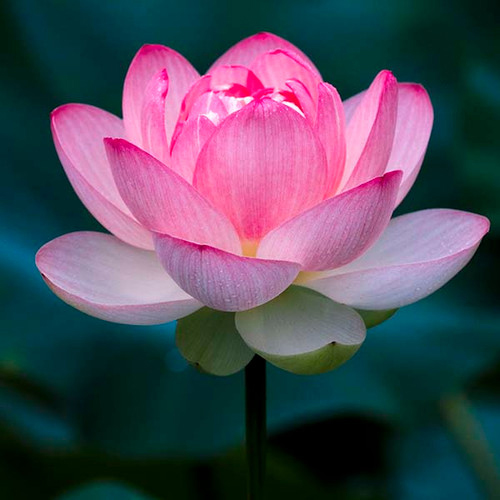
The roots of lotus are planted in the soil of the bottom of ponds or rivers, while the leaves float on the water surface or are held well above it. The flowers are usually found on thick stems rising several centimeters above the leaves. The plant normally grows up to a height of about 150 cm and a horizontal spread of up to 3 meters. The leaves may be as large as 60 cm in diameter, while the showy flowers can be up to 20 cm in diameter.
Speciality of Lotus Fiber
 Lotus plant has healing abilities and wearing a fabric made from lotus fiber is also believed to have the same effects. Lotus plants are pure by virtue and they emit this purity through fibers. By wearing lotus fiber fabrics, wearer feels calm, peaceful, and meditative. It also cures the wearer from headaches, heart ailments Asthma, and lung issues. The fabric made from lotus fiber is 100% organic and hence, are environmental friendly.
How did extracting Lotus Silk come into practice?
Extracting fibers from lotus stems have been in practice since 1910. Later during the 90’s designers, of Japan set up workshops to create a foreign market for their fabric. But due to low demand in Japan, lotus fiber fabric remained a rare and handmade textile.
Lotus silk is extracted and woven in Myanmar, Cambodia, Vietnam and even some parts of Manipur of India. Lotus silk is one of the most expensive and rarest fabrics in the world.
What makes Lotus Silk such a luxury?
One of the major reasons is that the entire process of manufacturing lotus fiber is completely manual. This natural fiber is only extracted by a few skilled craftspeople across the world. It is a highly time-consuming process. Moreover, the quantity of fabric produced is also limited.
Extracting enough lotus silk for one scarf can take two months, and the final product can cost 10 times as much as regular silk!
Properties of Lotus Fiber
Lotus silk is incredibly soft and smooth, providing exceptional comfort for wearers. The fiber is light and breathable, making it ideal for warm climates. Lotus silk has natural moisture-wicking properties, keeping the skin dry and comfortable. It is naturally hypoallergenic, suitable for individuals with sensitive skin.
The followings are specific technical properties of Lotus Fiber:
1. It is a cellulosic fiber and the finest aquatic fiber, also we can say it is a waterproof fiber.
2. It is cool, stiff, breathable, and comfortable fiber.
3. It has good elasticity, crease resistant, moisture absorbent, and dries fast.
4. Lotus fiber is of multi-filament structure, with a diameter of around 6 to 8 microns.
5. The length of lotus fibers can vary, but they are typically around 15 to 20 cm long.
6. Lotus fiber is naturally creamy white in color.
7. Fabric produced with this fiber has outstanding properties.
8. Breaking tenacity is 3.44 cn/dtex, initial modulus is 146.81 cn/dtex, and elongation at break is 2.75%.
9. Crystalline index is 62.
10. The moisture regain is around 7%.
11. Lotus fiber has good insulation properties, keeping the wearer warm in cold weather and cool in hot weather.
12. Lotus fiber has natural UV resistance, providing some protection against the sun’s harmful rays.
13. It doesn’t contain any chemical or toxic products, so it produces ecological fabric.
Applications of Lotus Fiber
Fashion and Apparel: Lotus fiber is primarily used in the fashion industry to produce luxurious garments. Its soft texture, breathability, and natural sheen make it ideal for high-end clothing, including dresses, scarves, and traditional attire. Designers are drawn to its unique aesthetic and sustainable production process.
Home Textiles: Besides apparel, lotus fiber is being used in home textiles. Products such as curtains, upholstery, and bedding benefit from the fiber’s durability and natural beauty. The eco-friendly nature of lotus fiber appeals to consumers looking to make sustainable choices for their
homes.
Active Wear: The moisture-wicking and breathable properties of lotus fiber make it suitable for active wear. As consumers seek more sustainable options in sports and casual wear, lotus fiber offers a natural alternative to synthetic materials. Its hypoallergenic nature is an added advantage for active wear designed for sensitive skin.
Luxury Goods: The exclusivity and luxury associated with lotus fiber have led to its use in high-end accessories and luxury goods. Items such as handbags, ties, and other fashion accessories made from lotus silk cater to a niche market that values sustainability, and unique and handcrafted products.
Cosmetics: Lotus fibre is used in some cosmetic products, such as face masks and lotions, due to its antioxidant and anti-inflammatory properties.
Traditional and emerging markets
Southeast Asia: Lotus fiber has been used traditionally in Southeast Asia, particularly in Cambodia and Myanmar, where artisans have been extracting and weaving the fiber for centuries. The luxurious and sustainable nature of lotus silk has made it a symbol of cultural heritage and artisanal craftsmanship.
Europe: The European fashion industry has begun to explore the potential of lotus fiber. Luxury brands and high-end fashion designers are incorporating lotus silk into their collections, recognizing its appeal to environmentally conscious consumers. European markets appreciate the fiber’s sustainability and the story of traditional craftsmanship behind it.
North America: In the United States and Canada, the focus on sustainable and eco-friendly products has driven interest in lotus fiber. Fashion designers and sustainable brands are experimenting with lotus silk to create unique, high-quality garments that appeal to eco-conscious consumers. The fiber’s hypoallergenic and moisture-wicking properties also make it attractive for active wear and upscale casual clothing.
Asia: Beyond Southeast Asia, other Asian countries such as Japan and South Korea are exploring the use of lotus fiber. These markets are known for their appreciation of high-quality, innovative textiles. Lotus fiber’s unique characteristics and sustainable production process align well with the growing trend towards environmentally friendly fashion in these regions.
Manufacturing advantages
The manufacturing process doesn’t require any gas, petrol, electricity or additional water. Lotus flower is a ‘Phyto-sanitary’ plant that cleans the water in which it grows and preserves the ecosystem while protecting fishes and insects. The whole process takes place within the framework of sustainable development.
Disadvantages of Lotus Fiber
Raw material collection to yarn spinning and weaving is completely handmade. So, the process is time-consuming and expensive. The lotus fabric must be woven within 24 hours to prevent the deterioration of the fiber.
Process of Lotus Silk Manufacturing
The entire manufacturing process is handmade. The process begins with fiber extraction, spinning it into yarn and making the fabric, which is time-consuming. This also limits the quantity of the fabric produced.
Step 1: Lotus harvesting
Lotus of different shades and colors are spread across thousands of water bodies and are harvested during the rainy season of June – November. The threads need to be processed within 24 hours while they’re still wet; otherwise, they’ll break. So, harvesting has to be done each day.
Step 2: Lotus Fiber extraction
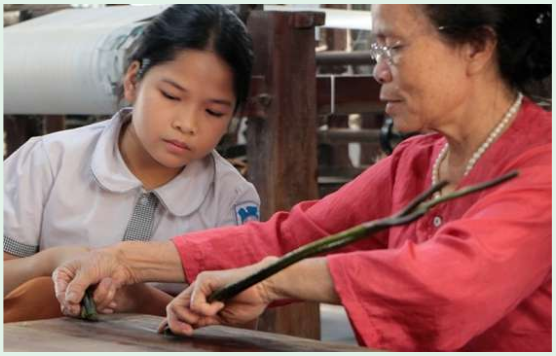
The stems of the lotus flowers are gathered by younger women in the mornings. Stems of the lotus plants are collected, cut, snapped, and twisted to expose its fibers. These stems are cut with shallow knife and 5-6 stems are snapped at one time, which reveals 20-30 fine white filaments of fiber. These filaments are drawn out of the stem, hung to dry and then rolled into single thread of 100-yard in length. It is very painstaking and time consuming process. To keep one weaver busy; around 25 thread makers are required.
Step 3: Preparing the Lotus Yarn
Fibers extracted from the stem are spun into yarn. Extracted fibers are placed in the skeins on a bamboo spinning frame to prepare yarns and transfer the thread into winders for warping. Threads are made up to 40 meters long to avoid entanglement. The threads are then taken from the warping posts, and are coiled into huge plastic bags. Yarns for the weft are wound into bamboo bobbins.
Step 4: Weaving of Lotus Fabric
Fabrics are woven in the traditional looms. The woven fabric has a width of approximately 24 inches. During the process of weaving, threads are frequently moistened with water, as lotus fibers need to be kept cool. The fabric is woven in 100-yard batches, and it takes about a month and a half to complete one batch. It’s estimated that around 32,000 lotus stems are required to make just 1.09 yard of fabric and 120,000 stems are required for one outfit, making the textile extremely exclusive. After weaving, the fabric is dyed with natural dyes and every part of the precious material is utilized in some way. Leftover scraps of yarn are twisted into the wicks of pagoda lamps, and leftover pieces of fabric are made into sequin-studded robes for mini-Buddha statues.
Step 5: Dyeing of Lotus Fabric, Fiber and Yarns
Only natural dyes are used on lotus fiber. Natural dyes are made from the bark of a tree, flower petals, leaves, and fruits. Yarns are dyed in skein forms in different dye baths. After dyeing, fabric and skeins are dried outside in sunlight.
Lotus fabric is the first natural microfiber and probably the most ecological fabric in the world. The plain woven pure lotus fabric is recommended for jackets, one piece and other dresses. The airy pure Lotus fabric is recommended for scarves, as it is especially breathable and light. Because of the time-consuming nature of the thread-making process, pure lotus cloth is rare and expensive, retailing at up to $4,00.00 per piece. For this reason, it is often mixed with cotton or silk.
Environmental benefits
 Since the entire process is eco-friendly, relying on manual labor without the need for chemical treatments or industrial machinery, there are number of atmospheric benefits of lotus fiber-made fabrics.
Sustainable Cultivation: Lotus plants grow abundantly in wetlands and do not require fertilizers, pesticides, or additional water resources, making their cultivation sustainable and eco-friendly.
Biodegradability: Lotus silk is biodegradable, reducing the environmental impact at the end of its life cycle.
Minimal Waste: The production process generates minimal waste, as all parts of the lotus plant can be utilized.
Carbon Sequestration: Lotus plants contribute to carbon sequestration, enhancing their environmental benefits.
Commercial viability
Several factors contribute to the commercial success of lotus silk:
 Luxury Appeal: The exclusivity and luxurious feel of lotus silk make it highly desirable in the high-end fashion market.
Sustainable Fashion Trend: Increasing consumer demand for sustainable and eco-friendly products positions lotus silk favorably in the market.
Cultural Heritage: Promoting lotus silk can support local artisans and preserve traditional crafts, adding cultural value to the material.
Market Expansion: With appropriate marketing and investment, the production scale of lotus silk can be expanded to meet global demand.
Challenges
While lotus silk has significant potential, challenges remain:
 Production Scale: One of the significant challenges in the widespread adoption of lotus fiber is the laborintensive and time-consuming production process. Each lotus stem yields a minimal amount of fiber, requiring thousands of stems for significant production. Innovations in extraction and processing techniques are needed to scale production while maintaining quality.
High Production Cost: The high cost of production makes lotus fiber more expensive than conventional textiles. However, as demand for sustainable and eco-friendly products increases, consumers may be willing to pay a premium for lotus fiber items. Efforts to optimize the production process and to reduce costs could make lotus fiber more accessible.
Limited Supply: Only a few places that produces lotus in this world, named India, Vietnam, Cambodia, Thailand etc. Thus the raw materials are very limited for collection. Expanding cultivation and harvesting practices can increase the supply of raw materials.
Consumer Awareness: Raising awareness about the benefits and unique qualities of lotus fiber is crucial for its global adoption. Educating consumers about the environmental impact of their textile choices and the sustainable nature of lotus fiber can drive demand. Marketing campaigns and collaborations with high profile designers can help increase visibility.
Conclusion
While lotus fiber has significant potential due to its sustainable properties and unique characteristics, its widespread use globally is currently hindered by high production costs, limited supply, and scalability challenges. However, with targeted investments in research, development, and marketing, lotus fiber could become a more prevalent material in the global textile industry, especially in the markets that value sustainability and luxury. It is said that with continued innovation and consumer education, lotus fiber can achieve commercial success on a global scale

References_____________________
I. Das, M. (2018). The Fabric of Sustainable Fashion: Lotus Silk. Retrieved from The Better India
II. Laurance, R. (2020). Lotus Silk: The Ancient Cambodian Fabric Making Waves in Sustainable Fashion. Retrieved from Eco-Age
III. International Trade Centre. (2021). Lotus Silk Production: A Sustainable and Innovative Textile Solution. Retrieved from ITC
IV. Fashion United. (2019). Lotus Silk: The Sustainable Fabric from Cambodia. Retrieved from Fashion United
V. Eco-Age
VI. Fashion United
VII. WWD and Textile Exchange
VIII. Sustainable brands
IX. The Guardian
X. Vogue and Eco textile news
XI. ITC and Scientific American
XII. Nature and BBC News







Comment here