

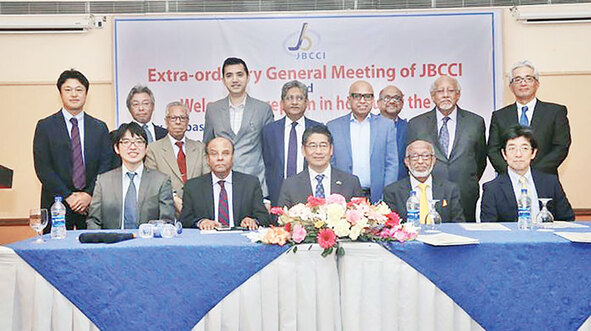
Japanese investment in Bangladesh has grown significantly over the past decade, with over 350 Japanese companies now operating in the country—nearly triple the number a decade ago. However, Tareq Rafi Bhuiyan Jun, president of the Japan-Bangladesh Chamber of Commerce and Industry (JBCCI), believes the investment potential remains far greater. He emphasizes that inconsistent policies, regulatory unpredictability, and weak infrastructure continue to deter further Japanese investment.
While sectors like light engineering, logistics, IT, manufacturing, and human resources attract interest, Bangladesh faces stiff competition from countries like Vietnam, India, and Indonesia. Investors are particularly sensitive to unstable policies, such as sudden changes in tax or customs regulations, which undermine long-term planning and confidence.
He cited the Bangladesh Special Economic Zone in Araihazar—a joint venture between Japan’s Sumitomo Corporation and the Bangladesh Economic Zones Authority (BEZA)—as a successful model. With world-class infrastructure and several firms already operating there, it serves as proof that well-executed projects can attract Japanese businesses. However, he warned that one success is not enough; faster rollout of similar zones and consistent policies are essential.
Common challenges include complex tax codes, customs delays, and discretionary authority at checkpoints, which especially hurt firms relying on precision equipment and time-sensitive imports. Jun called for urgent reform, including full digitization of customs processes and the reduction of bureaucratic bottlenecks. He also highlighted the importance of rewarding compliance and ethical business conduct to ensure fair competition. Lastly, Jun advocated aligning Bangladesh’s vocational training with Japanese standards to meet Japan’s growing need for skilled labor, offering mutual economic benefits.
Photo Courtesy by : Observer







Comment here