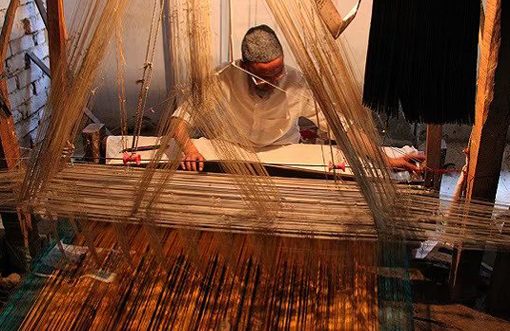
As the global textile industry prepares for ITMA ASIA + CITME 2026 in Shanghai from 20 to 24 November, machinery manufacturers are working to address a common set of challenges: rising production costs, pressure to reduce environmental impacts, shortages of skilled workers, increasingly demanding quality requirements, and the need to process a wider range of fibres.
The exhibition, which will occupy approximately 180,000 square metres across seven halls, is expected to bring together more than 1,800 exhibitors. Its programme covers the entire textile manufacturing value chain, including spinning, weaving, knitting, man-made fibres, dyeing and finishing, recycling, testing, and automation. Textile-reinforced composites and research into robotics, intelligent inspection, and artificial intelligence are also receiving dedicated attention.
For Bangladesh, one of the world’s leading apparel manufacturing and exporting countries, the technologies on display have implications far beyond machinery replacement. They could influence yarn quality, fabric productivity, dyehouse efficiency, product development speed, factory labour requirements, and the industry’s ability to meet customers’ sustainability expectations.
Five technology areas deserve particular attention.
1. Spinning and Recycling: Building the Next-Generation Spinning Mill
Spinning technology is entering a period of transition as manufacturers seek to combine higher productivity with improved fibre utilisation, automated material handling, and more consistent yarn quality. Recycling is adding another dimension: machinery must process increasingly variable raw materials without compromising the quality required by downstream knitting and weaving operations.
Rieter: Connecting Spinning Technology with Circularity
Rieter is developing its position across natural-fibre spinning and man-made-fibre technologies following its acquisition of Barmag, completed in February 2026. The company announced the establishment of Recycling Powerhouse Ltd. in July 2026, with the stated objective of industrialising, standardising, and scaling textile recycling.
This development is significant because textile-to-textile recycling requires more than a recycling machine. The quality and consistency of recovered fibres, preparation methods, spinning systems, and the final yarn specification all affect whether recycled material can be used successfully in new products.
For spinning mills, the challenge is to achieve a commercially viable balance between recycled content, yarn strength, evenness, productivity, and cost. Fibre length, contamination, fibre damage, and blend composition can all affect the final result.
Rieter’s wider technology strategy also points towards greater automation and digitisation across spinning processes. Connected equipment and production data can help mills monitor performance, identify process deviations, and improve operational decisions.
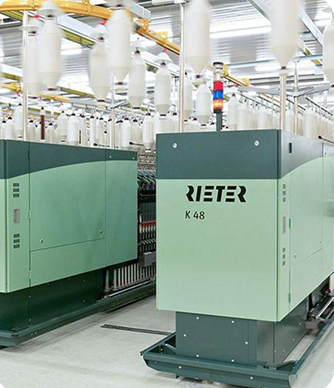
What Bangladesh should watch: Integrated spinning solutions, fibre preparation, recycling compatibility, energy consumption per kilogram of yarn, and the measurable quality of yarn produced from recycled blends.
Saurer: Rotor Spinning and Mechanically Recycled Fibres
Saurer’s Autocoro 11 rotor-spinning platform is relevant to mills investigating mechanically recycled fibres. Its June 2026 technology communication specifically addressed the efficient processing of mechanically recycled fibres.
Rotor spinning can be attractive for selected recycled-fibre applications because the process can accommodate certain shorter-fibre blends that present challenges for other spinning systems. However, performance depends on the raw material, yarn count, blend composition, machine settings, and the end-use specification.
Saurer’s broader portfolio includes rotor spinning, ring spinning, air spinning, twisting, and winding. Automated material handling and machine monitoring are important areas to examine when assessing the total productivity of a spinning installation.
The key commercial question is not simply whether a machine can process recycled fibre, but whether it can produce a consistent yarn at an acceptable production rate, with manageable waste and a competitive operating cost.
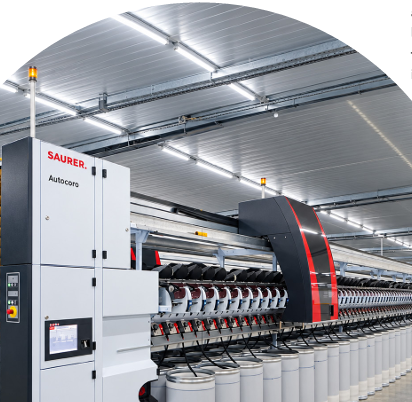
What Bangladesh should watch: Yarn quality from recycled blends, automatic doffing and material transport, operator requirements, machine utilisation, and energy consumption under comparable production conditions.
Trützschler: Preparing Short Fibres for Spinning
Trützschler’s 2026 announcements include its Integrated Draw Frame IDF 3, carding innovations, and the Pre-Cleaner CL-X. These technologies address different stages of fibre preparation, where cleaning, opening, carding, and drawing influence the consistency of the material entering the spinning process.
The IDF 3 is designed to integrate drawing into preparation for selected spinning applications, including rotor and air jet processes. The relevance to recycled fibres is particularly important because mechanically recovered textile material may contain a wider range of fibre lengths and require careful processing.
Trützschler has also reported productivity improvements for particular carding applications. Such figures must be assessed alongside the fibre type, production conditions, product quality, and machine configuration rather than assumed to apply to every installation.
For Bangladeshi spinning mills, improved fibre preparation could support more stable downstream production, but any investment should be evaluated through trials using the mill’s actual cotton, man-made fibres, or recycled blends.
The Investment Priority
The next generation of spinning mills will need to combine fibre flexibility with process control. Buyers and mill managers should request comparative data for yarn quality, production rate, waste, energy use, and maintenance costs. The most useful technology is the one that delivers repeatable results under real factory conditions.
2. Weaving Productivity and Energy Efficiency: More Than Loom Speed
Weaving remains a major area for investment because machine performance affects fabric cost, delivery schedules, and quality. However, the highest nominal loom speed does not automatically produce the lowest cost per metre. Warp and weft preparation, yarn quality, stoppages, fabric defects, and energy consumption all influence overall performance.
Picanol: Connected Weaving and Energy Management
Picanol’s portfolio includes the OmniPlus-i Connect air jet weaving platform and PicConnect, its digital platform for monitoring weaving operations. The company’s published technology communications have highlighted EcoBoost energy-saving developments and digital machine monitoring.
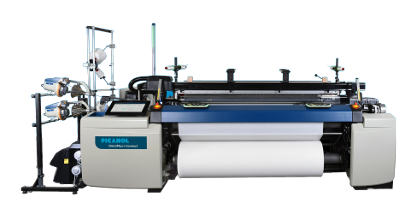
Air jet weaving uses compressed air to insert the weft yarn, making air consumption an important operating-cost consideration. Energy performance depends on fabric construction, machine settings, compressor efficiency, operating speed, and the condition of the installation.
Digital monitoring can help managers compare machine performance, identify recurring stoppages, and examine production data across a weaving department. The value comes from converting this information into practical improvements rather than simply collecting more data.
For Bangladesh, where large weaving operations may run many machines simultaneously, small reductions in energy use or downtime per loom can accumulate into meaningful savings at factory level.
What to request: Measured energy consumption per metre of fabric, production speed for a specified fabric, stoppage rates, and the conditions used for any advertised savings.
ITEMА: Rapier and Projectile Weaving
ITEMA’s technology portfolio includes rapier weaving platforms such as the R9500EVO and GalileoRX, alongside projectile weaving technology. In June 2026, the company announced the production of its first projectile weaving machines made in Italy at its Colzate headquarters.
Rapier and projectile systems serve different production requirements. Machine selection depends on fabric construction, yarn characteristics, width, production volume, and the required quality. Rapier technology can offer versatility across a broad range of fabrics, while projectile weaving is relevant to particular heavy, wide, or specialised fabric applications.
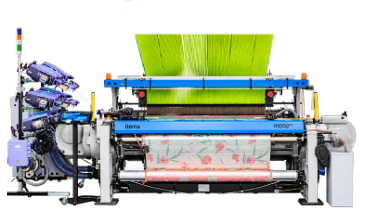
The commercial objective is to match machine capability with the product mix. Mills producing diversified fabrics may value flexibility, while mills running standardised products may prioritise throughput, reliability, and operating cost.
What Bangladesh should watch: Fabric-specific productivity, weft insertion reliability, maintenance requirements, energy consumption, and the ability to accommodate recycled or lower-consistency yarns.
Dornier: High-Performance Weaving for Demanding Fabrics
Dornier is known for weaving technologies including rapier and air jet systems, with applications spanning apparel fabrics and specialised technical textiles.
For manufacturers, the principal evaluation criteria include fabric quality, machine stability, flexibility across constructions, and the ability to maintain consistent production over long runs. Advanced controls can help operators manage process parameters, while machine connectivity can support maintenance and performance analysis.
For Bangladesh’s exporters, weaving technology decisions should be linked to the fabric categories being targeted, including denim, shirting, home textiles, and technical applications. A machine suitable for one category may not be the most economical choice for another.
Stäubli: Automation in Warp Preparation and Shedding
Stäubli supplies textile automation technologies including jacquard systems, shedding equipment, and warp preparation solutions. These systems influence the ability to produce complex patterns and manage demanding weaving operations.

Automation in these areas can reduce certain manual tasks and help improve process consistency. In jacquard weaving, the interaction between electronic pattern control, machine configuration, and the fabric design is especially important.
The strategic lesson: Bangladeshi weaving mills should assess the entire production system, from yarn preparation through loom operation, instead of judging investment decisions on nominal machine speed alone.
3. Knitting and Digital Product Development: From Virtual Design to Production
Knitting manufacturers are responding to demand for shorter product-development cycles, flexible manufacturing, complex structures, and reduced sampling waste. Computerised knitting and digital design tools can connect product development more closely with production.
KARL MAYER: Warp Knitting and Preparation Technology
KARL MAYER announced its ITMA ASIA 2026 programme in August, covering warp knitting, warp preparation, and customer demonstrations. Its planned technologies include new tricot machine developments, beam warping, sizing-box technology, and double-needle-bar Raschel applications.
Warp knitting is important for products such as sportswear fabrics, lingerie, footwear components, technical textiles, and selected industrial applications. Warp preparation is equally important because beam quality and yarn preparation affect machine stability and fabric consistency.
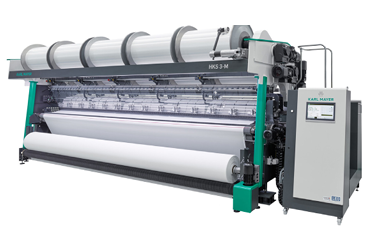
Sizing technology can influence yarn protection, abrasion resistance, and weaving performance. Any claimed reduction in sizing-agent consumption should be assessed alongside yarn performance, fabric quality, and downstream processing requirements.
SHIMA SEIKI: Computerised Knitting and 3D Development
SHIMA SEIKI’s technology ecosystem combines computerised knitting machines with CAD/CAM design tools. Its 2026 announcements have also included a partnership with CLO Virtual Fashion, linking garment visualisation and digital development with knitwear production workflows.
Digital sampling can allow designers and product teams to evaluate shapes, colours, and garment concepts before committing to physical samples. When the digital model, material properties, and production data are sufficiently aligned, this can help reduce some sample iterations and speed up communication between design and manufacturing teams.
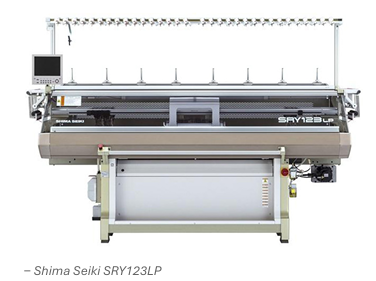
However, digital sampling does not eliminate the need for physical validation. Yarn behaviour, drape, stretch, dimensions, and finishing can differ from simulated results.
For Bangladesh’s export-oriented manufacturers, integrating digital design with knitting and garment development could shorten approval cycles and improve coordination with international buyers.
Santoni: Seamless and Circular Knitting
Santoni specialises in circular knitting and seamless technologies. Seamless manufacturing can reduce or eliminate selected garment assembly operations, depending on the product design, while circular knitting supports efficient production of knitted structures.
The business case depends on the garment category, machine configuration, yarn, finishing requirements, and the volume of repeat orders. Seamless technologies can be particularly relevant for selected sportswear, underwear, and performance-apparel applications.
What Bangladesh should watch: Production time per garment, yarn consumption, waste, finishing requirements, flexibility across product styles, and the extent to which reduced sewing operations translate into lower total cost.
Cixing: Computerised Flat Knitting
Cixing is among the Chinese machinery manufacturers confirmed for ITMA ASIA + CITME 2026. Its computerised flat-knitting technology is relevant to shaped knitwear, patterned structures, and automated garment production.
For prospective buyers, important evaluation points include knitting speed for the intended design, gauge, needle configuration, yarn compatibility, programming workflow, changeover time, and support for maintenance and spare parts.
Rather than comparing machine specifications in isolation, factories should run production trials using representative styles and calculate the total cost of producing saleable garments.
4. Dyeing and Finishing: Water, Chemicals and Energy Under Scrutiny
Wet processing is one of the most important areas for sustainability improvements because dyeing and finishing can involve substantial water, heat, chemicals, and wastewater treatment. The best solutions combine process technology with careful recipe control, monitoring, and wastewater management.
Fong’s: The Intelligent Dyehouse
Fong’s and its associated technology businesses serve the dyeing and finishing sector. Their technology portfolio covers dyeing machines, washing and finishing systems, and digital process solutions.
An intelligent dyehouse aims to improve repeatability by linking recipes, process parameters, production scheduling, and machine data. Better control can help reduce avoidable reprocessing, inconsistent shade results, and excessive use of resources.
Low-liquor-ratio dyeing may reduce the amount of water and chemicals circulating in a process, but the outcome depends on the fabric, dye class, recipe, and operating conditions. A lower liquor ratio alone does not guarantee lower total environmental impact if other process stages require additional resources.
For Bangladeshi dyehouses, investment decisions should consider water use per kilogram of fabric, energy per kilogram, first-pass shade approval, chemical consumption, and effluent-treatment performance.
Imogo: Precision Spray Dyeing
Swedish company Imogo promotes spray-based dyeing technology designed to apply dye liquor to fabric with tightly controlled application. Its Dye-Max technology has been reported with liquor use as low as 0.7 litres per kilogram of fabric in a specified configuration.
This figure should be treated as a manufacturer-reported technology benchmark, not a universal result for every fabric or dyeing recipe. Comparisons must establish the fabric construction, shade, chemicals, production speed, residual liquor, wash-off requirements, and total water balance.
Precision application may offer opportunities to reduce excess liquor and improve control in suitable processes. The practical question for a mill is whether the technology can meet its required shade consistency, fastness, throughput, and product range.
Baldwin: Precision Application in Finishing
Baldwin Technology develops precision spray and process technologies, including TexCoat G4 for textile finishing. Precision application aims to place finishing chemicals where they are needed rather than relying entirely on conventional saturation methods.
The company has reported wet-pick-up reductions of up to 50% for certain applications. Actual savings depend on the finishing recipe, fabric, machine configuration, and baseline process. Reduced wet pick-up can potentially lower the energy required to evaporate water, but the full result must be measured in production.
Factories should compare chemical consumption, wet pick-up, drying energy, fabric performance, and reprocessing rates before and after installation.
The Measurement Imperative
Dyehouses should request documented trials and monitor water, energy, and chemicals per kilogram of saleable fabric. They should also assess wastewater quality, colour consistency, reprocessing, and total operating costs. This approach will help distinguish genuine process improvements from isolated equipment claims.
5. Man-Made Fibres and Integrated Production: Connecting Upstream and Downstream Technology
Synthetic fibres are central to sportswear, performance apparel, home textiles, and industrial applications. The ability to produce consistent filaments, manage texturing, and integrate production data affects the quality and cost of downstream yarns and fabrics.
Barmag: Filament Production and Process Integration
Barmag supplies machinery and systems for man-made-fibre production, including filament spinning and texturing. Following Rieter’s completion of the Barmag acquisition in February 2026, the two businesses are positioned within a wider group covering natural and man-made fibre technologies.
Filament production depends on precise control of polymer processing, spinning conditions, winding, and downstream texturing. Consistency in filament properties is important for yarn uniformity, fabric appearance, and performance.
For producers, relevant evaluation criteria include output per position, yarn quality, energy consumption, changeover requirements, automation, and the suitability of the system for the intended polymer and product.
The strategic opportunity is to connect upstream filament production with downstream spinning, texturing, and fabric manufacturing, using data to improve traceability and process control.
Vandewiele: Integrated Textile Machinery and Automation
Vandewiele’s portfolio spans several textile manufacturing segments, including carpet and other textile technologies. Its broader group approach connects machinery, components, yarn handling, and process-specific automation.
For integrated textile production, the value of automation often lies in the interaction between machines rather than in a single headline specification. Consistent yarn feeding, tension control, material handling, and monitoring can support repeatable quality and more efficient operation.
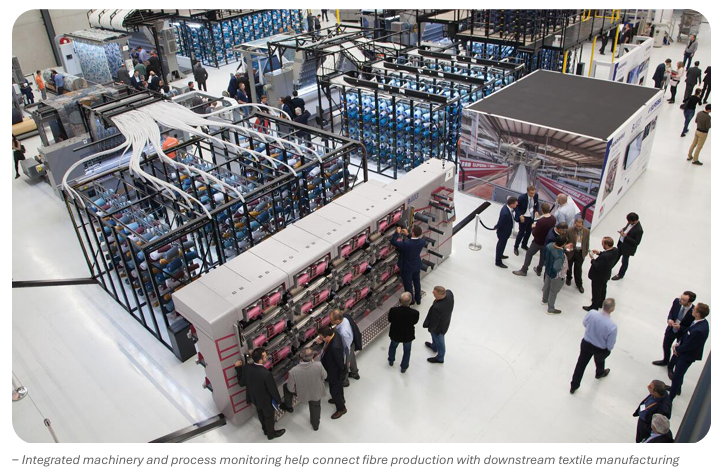
Factories considering integrated systems should examine the compatibility of machinery and software, maintenance arrangements, spare-parts availability, operator training, and the ability to measure production performance across the line.
What Should Bangladesh’s Textile Industry Take Away?
The five technology areas share one underlying principle: competitiveness increasingly depends on how effectively a factory integrates machinery, people, materials, and data.
For Bangladesh, priorities will differ by factory. A spinning mill may focus on fibre utilisation and yarn quality; a weaving mill on productivity and energy; a knitwear producer on digital development and changeover times; and a dyehouse on water, heat, and chemical consumption. Man-made-fibre producers will need to evaluate process consistency, automation, and downstream integration.
Before investing, manufacturers should ask suppliers for comparable production trials, independently verifiable performance data, lifecycle costs, local service arrangements, and realistic payback calculations. Sustainability claims should be assessed against clearly defined baselines and consistent measurement methods.
ITMA ASIA + CITME 2026 offers an opportunity to compare these technologies directly and discuss how they perform under Asian production conditions. Its expanded focus on recycling, digital platforms, automation, research, and textile-reinforced composites also signals that the next phase of machinery development will extend beyond conventional productivity improvements.
For Bangladesh, the challenge is to select and implement technologies that deliver measurable business and environmental results—not simply to acquire newer machines. The factories that combine technical investment with reliable data, skilled people, and disciplined process management will be better positioned to respond to the next generation of global textile requirements.
Bangladesh Textile Journal will continue to follow manufacturer announcements and technology developments ahead of ITMA ASIA + CITME 2026 in Shanghai.
Author Bio
Shawkat Iqbal is the founder and the Editor-in-Chief of Bangladesh Textile Journal (BTJ) and the textile industry analyst with more than 25 years of corporate and industry experience. He specializes in textile manufacturing, sustainability, circular economy, international trade, and technology trends. Through BTJ, he promotes industry knowledge sharing, global collaboration, and innovation across the textile and apparel value chain. He is a regular contributor to industry publications and a moderator and organizer of international textile industry events and business forums.