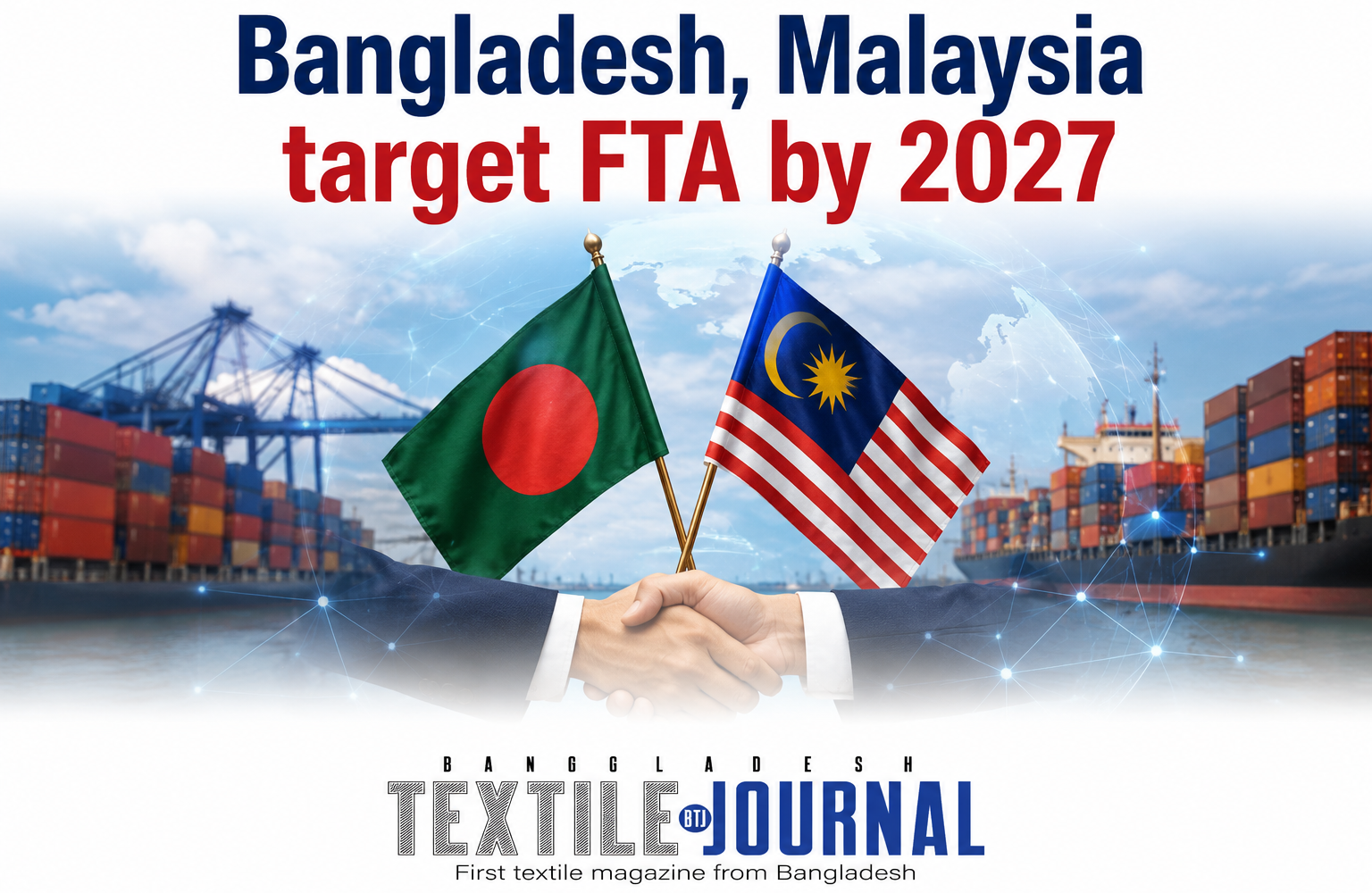
Bangladesh and Malaysia have agreed to accelerate negotiations on a bilateral Free Trade Agreement (FTA), aiming to finalize the deal by 2027 as both countries seek to deepen cooperation in trade, investment, labour, energy, digital technology, education and defence.
The commitment was announced in a joint statement issued following Prime Minister Tarique Rahman’s official visit to Malaysia, where he held bilateral talks with Malaysian Prime Minister Anwar Ibrahim in Putrajaya.
The two leaders reaffirmed their commitment to elevating Bangladesh-Malaysia relations and agreed to revive the long-pending Joint Commission Meeting and bilateral consultations. Recognizing Bangladesh as Malaysia’s second-largest trading partner in South Asia, both sides pledged to boost bilateral trade and investment while supporting the establishment of a Malaysia-Bangladesh Joint Business Council.
Priority areas for collaboration include telecommunications, energy, infrastructure, ports and logistics, halal industries, agro-processing, education, skills development, semiconductor manufacturing, smart industries and the digital economy. The two countries also agreed to strengthen cooperation in artificial intelligence, fintech, cybersecurity and digital governance.
On labour migration, Malaysia acknowledged Bangladesh’s proposal regarding worker recruitment while maintaining that new foreign worker quotas would continue to be approved based on employer demand and sectoral requirements. Both countries agreed to convene a Joint Working Group to review the existing labour Memorandum of Understanding and prepare a new framework to ensure safe and mutually beneficial migration.
The leaders also emphasized cooperation in higher education, with around 11,000 Bangladeshi students currently studying in Malaysia, and pledged to expand university partnerships, joint research and technical education initiatives.
In the energy sector, Bangladesh invited Malaysian investment in offshore oil and gas exploration, mineral extraction and renewable energy projects, while both sides reaffirmed cooperation on LNG supply and energy infrastructure. The two countries further agreed to enhance defence collaboration, including military training, technical exchanges, defence industry partnerships, counter-terrorism efforts and intelligence sharing.