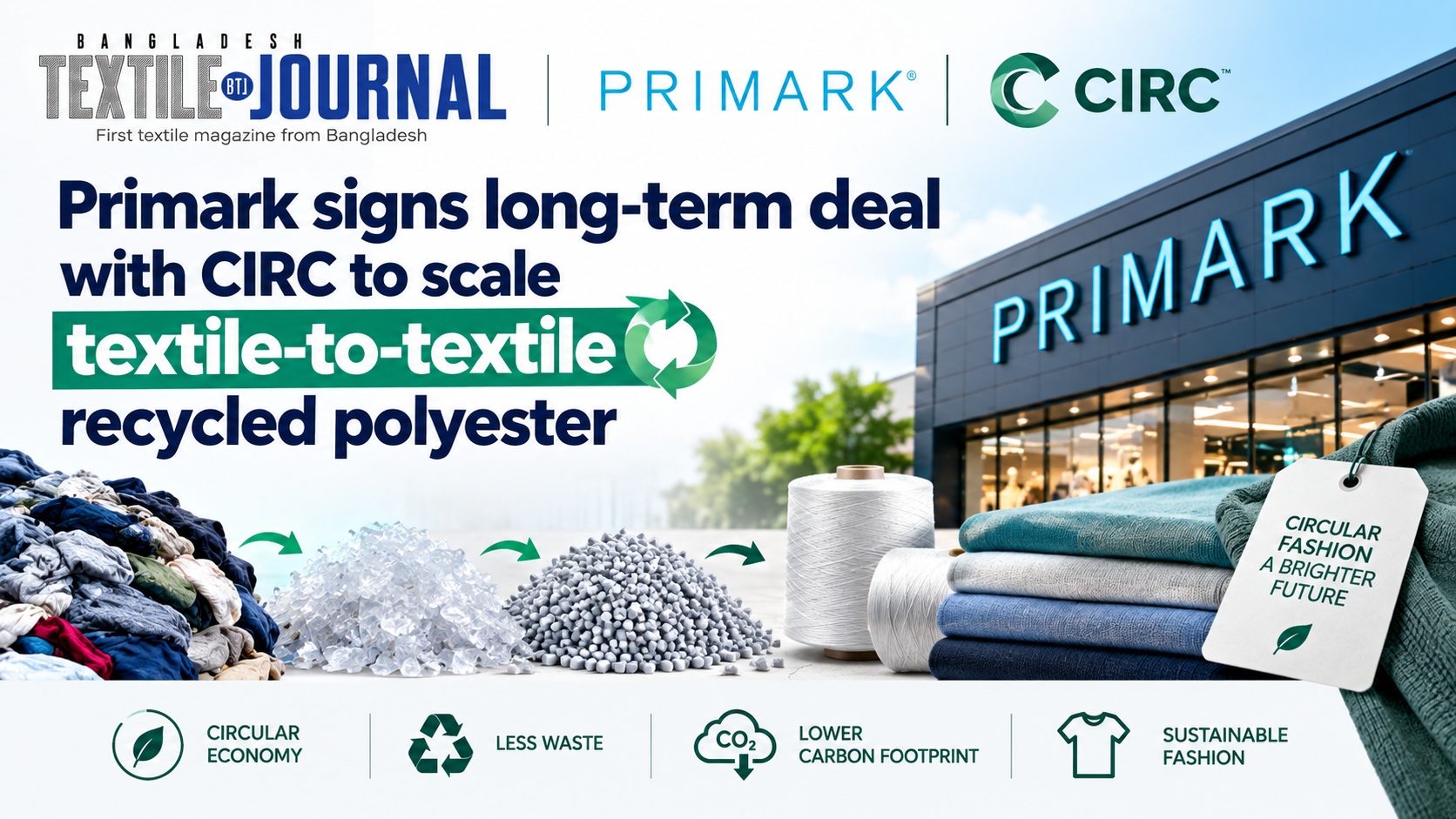
Fashion retailer Primark has signed a multi-year agreement with textile-to-textile recycling company Circ to purchase recycled polyester made from textile waste, with the material expected to enter Primark clothing from 2029.
The agreement is Primark’s first multi-year offtake agreement with a textile-to-textile recycler and provides Circ with a committed future buyer as it develops its first industrial-scale recycling facility in Saint-Avold, northeastern France. Financial terms and purchase volumes were not disclosed.
The planned Circ facility is designed to process approximately 70,000 tonnes of textile waste annually. The project is expected to require around $500 million in investment and is being developed through a combination of equity and debt, alongside potential grants and guarantees. Circ has stressed that the Primark agreement alone does not finance construction of the plant.
According to Circ CEO Peter Majeranowski, the long-term commitment provides greater visibility on future demand, helping reduce commercial risk and strengthen the company’s case with investors and financing partners.
Focus on difficult-to-recycle polycotton
A major attraction of Circ’s technology is its ability to process polycotton blends, which combine polyester and cotton and have traditionally been difficult to recycle at scale.
Circ’s technology is designed to separate the two components, recovering cellulose from cotton and the key building blocks of polyester for reuse in new textile production. The company says its process is designed to create materials that can return to fashion supply chains.
Primark said it evaluated textile-to-textile polyester providers for around 18 months before selecting Circ. The retailer highlighted Circ’s ability to address polycotton waste as an important consideration.
The French facility is expected to create around 200 jobs and is planned as a major industrial-scale textile recycling project. Circ currently expects the facility to become operational around 2029.
Primark expands recycled-fibre strategy
The agreement forms part of Primark’s wider efforts to increase the use of recycled and more circular materials. The company said that 39% of its clothing units sold in its most recent financial year contained recycled fibres, compared with 32% in the previous year, and it has stated an ambition to remove conventional materials from its clothing by 2030.
The Circ partnership is intended to provide another source of recycled material alongside Primark’s existing work with recycled fibres and suppliers.
For Circ, securing a major retail customer before its French facility reaches commercial production represents an important demand signal. Long-term purchasing commitments can help demonstrate market demand for recycled materials while the company develops the infrastructure required to process textile waste at industrial scale.
Recycling requires a wider supply chain
Both companies acknowledge that scaling textile-to-textile recycling will require more than recycling technology alone. Collection, sorting, feedstock preparation and traceability will be essential to ensuring that suitable textile waste reaches recycling facilities.
Circ says its process requires feedstock that meets defined technical specifications, while Primark has highlighted the importance of stronger collection and sorting infrastructure, advanced recycling technology and supportive policy measures such as effective extended producer responsibility schemes and recycled-content requirements.
The partnership therefore illustrates a broader shift in the textile industry: commercial demand, recycling technology, waste collection and investment infrastructure must develop together if textile-to-textile recycling is to move from pilot projects to industrial scale.
Circ’s Saint-Avold project is expected to become one of the largest planned facilities dedicated to recovering materials from blended textile waste.
For the fashion industry, the agreement also highlights an important principle: recycling alone cannot address the sector’s environmental impact if overall clothing volumes and virgin-material consumption continue to rise. Scaling circular materials will need to go hand in hand with more efficient resource use, longer product lifetimes and better-designed textile systems.