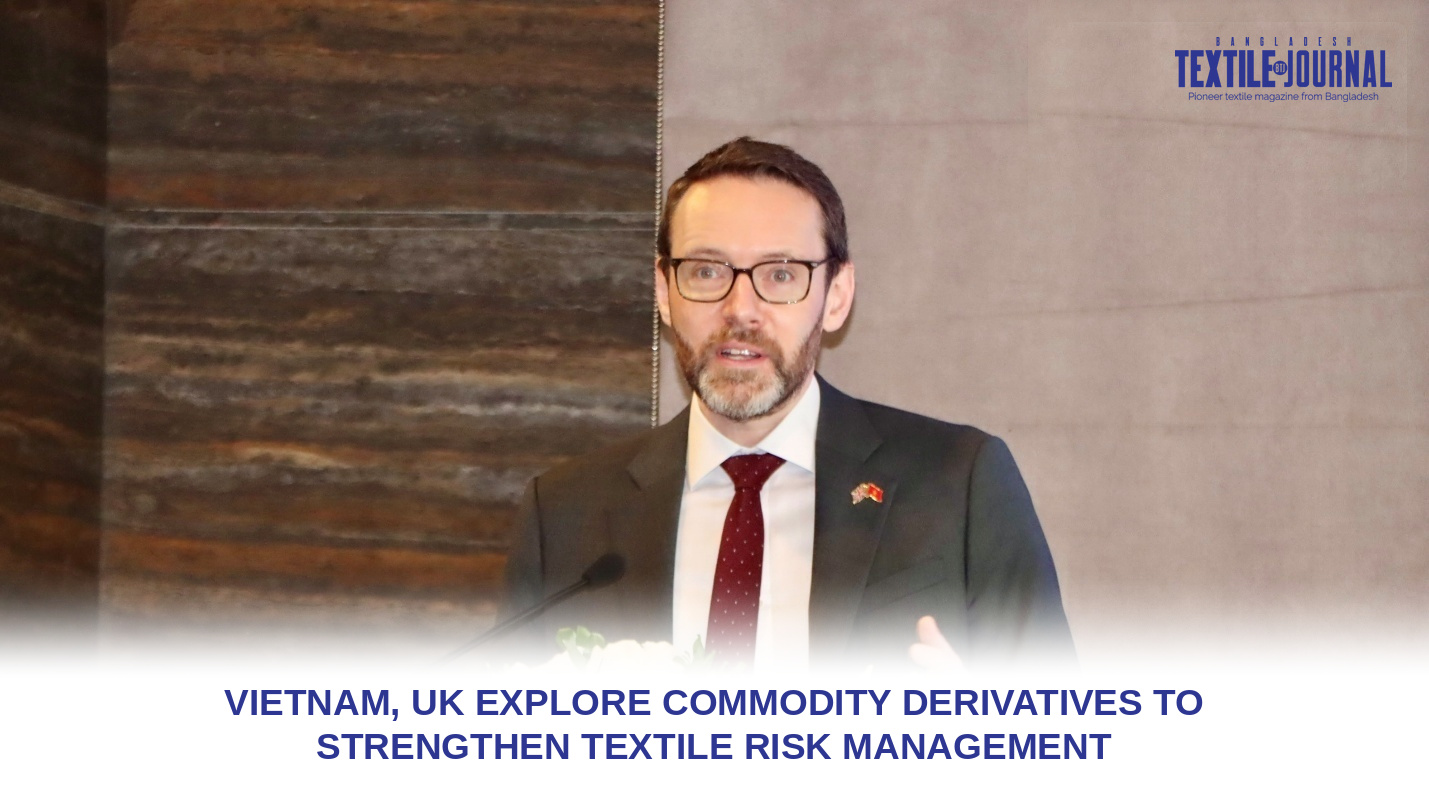
Vietnam and the United Kingdom are expanding financial cooperation, including plans to develop commodity derivatives that could help textile and other export-oriented industries manage raw-material price volatility and market risks.
The issue was discussed at the Vietnam-UK High-Level Conference 2026 in Hanoi, where the two sides explored cooperation in finance, fintech, artificial intelligence, logistics, digital assets and commodity markets.
Deputy Minister of Industry and Trade Phan Thị Thắng said Vietnam wants to build a transparent and professional commodity trading and derivatives market linked to the needs of producers and import-export businesses. Such instruments could help textile manufacturers improve cost visibility and manage risks associated with raw materials, energy and transportation.
The initiative is part of Vietnam’s wider plan to establish international financial centres in Ho Chi Minh City and Da Nang, supported by stronger regulation, digital finance and international expertise.
The UK is expected to contribute experience in financial regulation, commodity derivatives, trade finance, insurance, logistics and risk management. The two countries are also considering cooperation in green finance, supply-chain finance, cybersecurity and fintech.
Bilateral economic ties are expanding. Vietnam’s Ministry of Industry and Trade said two-way trade reached a record nearly $9.4 billion in 2025, while trade during the first five months of 2026 reached nearly $4.1 billion, up 12.5% year on year.
The UK-Vietnam Free Trade Agreement has been in force since 2021, while the UK and Vietnam have also traded under the CPTPP since December 2024, creating additional opportunities for market access and supply-chain integration.
For Vietnam’s textile and apparel sector, deeper access to financial and risk-management instruments could become increasingly important as exporters face volatile fibre prices, energy costs, freight rates and changing global demand.