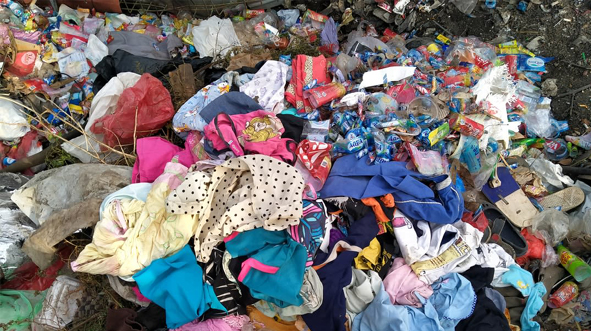
Bangladesh’s textile and apparel industry — one of the largest globally — faces a mounting challenge: managing blended textile waste generated across its vast supply chain. Yet, within this challenge lies an immense opportunity to transform waste into economic value and advance the nation’s transition toward a circular economy.
To address this potential, Intellecap recently hosted an interactive Capacity Building and Knowledge Dissemination Workshop in Dhaka, attended by H&M Group’s business partners and suppliers.
The event was part of the Switch to Circular Economy Value Chains (SWITCH2CE) initiative — a global program co-funded by the European Union and the Government of Finland, and led by UNIDO, to help enterprises integrate circular business models and sustainable production practices.
Pioneering circular innovation
The workshop showcased the H&M Group-led SWITCH2CE pilot, developed in collaboration with Circ®, a pioneer in textile-to-textile recycling technology. The pilot successfully demonstrated that Circ’s patented process can recycle blended post-industrial textile waste into new, high-quality fibers and garments, proving that large-scale product circularity is achievable in Bangladesh.
Circ’s technology was selected for its ability to separate and regenerate blended fibers, including complex cotton-polyester combinations, while maintaining fiber quality. The company’s continuous efforts to optimize its recycling process for lower carbon and water footprints reinforce its alignment with Bangladesh’s sustainability ambitions.
Building the ecosystem for circular success
Speakers emphasized that technology alone cannot drive circular transformation. A thriving circular ecosystem requires a robust infrastructure for waste collection, sorting, and segregation, coupled with renewable energy integration and capacity building across local value chains.
Participants discussed how policy support, private investment, and knowledge-sharing can strengthen local supply chains, ensuring a consistent feedstock for textile-to-textile recycling and creating new opportunities for green jobs and innovation.
The road ahead
The key takeaway from the workshop was clear: the future of Bangladesh’s textile circularity depends on blending cutting-edge recycling technology with systemic ecosystem development. By fostering collaboration among brands, suppliers, recyclers, and policymakers, Bangladesh can position itself as a global leader in sustainable manufacturing.
As Intellecap and its partners continue to build capacity and share best practices, the goal remains to empower the RMG sector with the knowledge, technology, and partnerships necessary to make Bangladesh’s transition to a truly circular textile economy a global benchmark.