BTJ: Stäubli has built a strong reputation as a global leader in textile machinery. How do you see the company’s role evolving as the textile industry moves toward greater automation, digitalization, and sustainability?
Summer Hsia:
Stäubli’s role is to support textile manufacturers through this transformation with reliable, high-performance and future-oriented technologies. Thanks to our comprehensive range of solutions in weaving preparation, shedding systems, Jacquard technologies and technical weaving systems, we help weaving mills move forward in automation, digitalization and sustainability — three areas that are now deeply connected.
Our objective is to help customers improve productivity, reduce downtime, control quality more consistently and use resources more efficiently, while maintaining the long-term reliability that Stäubli is known for.
In a market where investment decisions must be carefully justified, our technologies are also designed to support a strong return on investment by improving machine availability, reducing operating constraints and creating value over the long-term.
BTJ: Bangladesh has become one of the world’s largest textile and apparel manufacturing hubs. How important is Bangladesh to Stäubli’s global textile business, and what trends are you observing in this market?
Summer Hsia:
Bangladesh is an important market for Stäubli because it has established itself as a highly competitive textile manufacturing base, shaped by strong cost pressure and a fast-evolving industrial organisation.
We see a market relying heavily on large-scale, continuous production, where mills need to strictly control production costs, minimize process interruptions and ensure consistent fabric output. There is also an ongoing structuring of weaving and warp preparation to improve production autonomy.
In this context, demand is increasing for robust, simple, reliable and easy-to-operate machinery that can support stable performance in demanding day-to-day production conditions.
BTJ: The concept of Smart Factories and Industry 4.0 is reshaping textile production. How is Stäubli helping manufacturers improve productivity through automation and intelligent weaving solutions?
Summer Hsia:
Stäubli supports the move toward smarter factories by focusing on the concrete automation of key production steps. In weaving preparation, automated drawing-in and warp tying help mills save time, reduce manual intervention and improve consistency from one style change to the next.
In shedding and Jacquard applications, our technologies contribute to precise motion control, stable high-speed operation and reliable fabric quality. This practical approach to automation helps manufacturers increase productivity while making daily operations more controlled and repeatable.
BTJ: What are the latest innovations or technologies introduced by Stäubli that you believe will significantly impact weaving mills over the next few years?
Summer Hsia:
Several recent solutions are particularly relevant for modern weaving mills. The SAFIR PRO range supports automated drawing-in with high speed and accuracy, helping mills improve preparation efficiency. TIEPRO offers fast and reliable warp tying for standard yarns.
In shedding, our cam motions and electronic rotary dobbies support stable high-speed operation, while our PRO range Jacquard machines offer precision, flexibility and energy-efficient performance for complex fabrics.
Together, these technologies help mills increase productivity and quality while reducing operational constraints.
BTJ: Sustainability is now a key purchasing criterion for brands and buyers. How do Stäubli’s technologies contribute to reducing energy consumption, minimizing waste, and improving overall production efficiency?
Summer Hsia:
For Stäubli, sustainability is closely linked to efficiency, durability and reliability. Our machines are designed for long service life, reduced maintenance needs and stable operation over many years.
By improving process accuracy, automation also helps reduce errors, fabric defects and unnecessary waste. In addition, our latest technologies integrate energy-efficient design principles, optimised motion control and digital support tools to help customers improve resource usage throughout the machine lifecycle.
With their robust design and long service life, our machines also have strong resale value that contributes to sustainability, as machines can remain in operation for many years and continue creating value beyond their first installation.
BTJ: How are digital technologies such as IoT, predictive maintenance, artificial intelligence, and data analytics influencing the future of weaving machinery?
Summer Hsia:
Digital technologies are adding a new layer of intelligence to weaving machinery. Beyond mechanical performance, they help transform machine data into useful information for operators, maintenance teams and production managers.
At Stäubli, this is reflected in solutions such as the TC8 controller for Jacquard PRO machines, which supports advanced electronic control and monitoring functions, and in digital platforms such as MyStäubli, which centralise access to machine information, technical documentation, service support and spare parts.
The objective is to make equipment easier to supervise, maintain and manage throughout its lifecycle.
BTJ: Beyond supplying machinery, how does Stäubli support customers through training, technical service, and knowledge sharing to maximize machine performance?
Summer Hsia:
Stäubli works closely with customers throughout the entire machine lifecycle. This includes technical consulting before investment, support during installation, operator training, preventive maintenance, spare parts availability and after-sales service.
Our local teams and global experts work together to ensure that customers can operate their machines efficiently and maintain performance over time. This partnership approach is essential because customers do not only need equipment; they need long-term support and expertise.
BTJ: Many textile manufacturers are facing higher production costs, labour shortages, and increasing quality requirements. How can automation help address these challenges?
Summer Hsia:
Automation helps mills reduce dependency on manual operations, shorten preparation times and improve process consistency. This is especially important when skilled labour is limited or production costs are rising.
Automated drawing-in, warp tying and precise shedding technologies help reduce errors, improve machine uptime and deliver more stable fabric quality. In this way, automation supports both productivity and competitiveness.
BTJ: Technical textiles continue to experience strong global growth. How does Stäubli see opportunities in this segment, and what technologies are supporting these applications?
Summer Hsia:
Technical textiles represent a very promising segment because they serve demanding applications such as automotive, aerospace, medical, construction and industrial uses. These fabrics often require high precision, special yarn handling and complex structures.
Stäubli supports this market with advanced Jacquard technologies, including the UNIVAL 100, LX2494 and LXL PRO Jacquard machines, as well as dedicated technical weaving systems such as TF20 and TF30 for 3D wovens.
In weaving preparation, the MAGMA is a high-efficiency warp-knotting machine designed to handle demanding technical yarns with reliability and ease, while the SAFIR PRO S37 drawing-in machine is ideal for processing technical yarns like glass.
BTJ: International exhibitions such as ITMA and ITMA ASIA+CITME have become important platforms for innovation. What were the key highlights from Stäubli’s recent exhibitions, and what message did you want to convey to the industry?
Summer Hsia:
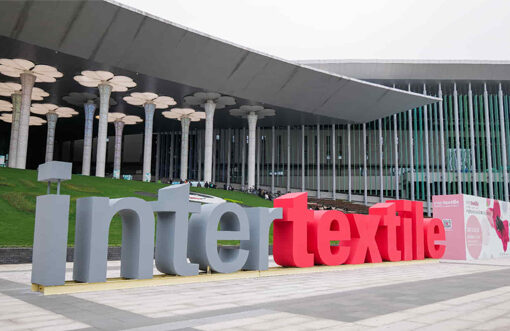
As part of the latest major textile exhibitions, ITM 2026 in Istanbul was an important opportunity for Stäubli to meet customers from Türkiye, the Middle East and surrounding textile markets, and to present solutions addressing productivity and reliability in daily weaving operations.
Looking ahead, several key events will allow us to continue this dialogue with customers and industry partners: IGATEX Pakistan in October, ITMA ASIA + CITME 2026 in November, and India ITME in December.
These platforms are important opportunities to connect with weaving mills across Asia and highlight our comprehensive portfolio.
Our message to the industry remains clear: Stäubli supports weaving mills with technologies designed for productivity, flexibility, energy efficiency and long-term reliability.
BTJ: What advice would you offer to Bangladeshi weaving mills that are looking to remain competitive in an increasingly demanding global marketplace?
Summer Hsia:
My advice would be to invest in technologies that create long-term value, not only short-term productivity gains. Mills should focus on automation, process reliability, energy efficiency, quality consistency and strong service support.
As global buyers become more demanding, competitiveness will depend on the ability to produce efficiently, respond quickly to changing orders and maintain stable quality. Choosing reliable partners and future-ready technologies will be key.
BTJ: How is Stäubli contributing to the transition toward a circular textile economy through machinery innovation and sustainable production technologies?
Summer Hsia:
Stäubli contributes to circularity by designing equipment that is built to remain useful for many years. This means focusing on robust construction, long-term maintainability, spare parts availability and the possibility to keep machines in operation beyond their first installation.
A durable machine with strong residual value helps reduce the need for premature replacement and supports a more responsible use of industrial assets.
In this sense, circularity is not only about reducing waste during production, but also about extending the value and lifetime of the equipment itself.
BTJ: Looking ahead to 2030, what major technological developments do you expect to redefine weaving and textile manufacturing?
Summer Hsia:
By 2030, weaving mills will be more automated, connected and data-driven. We expect stronger integration of digital tools, predictive maintenance, intelligent process control and flexible production systems.
Mills will need to manage shorter lead times, more varied fabric portfolios and stricter sustainability requirements.
The most competitive manufacturers will be those able to combine high productivity, agility, quality consistency and responsible resource management.