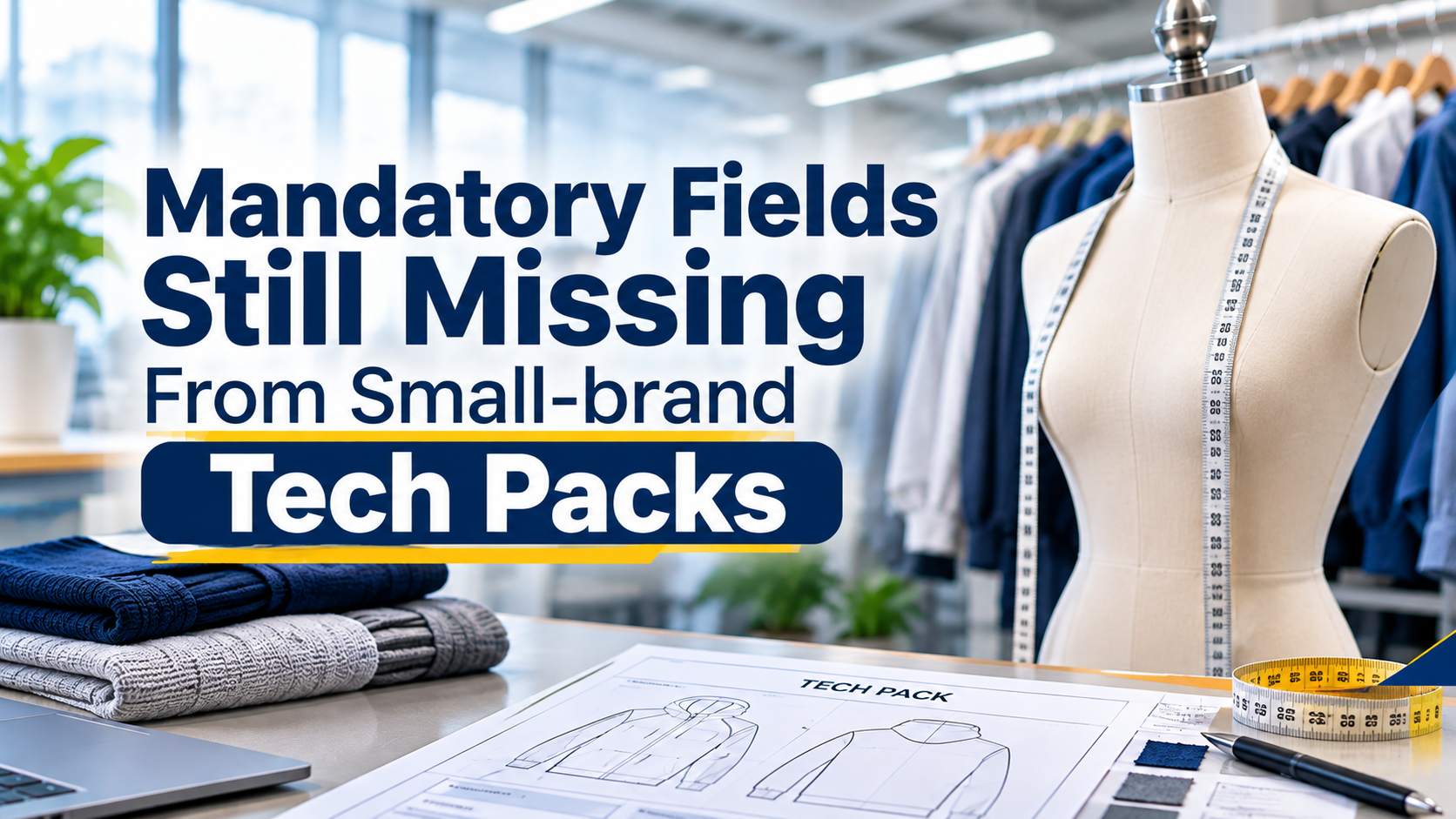
Small brands often treat a tech pack as a PDF that “looks complete.” On a cut-and-sew line in China, completeness is measured differently: can a cutter, a sewing supervisor and a QC inspector execute the same garment without calling the merchandiser every hour? The packs that fail that test usually share the same gaps. Four fields are still missing more often than not: tolerances, measurement method, reference-sample version, and revision ownership.
This is a practitioner note for merchandisers and sourcing teams who brief overseas factories. It is not a PLM product review. The examples are from cut-and-sew menswear programmes (tees, polos, shorts, light jackets and related styles) at roughly 100 pieces per colour per design and above.
Tolerances Are Not Optional Decoration
A measurement chart that lists “chest 56 cm” without a tolerance is an invitation to argue after bulk. Factories need a signed tolerance band for critical points – typically ±1 cm or ±0.5 cm depending on the point and the fabric – and a clear rule for what happens when a sample sits on the edge of the band.
Without tolerances, every PP sample becomes a negotiation. With them, QC can pass or hold a size set against a written standard instead of a WhatsApp screenshot. If you only add one field this month, add tolerances next to every critical measurement and state whether they apply to the graded size set or only to the sample size.
Measurement Method Must Travel with the Number
“Chest 56 cm” still fails if nobody agrees how chest is measured. Across brands we see three common methods for the same point: high-point shoulder to high-point shoulder then down; armhole to armhole at a fixed distance; or circumference measured on a flat garment with a specific fold. Each can produce a different number on the same sample.
Put the method in the pack: where the tape starts, whether the garment is flat or filled, and whether measurements are taken before or after wash. Attach a one-page diagram if the point is non-standard. When the method is missing, the factory invents one – and the brand discovers the mismatch only when bulk arrives.
Reference-Sample Version Control
Most disputes we see are not about the PDF. They are about which physical sample governs. Brands send a “gold” sample, then a revised sample, then a salesman’s sample with a different wash or print placement. The line receives one of them. Merchandising retains another. QC measures against a third photo.
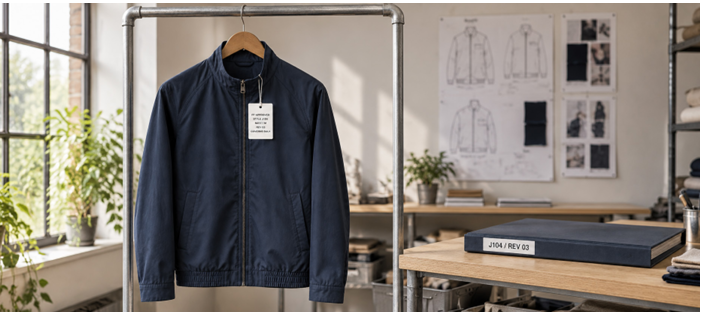
Name the governing sample in the tech pack: style code, colourway, size, date received, and a short label such as “PP approved 2026-09-12 – governs bulk.” If a later sample overrides it, issue a revision that retires the old label. Do not leave two sealed samples in the factory without saying which one wins.
Revision Ownership: Who Confirmed the Change Reached the Line?
Comments pile up in email, WeChat and shared drives. A pocket move approved in a mark-up never reaches the cutting table. A print colour corrected in a lab-dip email never updates the bulk strike-off log. The missing field is not another comment thread – it is an explicit owner and timestamp for “production has this revision.”
A workable minimum: every approved change lists (a) what changed, (b) who approved it, (c) the document or sample version that now governs, and (d) who at the factory confirmed the line received it. Until (d) exists, treat the change as not live.
A Minimum Viable Tech-Pack Checklist Before Bulk Cutting
Before you release a cut-and-sew programme to bulk, check that the pack (or linked files) includes:
- Style identity: style code, colourway names, season or programme ID.
- Construction: stitch types, SPI where critical, seam allowances on risk seams.
- Measurement chart: tolerances and measurement methods for critical points.
- Graded size set: or clear base size plus grade rules.
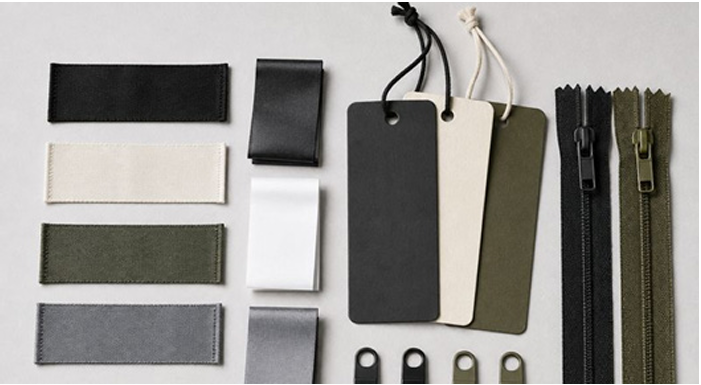
- Fabric and trim specifications: with approved lab dips / handlooms where colour matters.
- Artwork placement: with measurable offsets from seams or centre lines.
- Reference-sample label: which physical sample governs.
- Bill of materials: with supplier codes the factory can reorder.
- Revision log: with owner and line-receipt confirmation for the latest change.
- QC hold points: what must pass before bulk cutting proceeds.
Why This Reduces Cost for Both Sides
Missing fields look like paperwork. In practice they create sample loops, delayed cutting tickets, disputed shipments and chargebacks. A tighter pack does not replace relationship or capacity. It reduces the number of times a line stops to ask which sample is real.
For Bangladesh and other export hubs serving small brands, the same gaps appear when tech packs are adapted from larger PLM exports without the factory-floor fields. A short, explicit pack beats a long, ambiguous one.
How Missing Fields Show Up on the Line
When tolerances are absent, supervisors pad measurements “to be safe,” then bulk comes out large. When measurement method is absent, a chest number that matched the sample size fails on the graded set. When reference-sample version is unclear, print placement follows the salesman sample while wash follows the PP. When revision ownership is missing, an approved collar height change appears on only half the cut.
None of these failures require exotic machinery. They require the brand to write down what the line is already guessing.
A Practical Sequence for the Next Programme
For the next 100-piece-per-colour cut-and-sew drop:
- Freeze the measurement chart with tolerances and methods before the first PP.
- Seal and label one governing sample after PP approval.
- Open a one-page revision log that production must initial when a change goes live.
- Hold cutting until the four fields above are present or explicitly waived in writing.
That sequence is shorter than another round of samples. It also gives Bangladesh export teams a clearer handoff when the brand’s PLM export is incomplete.
Closing
Tech packs fail less often because of software gaps than because of silent assumptions. Tolerances, measurement method, reference-sample version and revision ownership are the four assumptions we still see left unwritten. Write them once, and both the brand and the factory spend less time arguing about what “approved” meant.
Author Note
Ademar Neadstine
Ademar Neadstine is founder of Clothing Manufacturer China, a China-based menswear cut-and-sew OEM.
Practical guides on tech packs and sample approvals: