What Is Sea Silk?
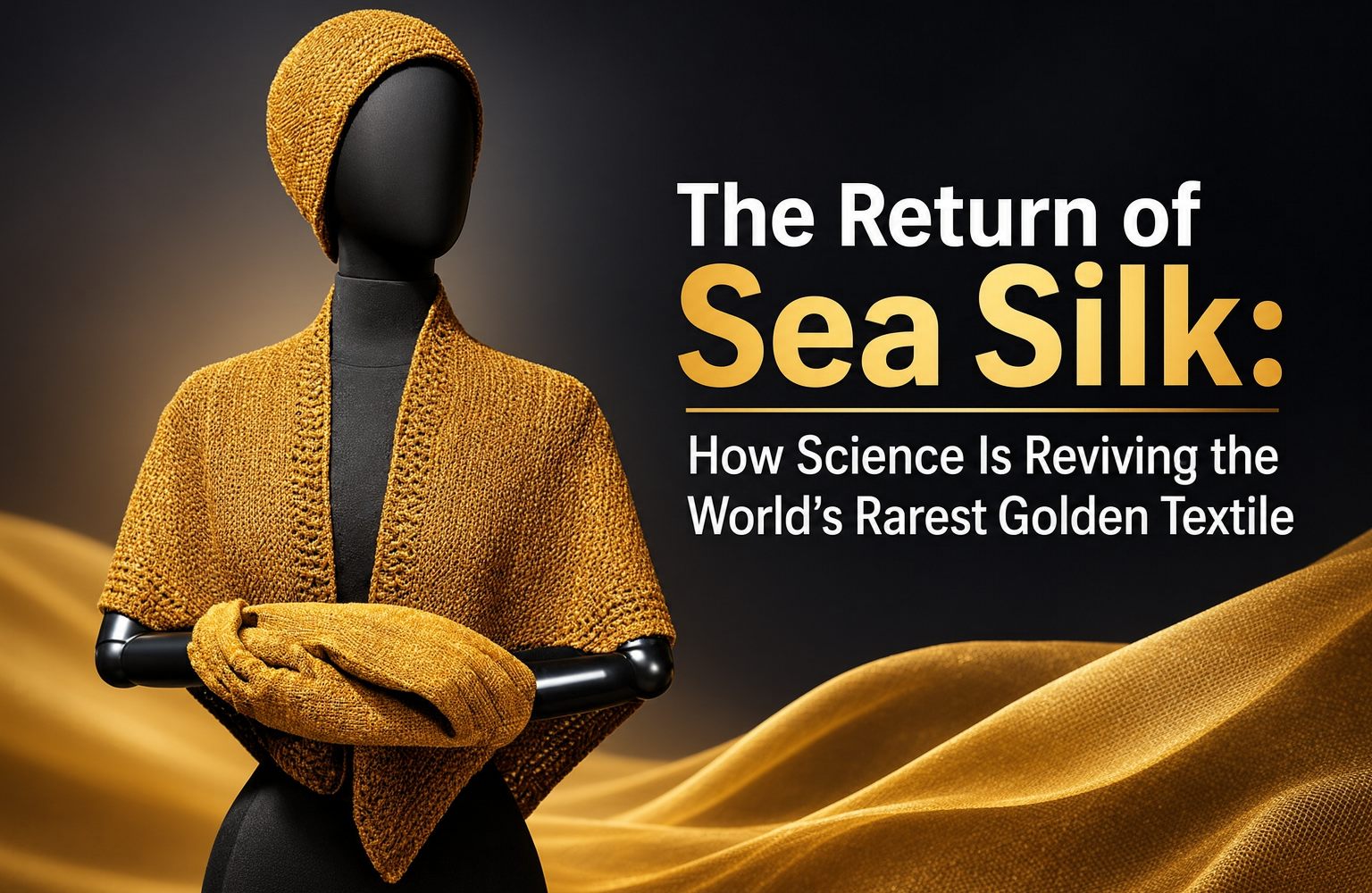
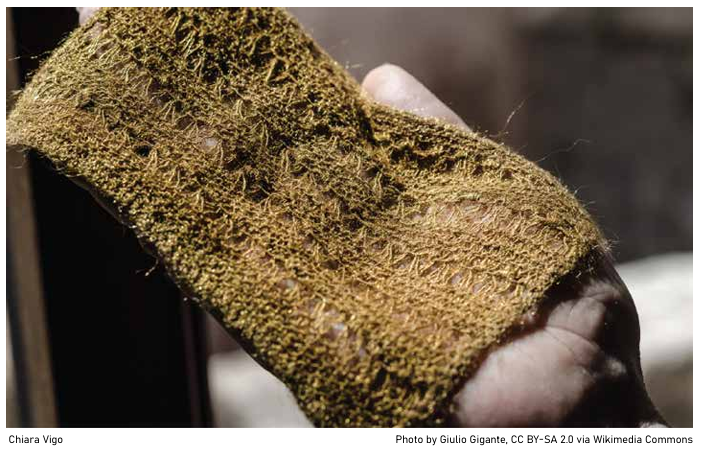
The fabric at the center of this scientific breakthrough is not spider silk or spider-derived golden cloth (a famously rare textile made from orb-weaver spiders), but a completely different and ancient material known as sea silk — historically one of the most prized fabrics in the world. Sea silk was an ultra-luxury textile of antiquity, sometimes referred to as the “golden fibre of the sea” (sericum marinum aureum in Latin). This extremely rare material possesses remarkable qualities: finer than traditional silk, light as air, warm, and exceptionally soft, with a subtle metallic glow.
Historical and Cultural Significance
Sea silk wasn’t just a cloth — it was a symbol of power, status, and spiritual significance. This fiber was so rare and precious that it was traditionally reserved for the most influential figures of the Roman and early medieval worlds — emperors, popes, nobility, and high-ranking clergy.
It was prized for its extreme lightness and luminous golden sheen, as well as for the extraordinary craftsmanship required to harvest and prepare the delicate fibers entirely by hand. Unlike other luxury textiles, sea silk was never widely traded. It was intimate. Rare. Almost mythical. In symbolic terms, it was sometimes compared to woven gold. Historians consistently rank sea silk among the rarest textiles ever produced.
Contemporary Craftsmanship
The knowledge required to transform sea silk into a textile has survived only in fragments. Today, only a handful of women worldwide are believed to still possess this ancient expertise, a tradition passed down through generations along the Mediterranean coast.
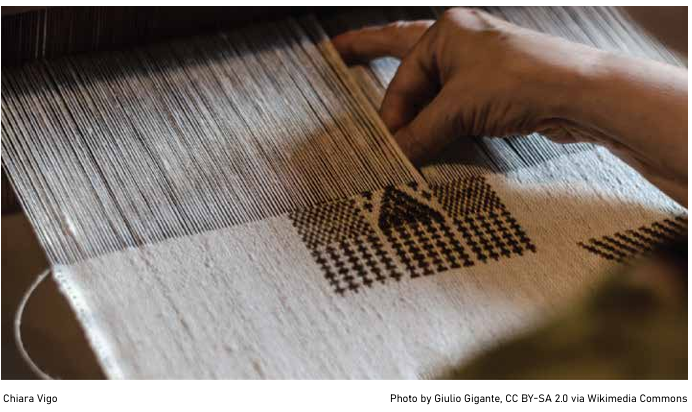
The most renowned and controversial contemporary custodian of this tradition is Chiara Vigo, based in Sant’Antioco, Sardinia. Her work has brought renewed attention to an almost forgotten craft whose techniques were once guarded within small coastal communities.
Sea silk craftsmanship is extraordinarily labor-intensive, relying entirely on patience and manual skill. The knowledge surrounding it exists at a fragile intersection between craftsmanship, cultural memory, and mythology. As the number of practitioners dwindles, the survival of this ancient tradition remains uncertain, raising broader questions about the preservation of intangible heritage.
A Fabric Born in the Sea
Pinna Nobilis is the largest Mediterranean bivalve mollusk, commonly known as the noble pen shell. These remarkable creatures can reach impressive sizes, with shells growing up to about 120 cm in length and around 20–25 cm in width. They have a long lifespan, typically living 30–50 years, though some individuals may survive even longer under favorable conditions.
Sea silk was made from the byssus threads of the noble pen shell, which are protein-based filaments secreted by the mollusk to anchor itself to seabed rocks. Once cleaned, spun, and woven, byssus forms an exceptionally fine, lightweight fabric with a natural golden shimmer. Although byssus fibers remain extant, harvesting them is strictly prohibited, as it can harm the clam. This scarcity further enhances the material’s historical mystique and value.
A Silent Victim of the Anthropocene
For centuries, Pinna Nobilis stood as one of the Mediterranean’s most imposing and silent inhabitants — a giant bivalve anchored to seagrass meadows, quietly producing the luminous filaments known as byssus. Yet beneath its apparent stillness lies a history shaped by environmental pressure and ecological fragility.
From the mid-20th century onward, rapid coastal urbanisation, industrial discharge, and the degradation of Posidonia Oceanica meadows began to erode the natural habitat of this remarkable species. Often described as the “Blue Lung” of the Mediterranean, Posidonia Oceanica forms vast underwater meadows that generate oxygen, store carbon and provide essential habitat for marine biodiversity. Anchoring, trawling, and uncontrolled maritime activity further destabilised already vulnerable populations. Though legally protected under European conservation frameworks in the early 1990s, the species had already entered a period of gradual decline.
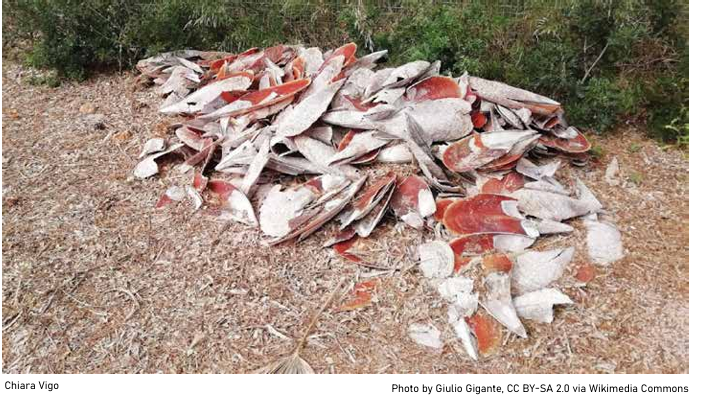
The true rupture came in 2016, when a parasitic outbreak caused by Haplosporidium Pinnae triggered unprecedented mass mortality events across the Mediterranean basin. In some regions, mortality rates reached 80 to 100 percent within a few years. Entire populations collapsed, transforming once-abundant underwater landscapes into graveyards of empty shells. The largest bivalve in the Mediterranean became one of its most fragile.
Climate change has since compounded the crisis. Rising sea temperatures, pollution, microplastics, and increasingly violent storm events place additional stress on surviving individuals. While not “intelligent” in a cognitive sense, Pinna Nobilis is biologically responsive — sensitive to changes in light, chemistry, and physical disturbance. It is an organism finely attuned to its environment, and therefore acutely vulnerable to its disruption.
Today, the species is considered critically endangered in many areas. Its decline is not merely a biological concern, but a cultural one. With the disappearance of living populations comes the silencing of a material tradition — the natural production of sea silk — now suspended by ecological necessity.
What Scientists Just Did — The Revival
In 2025–2026, a team of researchers from Pohang University of Science and Technology (POSTECH) in South Korea made headlines by successfully recreating Sea Silk using modern techniques. The research was led by Professors Dong Soo Hwang and Jimin Choi, and their findings were published in the peer-reviewed journal Advanced Materials under the title “Structurally Colored Sustainable Sea Silk from Atrina Pectinata.”
The Approach
Because the original clam species (Pinna Nobilis) is now critically endangered and protected (harvesting is banned in the EU), the team used byssus from a different clam species — the pen shell Atrina Pectinata, which is widely farmed for food in Korean coastal waters. They found that the byssus fibers of Pinna Nobilis and Atrina Pectinata share key similarities, enabling them to re-create nearly identical fibers.
Material sourcing
Byssus fibers from Atrina Pectinata are typically discarded during seafood processing, making them readily available as a raw material.
Structural similarity
Researchers confirmed that the protein composition and fiber structure (morphology) of Atrina Pectinata closely mirror those of Pinna Nobilis, supporting its suitability as a viable alternative.
Processing refinement
Through controlled cleaning, alignment, and weaving techniques, they recreated a textile closely matching the visual and tactile qualities recorded for historical sea silk.
This approach transforms what was once aquaculture waste into a high-value fiber, aligning seamlessly with circular economy principles in textiles.
Why It Glows: Structural Coloration, Not Pigment
Raw byssus is initially dark and stiff, and transforming it into the legendary sea silk requires meticulous work. The fibers are repeatedly washed in fresh water, treated with natural substances such as lemon juice or wood ash, carefully combed, and hand-selected. Each strand is spun entirely by hand, without industrial machinery, producing a silk finer than a human hair. Even a few centimeters of fabric require thousands of these rare filaments, underscoring just how precious and extraordinary each strand truly is.
It is precisely this careful, hands-on processing that brings out the unique properties of sea silk — including its remarkable golden hue. For material scientists, the most compelling aspect of sea silk is the source of its color. Unlike conventional silk, it was never dyed. Its color does not come from pigments but arises from structural coloration — microscopic spherical protein nanostructures (sometimes called photonic) embedded within the fiber scatter and reflect light at specific wavelengths. The result is a warm, golden sheen that:
- Does not fade over time, unlike dyed textiles.
- Requires no chemical colorants.
- Reduces reliance on water-intensive dyeing processes.
For an industry under increasing pressure to reduce chemical discharge and water consumption, sea silk offers a compelling model: its structural coloration provides lasting, dye-free color while minimizing water use and environmental impact.
Beyond these technical merits, sea silk is like holding sunlight woven into a thread. Its radiance, intrinsic to the fiber’s structure rather than added pigments, has endured for centuries — as confirmed by ancient fragments that remain luminous to this day.
Behind the Breakthrough — Why This Matters Today
Sea silk is not just a historical curiosity — its unique properties, coupled with recent research, could have real implications for textile science. Beyond its aesthetic and cultural value, it provides clear technical insights:
- Bio-derived structural coloration as a sustainable dye alternative.
- Upcycling of marine byproducts into high-value fibers.
- New approaches to protein-based filament engineering.
- Potential applications in advanced materials and biomimetic design.
Implications for the Textile Sector and Science
The structural coloration inherent to sea silk demonstrates how natural optical effects can replace synthetic dyes — a major source of pollution in the fashion industry. Because the byssus threads used are generally waste products from shellfish farming, this approach represents a potentially eco-friendly form of upcycling, turning what was once discarded into high-value material.
Beyond textiles, these insights point toward broader applications for biologically derived, structurally coloured materials. Coatings, bio-based composites, and performance fabrics could maintain vibrant colors without chemical dyes, highlighting how ancient natural designs can inform next-generation sustainable materials.
As regulatory pressure intensifies on water usage, microplastic pollution, and toxic dye effluents, the textile industry is actively seeking nature-inspired solutions. Sea silk exemplifies how innovation sometimes lies not in inventing something new, but in rediscovering what was once lost, bridging centuries of craftsmanship with modern material science.
The Bigger Picture: Reclaiming Ancient Knowledge
The revival of sea silk illustrates a broader trend in textile research: blending historical craftsmanship with advanced materials science. What was once hand-harvested by Mediterranean artisans is now examined at the nanoscale. In that convergence lies the future — textiles that are lighter, cleaner, and structurally beautiful, without chemical intervention. After centuries in obscurity, the golden fiber of the sea is shimmering once again — this time under laboratory lights.
Conclusion
Fabrics become “the most expensive” because of a combination of rarity, labor, unique properties, and cultural prestige — sometimes one factor dominates, sometimes they all converge. Few textiles carry heritage, science, and aesthetic resonance in a single thread, yet sea silk remains among the most poetic materials ever created by nature. It isn’t merely spun — it is grown by a living creature, shaped by saltwater, and polished by sunlight.
This luminous fiber feels fragile, precious, almost sacred. That emotional response is no accident — scarcity always carries weight. Yet it offers more than rarity alone, intertwining knowledge, tradition, and scientific wonder in every filament. Material and meaning merge seamlessly, leaving behind not just a fabric, but a lasting sense of awe.