


Introduction
Indigo farmers in the primary growing regions of Bangladesh and West Bengal were paid extremely low prices for their crops, as European colonists monopolized its cultivation. Under these harsh conditions, a prolonged famine
ensued, claiming millions of lives until farmers rose up against their British plantation owners in the Indigo Rebellion of 1859-60. While the rebellion led to positive changes in the industry, the advent of synthetic dyes and
the necessity for more essential crops eventually led to the decline of indigo cultivation.
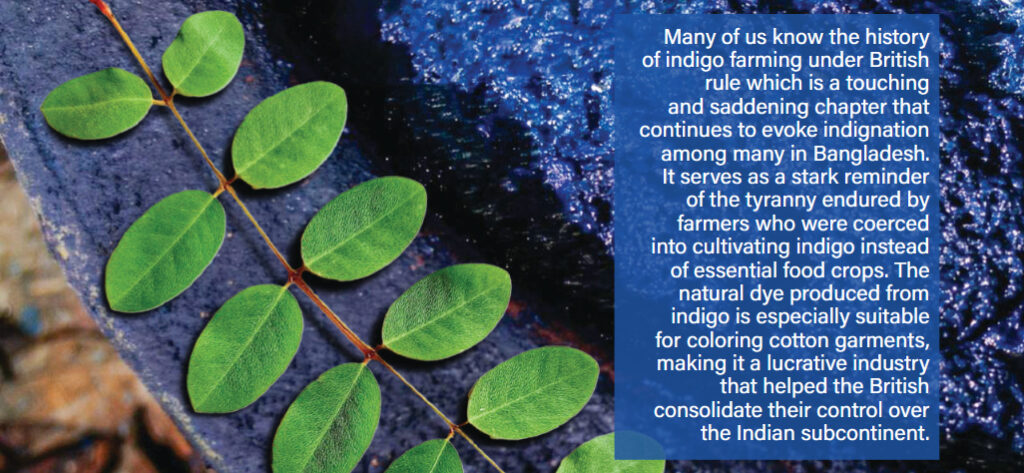
After all those years, it is really good to see that the indigo farming has started in some small areas in rural Bangladesh, especially in northern part of Bangladesh. Indigo farming is experiencing a revival in here, with some farmers in Rangpur and Nilphamari cultivating the plant on a small scale. Locally known as “Malgas,” the plant’s leaves are used as compost to increase soil fertility, while the stalks and branches are burned as fuel. This report will help find out the feasibility of indigo farming in Bangladesh.
Naming and its historical context
Indigo (Indigofera tinctoria) is widely believed to have originated in the Indian subcontinent. Archaeological and historical evidence supports this claim. The earliest known use of indigo dye dates back to around 2000 B.C.E. in the Indus Valley civilization, where textile fragments dyed with indigo were discovered at sites like Mohenjo-Daro and Harappa. These findings predate known indigo use in ancient Egypt or Mesopotamia. Additionally, classical Greek and Roman texts refer to indigo as “Indikon,” meaning “from India,” highlighting that the dye was imported from Indian subcontinent and prized for its rich blue hue. Subcontinent’s long-standing cultivation of Indigofera tinctoria and development of fermentation-based dyeing techniques cement its reputation as the birthplace of indigo dyeing. In local language, it is called “Neel” meaning “dark blue”. Indigo spread from Bengal, an eastern part of Indian subcontinent, influencing various cultures and civilizations, including Egypt, Africa, and Europe. In different cultures, indigo symbolized divinity, immortality, and wealth, and was used in textiles, religious ceremonies, and even in mummification practices. In the late 19 th century, synthetic indigo was developed, leading to a decline in natural indigo cultivation but also contributing to the mass production of denim.
Historically, indigo production and export were flourishing industries in Bengal during the early 19th century but declined in the 1840s and 1850s. This led to economic losses for peasants, who subsequently refused to grow indigo. The conflict with planters, who had heavily invested and pressured peasants to continue cultivation, sparked the “Indigo Revolt” or “Neel Bidroho.” The rebellion, which began in Jessore and Nodia of Bengal in 1859, spread to other districts and continued until 1862, when the government intervened in favor of the peasants.
Rediscover indigo farming
After 160 years since the “Neel Bidroho”, the historic peasant uprising against forced indigo cultivation, many
farmers in Rangpur are now thriving by growing the very plant that once led to their oppression. According to the Department of Agriculture Extension (DAE), approximately 3,000 acres in Rangpur are currently dedicated to indigo cultivation.
Reviving indigo cultivation for its original purpose could enable Bangladesh to tap into a multi-million-dollar business, as the use of natural dyes is increasing worldwide due to growing health awareness. Studies have shown that some synthetic dyes can be hazardous to health, while natural dyes are non-toxic and environmentally friendly, made from sustainable sources.
It is found that the indigo plant was “rediscovered” in Bangladesh by a consultant named Tushar Kumar, who
worked in the country under a CARE Foundation project in Rangpur in 2006. Inspired by his success, the U.S.-
based NGO Mennonite Central Committee organized training for local farmers on how to extract dye from the plant that same year. Nikhil Chandra Ray, a resident of Horkoli Thakurtari village in Gangachara upazila of Rangpur who received the training, has since emerged as a pioneer in producing indigo dye.
Recent industrialization
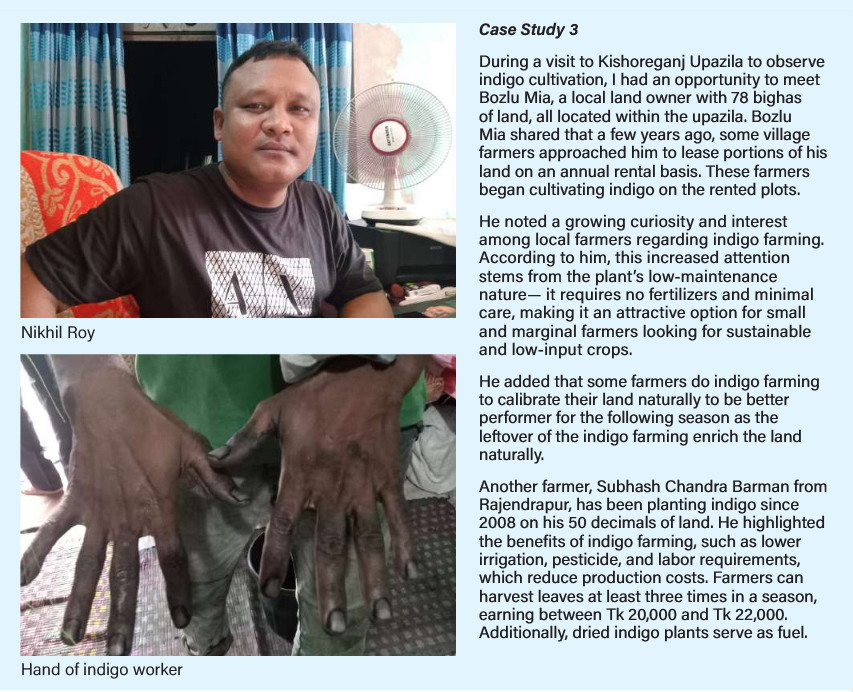
“I set up an indigo manufacturing plant on 37 decimals of land along the Dinajpur-Rangpur-Dhaka highway,” Nekhil said, adding that the industry is facilitating growth in his area by providing employment opportunities. For instance, about 720 farmers from villages in Rangpur and Nilphamari are now contracted by Nekhil’s factory to grow indigo on approximately 1,000 bighas of land.
Mr. Khabiruddin Sarker, a senior scientific officer of BCSIR, stated that the sample provided by Nikhil is a good natural dye suitable for fabrics and textiles. As a result, several entrepreneurs joined forces with Nikhil to form a joint stock company called “Indigo Fields Ltd” to popularize the natural dye both domestically and internationally. Currently, India, China, Vietnam, and El Salvador are the major dye exporters, leaving ample opportunity for Bangladesh to join the competition.
Nikhil’s factory employs about 100 workers, who are paid Tk 250-300 daily. He explained that about 300 kilograms
of leaves are required to produce a single kilogram of dye, costing about Tk 3,000 to Tk 3,500. The dye is then sold for between Tk 4,000 and Tk 8,000 per kilogram, depending on the quality and destination market. The demand for Nikhil’s dye has been increasing, with its quality certified by the Bangladesh Council of Scientific and Industrial Research (BCSIR).
Living Blue, another prominent dye producer co-owned by Care Enterprise Inc. along with Cottage and Village Industry, has also been working in this field since 2006.
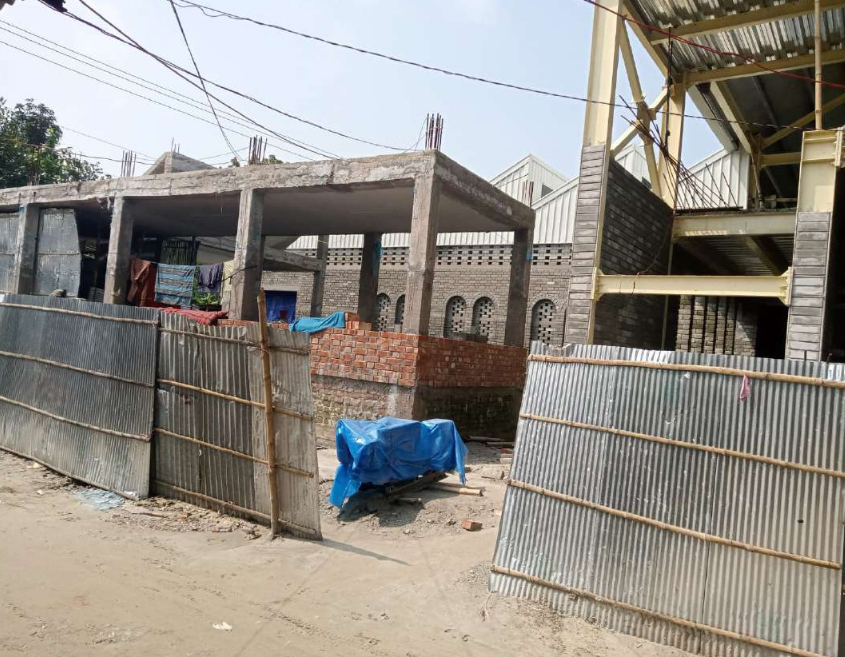
It is also heard that a few of the international organizations showed high interests for investing on making manufacturing plant in Bangladesh in order to produce high quality natural dye from indigo plants which grows here, indeed with a much lower labor cost than other natural dye manufacturing countries. These foreign interests show that indigo from this region has a greater chance to lead as one of the valuable and sustainable produces from Bangladesh. Being the largest exporter of ready-made garment to the World, Bangladesh can easily take this advantage, adding up own natural dyes to make their product, as it is the most sustainable and the most eco-friendly stuff.
Governmental support for indigo farming
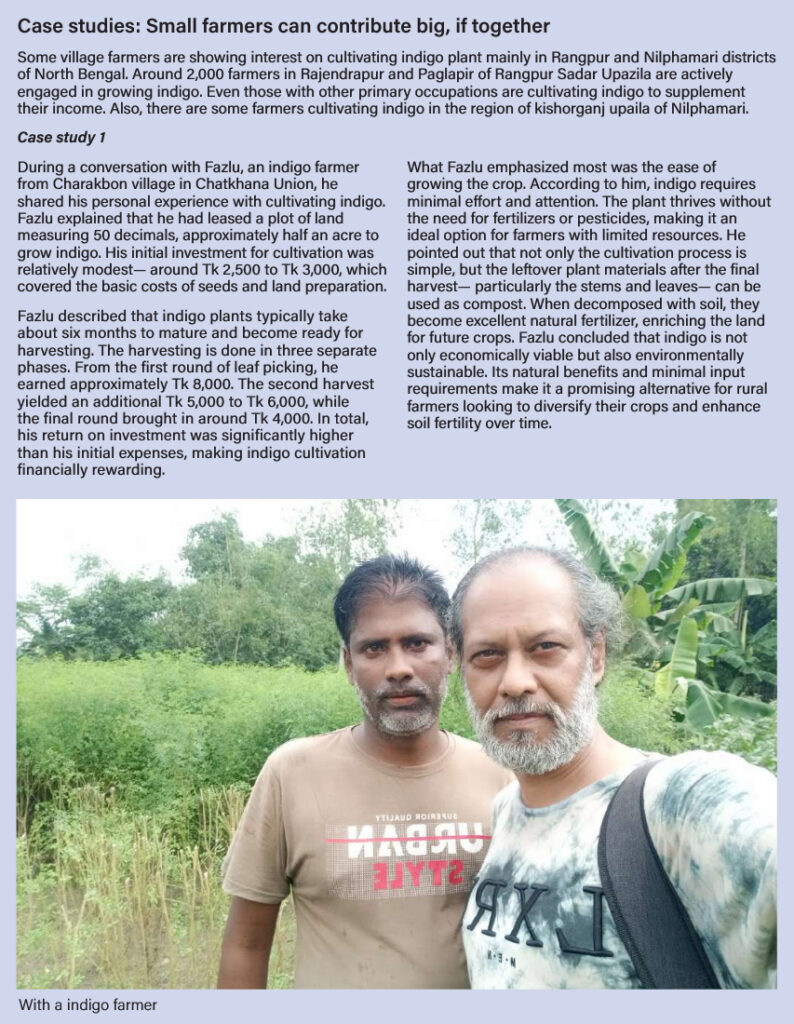
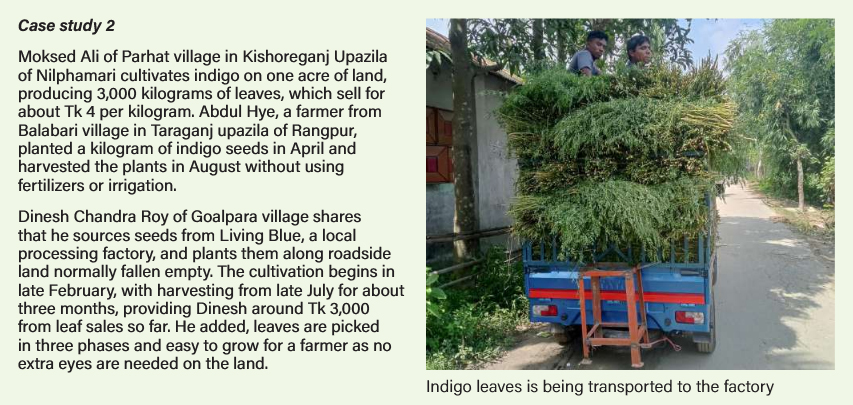
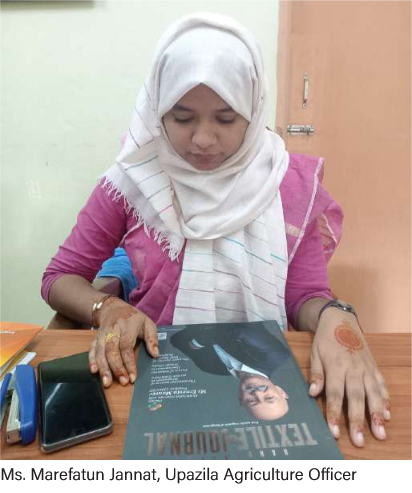 While speaking with Ms. Marefatun Jannat Mou, an Upazila Agriculture Officer, she highlighted the government’s willingness to support farmers interested in cultivating indigo. She noted that while some farmers have already approached the agriculture office, seeking assistance— particularly for seed procurement— indigo seeds are currently more readily available through NGOs rather than government channels.
She acknowledged that the majority of farmers in the region remain focused on cultivating tobacco as a primary cash crop. This trend is largely influenced by the strong presence of private companies that offer attractive incentive packages, including partial advance payments and guaranteed buyback options, which make tobacco financially appealing to growers.
However, she emphasized that with similar levels of support from private sector investors and stakeholders, indigo cultivation could become a promising and sustainable alternative. As global demand shifts increasingly toward eco-friendly and sustainable practices, indigo— being a natural dye crop with minimal input requirements— holds significant potential for future growth.
She concluded that with coordinated efforts among government agencies, NGOs, and private enterprises, including investment capital and market linkage support, indigo could emerge as a viable and profitable crop for the region’s farmers, offering both economic benefits and environmental sustainability.
Dr. Mohammad Sarwarul Haque, Deputy Director of Rangpur DAE, noted that indigo farming is more convenient compared to other crops, attracting more farmers to the practice. Over the past 15 years, indigo processing has regained popularity in Rangpur and Nilphamari district.
Both in Nilphamari and Rangpur, the Department of Agriculture Extension (DAE) has been active in promoting sustainable agricultural practices, including eco-friendly pest management techniques. Such practices can be advantageous for indigo cultivation, which thrives with minimal chemical inputs.
Sustainable and eco-friendly trends in world market
There is a demand from the local market as well from the international market for this natural indigo dyes. Prominent trading firms, exporters, and NGOs such as Aarong, Probortona, Esquire, The Source, and Nodi Limited regularly collect indigo dye from Nikhil’s factory.
Mokhlesur Rahman, Senior Manager of Nodi, mentioned that they source indigo dye from Nikhil’s factory to color
export-oriented garments that are free of health hazards. “Local garment units import synthetic dyes for millions
of dollars each year. If those are replaced by locally produced natural dye, our country could save a huge amount of foreign currency,” he added.
The indigo dye produced in Rangpur not only meets local demand but is also exported to countries including the USA, France, Germany, India, Singapore, Canada, and Japan, with each kilogram of pure dye fetching Tk 5,000 to Tk 8,000 depending on the grades and strengths of the dyes.
Advantaging factors for the success
While talking with Nikhil Chandra Roy, he said, the indigo that is produced by them is one the best in the world in terms of color strength when compared with Thailand, china, El-Salvador, and other natural indigo manufacturing countries. Indigo produced in Bangladesh has many unique factors which make it highly competitive in international market. Additionally, our agronomic conditions, cheap labor costs, market demands with global trends, and environment and social benefits are some of the important points that can take indigo fly high from Bangladesh.
Agronomic Conditions
Bangladesh’s subtropical climate, characterized by ample rainfall and moderate temperature, is highly suitable for
indigo cultivation. The plant thrives in well-drained, loamy soils with good organic content. It has relatively low
maintenance, requiring minimal chemical inputs, which aligns with the global trend toward organic farming. The
crop can also be integrated into crop rotation systems, helping to improve soil fertility and reduce pest cycles.
Market Demand and Global Trends
Globally, the textile and fashion industries are experiencing a shift toward sustainable practices, which includes the use of natural dyes. Major fashion brands are increasingly adopting eco-friendly alternatives, creating a surge in demand for natural indigo. Bangladesh, being a major exporter of garments, especially denim, stands to benefit significantly if it can integrate natural indigo into its textile value chain. Countries such as India and El Salvador have already established profitable indigo farming sectors. By positioning itself similarly, Bangladesh can tap into premium markets that value organic and sustainable credentials.
Economic Feasibility
The production of indigo can generate high returns for farmers, especially when compared to traditional crops like rice or jute. Indigo cultivation provides multiple streams of income: the raw leaves, the processed dye, and value-added products such as artisanal textiles and cosmetics. With proper training and infrastructure, farmers can extract and process the dye themselves, thereby capturing a larger share of the value chain. Additionally, indigo farming can generate employment opportunities in rural areas, contributing to poverty alleviation and economic development.
Integration into the Textile Sector
Bangladesh’s textile industry is its economic backbone, contributing over 80% to export earnings. Currently, the country imports the majority of its dyes, many of which are synthetic and environmentally harmful. By cultivating and processing indigo locally, Bangladesh can reduce import dependence, promote sustainability, and enhance the value of its textile exports. Denim, a major export product, is particularly suited to indigo dyeing, and positioning it as an eco-friendly alternative can open doors to new markets and price premiums.
Environmental and Social Benefits
Indigo farming is not only commercially promising but also environmentally beneficial. As a nitrogen-fixing plant, indigo improves soil health and reduces the need for synthetic fertilizers. It also promotes biodiversity by creating habitats for pollinators and other beneficial organisms. From a social perspective, indigo farming can empower smallholder farmers and rural women, who often play a key role in agricultural activities. Artisanal dyeing and textile production can preserve cultural heritage while providing sustainable livelihoods.
Challenges and future prospects
Despite the positive developments, challenges remain. The lack of official recognition of indigo as a primary crop
by the DAE means that specific data on cultivation areas and farmer participation are limited. This gap hinders the
formulation of targeted policies and support mechanisms.
However, the growing global demand for natural dyes presents a significant opportunity. With coordinated efforts among government agencies, NGOs, and private stakeholders, indigo farming in Bangladesh can be further developed, benefiting both the economy and the environment.
Conclusion
Indigo farming holds significant commercial potential for Bangladesh. Its compatibility with local agro-climatic
conditions, alignment with global sustainability trends, and synergy with the country’s dominant textile sector
make it a compelling opportunity. The combined efforts of various organizations have laid a strong foundation for
the industry’s growth. Recognizing indigo as a valuable crop and integrating it into official agricultural programs
could further enhance its potential.
However, realizing this potential requires coordinated efforts across the public and private sectors, investment
in infrastructure and training, a commitment to equitable and environmentally sound practices. If nurtured properly, the renaissance of indigo can not only generate economic benefits but also restore a sense of pride and
identity rooted in Bangladesh.
 References
1. Local indigo dying manufacturers in Rangpur and
Nilphamari district
2. Local farmers from different upazilas of Rangpur and
Nilphamari
3. Local entrepreneurs of indigo dye marketers
4. Stakeholders of indigo dye consumers and producers
5. Kishorganj Upazila Agriculture Office, Nilphamari
6. Rangpur DAE office
7. A few Bangladeshi fashion brand’s representatives
8. The Independent
9. The Financial Express
10. The Daily Star







Comment here