LOCANIT® SLT BD, developed by PULCRA Chemicals, is a specialised auxiliary designed to improve wet fastness in reactive dyeing of cellulosic fibres while significantly reducing the resources required during the after-soaping process. The technology enables cotton knit goods to be after-soaped at substantially lower temperatures—typically 40–60°C—instead of conventional higher-temperature processes.
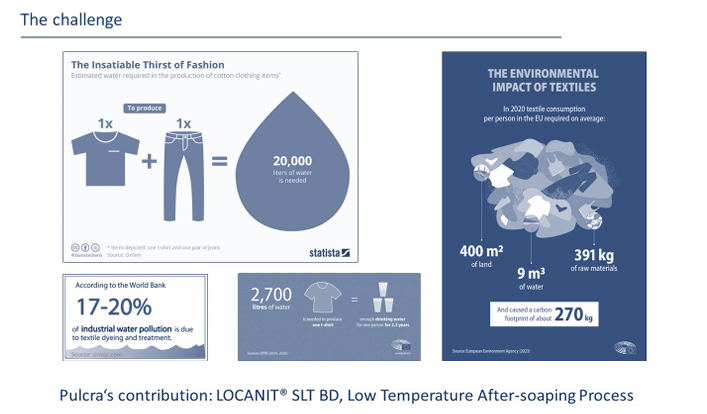
The technology addresses a key challenge in cotton dyeing: achieving the required fastness and shade quality while reducing water, energy, steam consumption, wastewater and processing time. According to the presentation, LOCANIT® SLT BD can also improve the brilliancy of shades and disperse hardness builders.
Demonstrated Resource Savings
A 2024 customer case study involving cotton knits dyed with reactive dyes in jet-dyeing machines compared the conventional LOCANIT® S process with the new LOCANIT® SLT BD process. At a liquor ratio of 1:8, the reported savings were substantial:
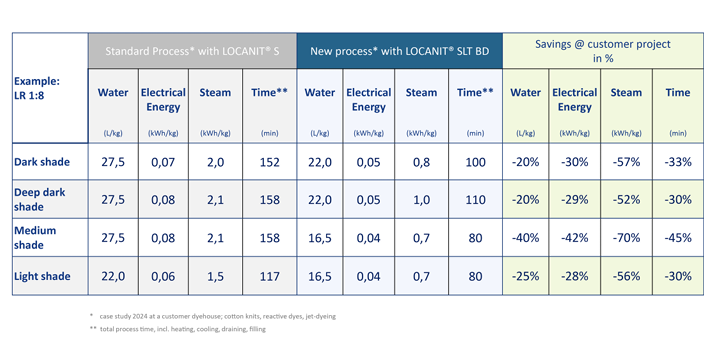
For example, the medium-shade process reduced water consumption from 27.5 to 16.5 L/kg, electrical energy from 0.08 to 0.05 kWh/kg, steam from 2.1 to 0.9 kWh/kg, and total process time from 158 to 110 minutes.
Sustainability and Operational Benefits
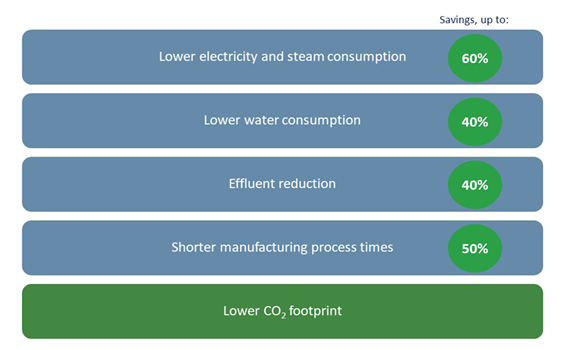
The principal value proposition of LOCANIT® SLT BD is its ability to combine fastness improvement with lower resource consumption. The presentation identifies several benefits, including:
- Lower electricity and steam consumption
- Lower water consumption
- Reduced CO₂ footprint
- Reduced effluent generation
- Shorter manufacturing process times
- Fewer after-soaping baths
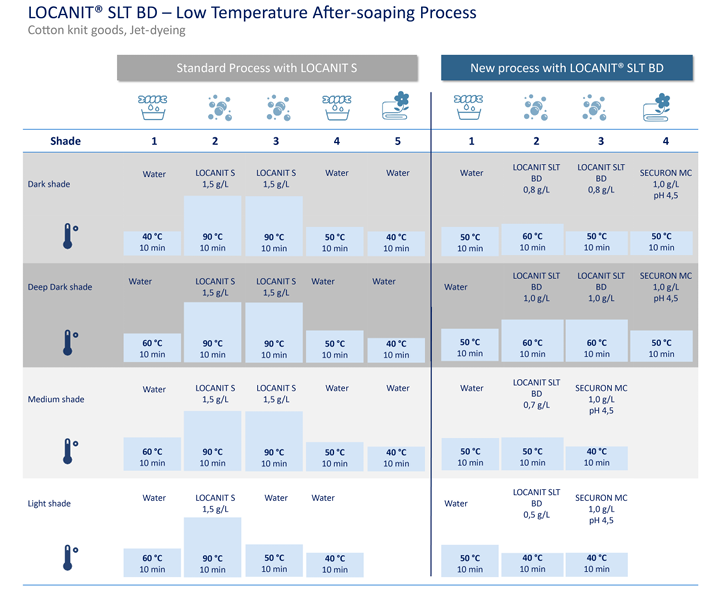
The technology therefore has potential relevance for textile dyehouses seeking to improve both production efficiency and environmental performance, particularly where water, energy and wastewater costs are significant.
Key Takeaway
LOCANIT® SLT BD represents a shift from conventional high-temperature after-soaping toward a low-temperature, resource-efficient process. The customer case study indicates that the technology can deliver significant reductions in water, energy, steam and processing time while maintaining the objective of improved wet fastness.
For cotton knit processing, this combination of quality, productivity and sustainability makes the technology particularly relevant to dyehouses pursuing lower-impact manufacturing.